




Analysis: From Jingle All the Way to Die Hard, Christmas films are perfect record keepers of social change and how we evolve as a society
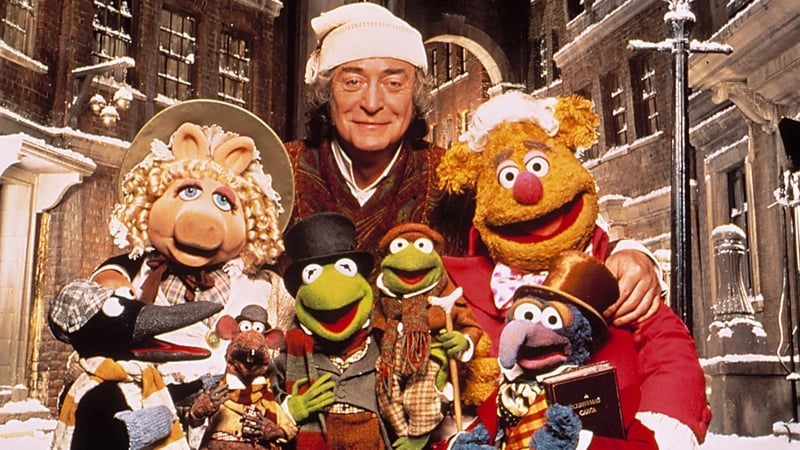
Every December, Irish living rooms glow with the familiar blend of pine needles, tins of Roses, the smell of mulled wine and the irresistible pull of the Christmas movie. Whether it is The Muppet Christmas Carol, Home Alone, Elf or It's a Wonderful Life, these films drift back into our lives with the confidence of old friends who never bother to text first. Yet they are not simply seasonal entertainment.
Beneath the tinsel and cheer sit small cultural mirrors, quietly showing how ideas about family, community, work and belonging have shifted over the decades. It turns out that Christmas films are perfect record keepers of social change, because nothing captures how we evolve quite like a genre that returns year after year, repeating itself just enough to reveal what has changed.
Family life: from perfect households to messy reality
Family sits at the heart of most Christmas films, which makes the genre a useful way to track how families themselves have evolved. In classics like It’s a Wonderful Life or White Christmas, the family is presented as wholesomely traditional and usually led by a heroic father figure with a crisp haircut. Mothers are angelic, children are polite and the house is tidy. These films offered reassurance that a good Christmas meant a good family closely tied to respectability.
We need your consent to load this rte-player contentWe use rte-player to manage extra content that can set cookies on your device and collect data about your activity. Please review their details and accept them to load the content.Manage Preferences
From RTÉ Brainstorm, why It's A Wonderful Life is still a winner today
Then the 1990s arrived and Christmas films discovered the concept of mess. Home Alone gives us the McCallisters, a family so frantic they forget an actual child in their house. The story still ends with a warm reunion, but the world it shows is messier and more recognisable. Meanwhile, Jingle All the Way and The Santa Clause introduce blended families, custody arrangements and parents trying to salvage Christmas while silently wondering how life became so administratively complicated.
Fast forward to the streaming era and the genre has further evolved. Netflix churns out festive films populated by single parents, long distance couples, queer protagonists and entire communities of people who seem to have absolutely no issue celebrating Christmas with their ex’s elderly relatives. Love Hard, The Christmas Chronicles and Single All the Way present family as something flexible and diverse, defined by emotional connection than by structure.
A slow shift in gender roles
If you want to see gender roles age badly, look no further than early Christmas classics. Miracle on 34th Street offers a professional woman framed as slightly hardened by practicality, softened by the intervention of a kind, whimsical man. In A Christmas Carol, female characters hover around the edges like elegant lampshades while Scrooge is guided through his existential crisis by an all-male supernatural support team.
We need your consent to load this rte-player contentWe use rte-player to manage extra content that can set cookies on your device and collect data about your activity. Please review their details and accept them to load the content.Manage Preferences
From RTÉ Radio 1's Arena, Jarlath Killeen from Trinity College Dublin discusses key Christmas literature from Charles Dickens' A Christmas Carol to Patrick Kavanagh's A Christmas Childhood
By the late 20th century, things begin to shift. The Holiday gives Cameron Diaz and Kate Winslet leading roles with careers, chaotic love lives and emotional journeys of their own. Love Actually, for all its imperfections, shows women in journalism, public relations and politics, even if romance still does most of the heavy lifting. Christmas With the Kranks shows a couple navigating festive pressures together rather than relying on one partner to manage it all.
More recent Christmas films go further. Happiest Season centres on a same sex couple dealing with family tension. Last Christmas puts Emilia Clarke’s flawed but self-determined character at the centre of the story, complete with work stress and unresolved trauma. In other words, Christmas caught up with the fact that women have agency, men have emotions, and not every family runs on 1950s gender logic.
From Hulu, Official trailer for Happiest Season (2020) starring Kristen Stewart and Mackenzie Davis
Work, money and the meaning of success
No Christmas movie would be complete without at least one character discovering that capitalism has ruined their holiday. A Christmas Carol is the oldest and clearest example, with Scrooge’s transformation critiquing greed and rewarding compassion. By the 1980s, Christmas movies were staging their festive crises inside office buildings. Trading Places skewers class and privilege through market chaos, while Die Hard uses a corporate office party as the backdrop for personal bravery and reconciliation. Die Hard is still debated as a Christmas film, but it remains the only festive favourite in which the miracle of the season is surviving a terrorist attack at work.
By the 1990s, work had become a major source of festive tension. Jingle All the Way follows an Arnold Schwarzenegger so overwhelmed by deadlines that he becomes forced into an action movie quest in search of the perfect toy. The Nightmare Before Christmas is practically a treatise on burnout. Even The Santa Clause hinges on a man whose identity is transformed when he is forcibly removed from his corporate life.
From Movieclips, At the toy store, Howard (Arnold Schwarzenegger) and Myron (Sinbad) are mocked for their lateness in buying a Turbo Man doll
Today, overwork is the clear villain. In Elf, Walter’s job obsession is the real threat to Christmas spirit. In Klaus, the town only begins to thrive when people shift from self interest to community. Christmas films now routinely tell us to slow down, switch off and prioritise people over productivity, echoing broader conversations about balance and wellbeing.
Loneliness and emotional honesty
One of the biggest shifts in Christmas films is how they portray loneliness. Older films tended to treat loneliness as a temporary sadness quickly solved by the arrival of family or romance. More recent stories recognise something more complicated.
In The Snowman and The Polar Express, yearning for connection drives the emotional core. More adult stories such as About a Boy explore isolation with far greater honesty and in ways older films avoided. Love Actually quietly weaves together grief, unrequited love and emotional responsibility. Last Christmas confronts illness, trauma and the struggle to rebuild a sense of purpose. Modern Christmas films acknowledge that the season can amplify joy, but also sadness, and that feeling a bit lost at Christmas is not a personal failure but a human reality.
From Warner Bros, trailer for The Polar Express
Community, diversity and belonging
Older festive films often featured communities that looked and behaved the same, often representing small town, middle class, mainly white societies. Today the genre is more varied. Jingle Jangle offers a vibrant cast of Black characters in a story full of music and invention. Single All the Way places LGBTQ+ love front and centre without turning identity into conflict. The Best Man Holiday, A Naija Christmas and Let It Snow all bring different cultural traditions and communities to the festive canon.
As another festive season arrives, it’s worth pausing to consider why certain films feel essential to us. Maybe it is the slapstick joy of Home Alone, the emotional warmth of The Muppet Christmas Carol, or the snowy wonder of The Polar Express. Or perhaps it’s something newer that reflects who we are now.
Contemporary life is diverse, multicultural and full of different ways of celebrating. Christmas movies now offer a way to reflect that many of these changes more openly than ever before. When you settle down this year, blanket on your lap and selection box already under strategic assault, ask yourself which films you are pressing play on and what they reveal about your own evolving Christmas season.
Follow RTÉ Brainstorm on WhatsApp and Instagram for more stories and updates
The views expressed here are those of the author and do not represent or reflect the views of RTÉ
