

Analysis: From the meteor showers to super moons, this time of year gives us a front row seat to one of the most active regions of the galaxy
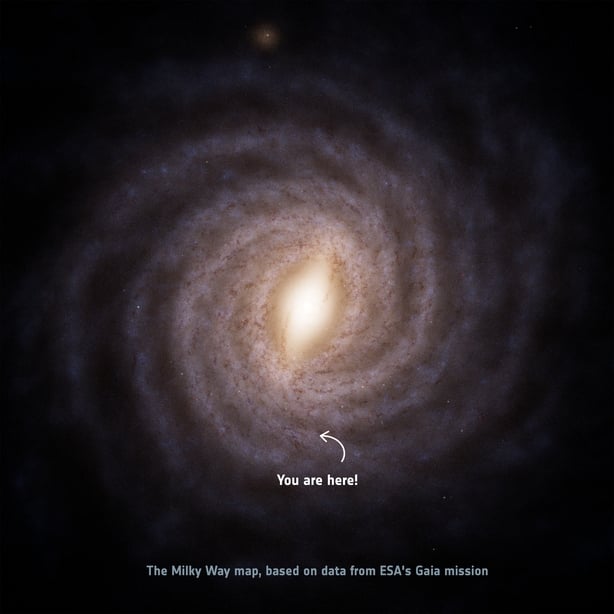
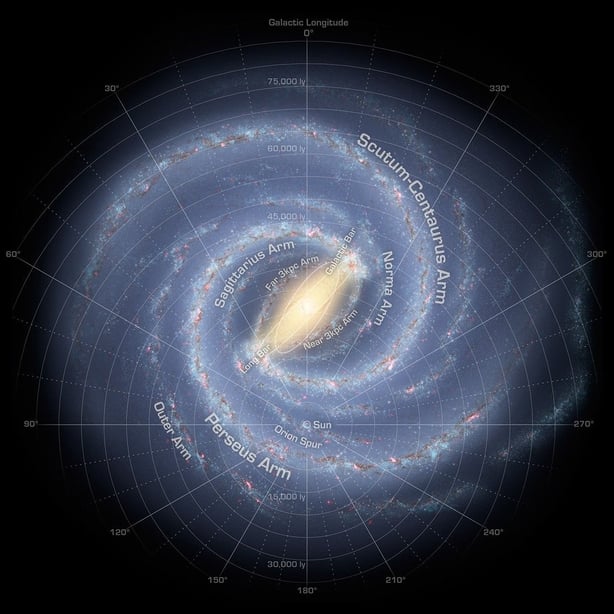
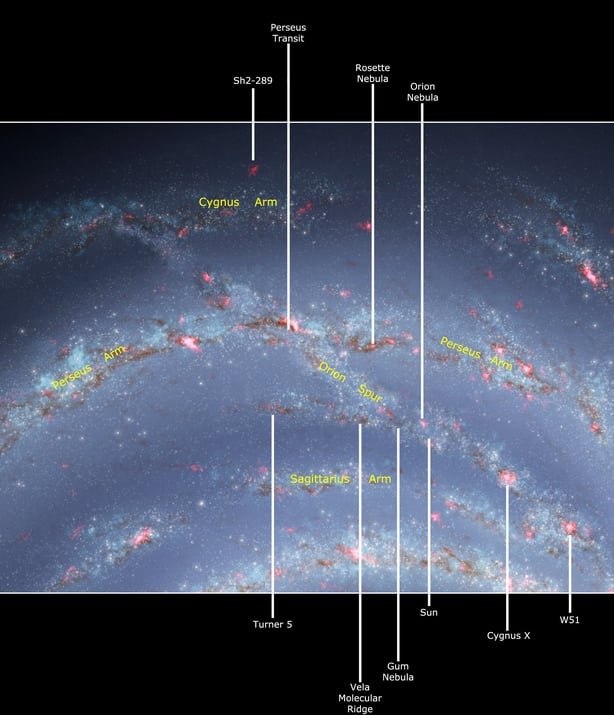
Irish folklore heralds winter with the Samhain festival on November 1st. More recently meteorological services declare winter to begin in December. As our Solar System resides within a relatively small spiral arm called the Orion Spur, between two larger spiral arms of the Milky Way galaxy, winter nights from Ireland are dominated by the spectacular constellations of Orion, Taurus, and Gemini - all visible in the southern part of our sky where we are looking outward along the plane of the galaxy toward the outer edges of the Orion Spur.
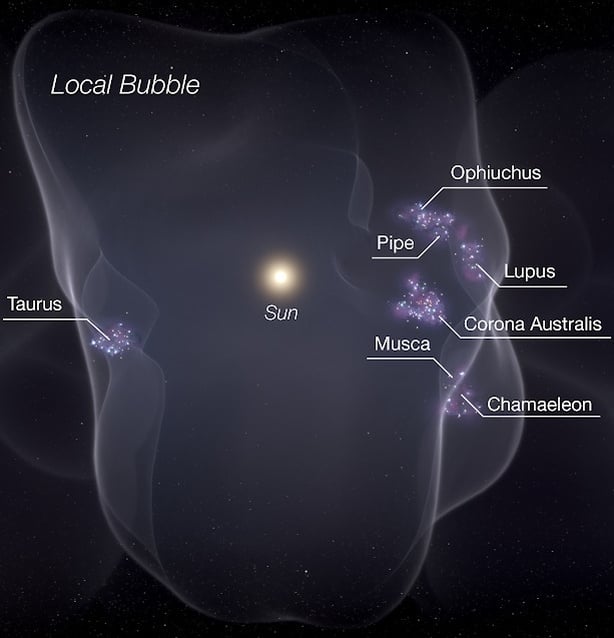
While constellations are mostly patterns of stars with no association with one another, this is not the case for Orion and Taurus where both comprise of stars of one of the most active star-forming regions of the galaxy, and with which recent European Space Agency GAIA findings reveal our planet to have an enduring relationship.
As such, each winter from Ireland presents to us a front row seat to one of the most active regions of the galaxy, with vast clouds of gas creating new stars by the thousand and supernova explosions every few million years that sculpt the heavens above and which influence Earth's path through the galaxy. Orion and Taurus are the visible manifestation of dynamism on a galactic scale, much of it visible to the naked eye and through binoculars.
Orion
We find Orion by looking south to southeast, rising earlier each evening and in full glory through January and February. Surely the most impressive constellation on all the sky, Orion stretches 60 full moons from top to bottom.
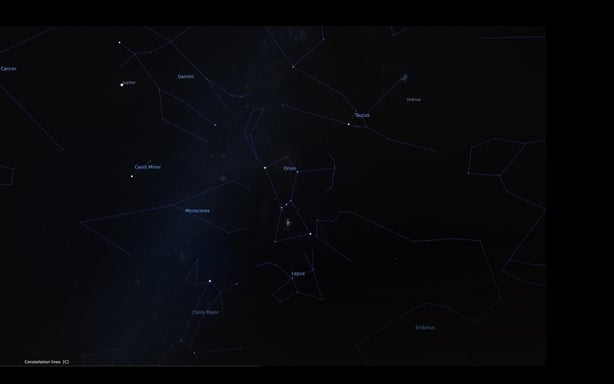
Many myths are associated with Orion the Hunter. In one, his boastful claim that he could hunt any animal sees him punished by being placed in the sky, unable to catch Taurus the Bull. His two faithful hunting dogs, Canis Major and Canis Minor accompany him on this endless journey. Canis Major, southeast of Orion, is unmistakable as it contains Sirius, the brightest star in the sky, at just 8 light years distance.
Orion is a sight to behold. Upper left is Betelgeuse, a distinctly red star. It is a super-giant star only 10-million years old but already nearing its end. More massive than our Sun, it has quickly burnt itself out and will soon explode as a supernova. As recently as 2020 Betelgeuse attracted global attention by dimming visibly over many weeks, before brightening again.
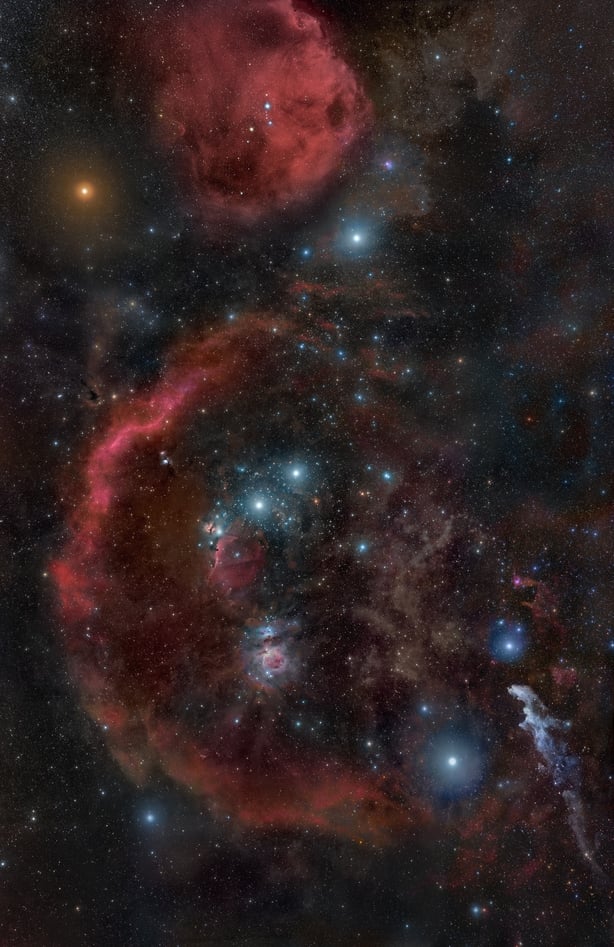
Orion contains a vast star-forming region called the Orion Molecular Cloud Complex from which emerged the three stars making up Orion's Belt. These super-luminous blue stars appear in a straight line and as with the lower right star Rigel, are living fast, violent lives and when eventually explode will create shock waves in surrounding nebulae to seed countless new stars like our Sun, all with accompanying planets.
Recent supernovae in Orion have created a huge cavity called the Orion-Eridanus bubble which we now know Earth passed through 18 million years ago, identified by the isotope Iron-60 spread across our planet. As we gaze upon Orion each winter, we gaze upon a place from which we have come. One wonders what events of that time may have shaped the course of this planet.
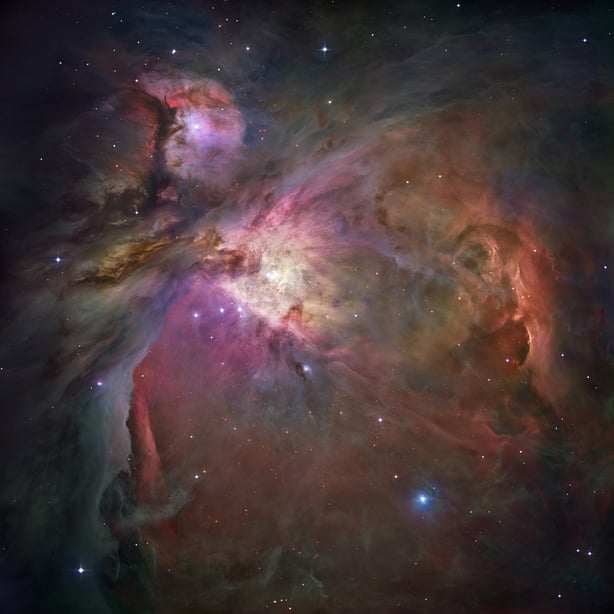
Another star forming region can be just about seen with the unaided eye - and beautifully through binoculars - as a faint nebulous patch just below Orion's Belt, in what is termed the Sword of Orion or Orion Nebula, where thousands of stars and planets are currently forming. The Hubble Space Telescope recently identified this region to be synthesising water equivalent to 90-times all of Earth's oceans, every day.
Taurus
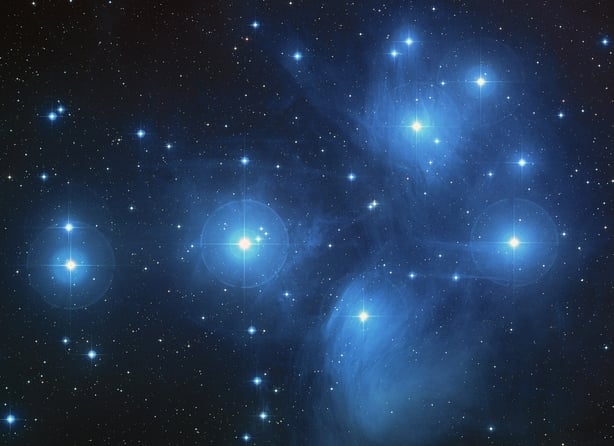
To the upper right of Orion, we find the constellation of Taurus. Its eye is the orange super-giant star Aldebaran, surrounded by the closest open-cluster of stars to Earth - the Hyades - glorious to view both with the naked eye in dark skies and through binoculars. Further to the right we find the Pleiades, or seven sisters - surely the most beautiful grouping of stars in all the sky - identified as a small region of blue-white sparkling stars just within visible acuity.
In Greek mythology the seven daughters of Atlas and Pleione were placed in the sky by Zeus for protection from the advances of Orion. Although only seven can be seen by eye, dozens are visible through binoculars, with estimates suggesting up to 10,000 stars in total.
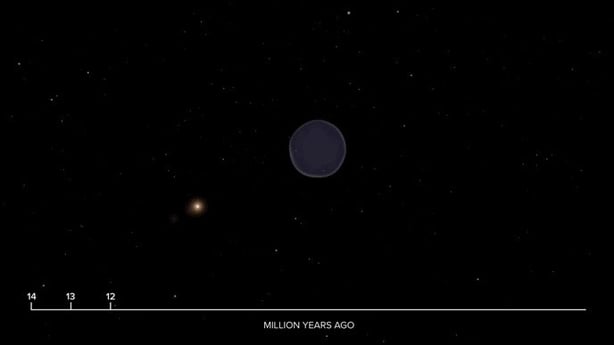
About 100 million years old, we have only recently learnt how the Pleiades play a role in Earth's current trajectory through the Milky Way. Perhaps 5 million years ago, up to 14 supernova explosions, some within the Pleiades, created a new bubble adjacent to the Orion-Eridanus bubble called the Local Bubble, clearing out almost all interstellar material. Our Solar System entered that bubble 3.5 million years ago and today we find ourselves at is centre. Our Solar System, and all the stars of our night sky enjoy a calm within the Milky Way thanks to the clearing work of the Pleiades, revealing our intimate connection with the sky above our heads.
Winter events closer to home
Of course, we do not have to gaze hundreds of light years to connect with our winter sky, with plenty of intriguing celestial activity in the vicinity of our Solar System too.
Winter Solstice
Winter Solstice, the shortest day of the year, occurs on December 21st and in Ireland is marked at Newgrange neolithic tomb in county Meath when the rising Sun shines into its inner chamber. Although entry to the chamber is by lottery, it is an enriching experience to visit Newgrange on that day where a sense of a shared history and of renewal is felt by all.
Super Moons
Unusually, the full moons of November 5 and December 4 and January 2026 are all a super moon - a full moon at its closest point to Earth which we see as around 33% brighter. While we surely take our faithful nearest cosmic neighbour for granted, super moons offer a rare opportunity to see our Moon more clearly, and surely more meaningfully. Be sure to check out the intriguing full Super Moon on January 3 next.
Geminids
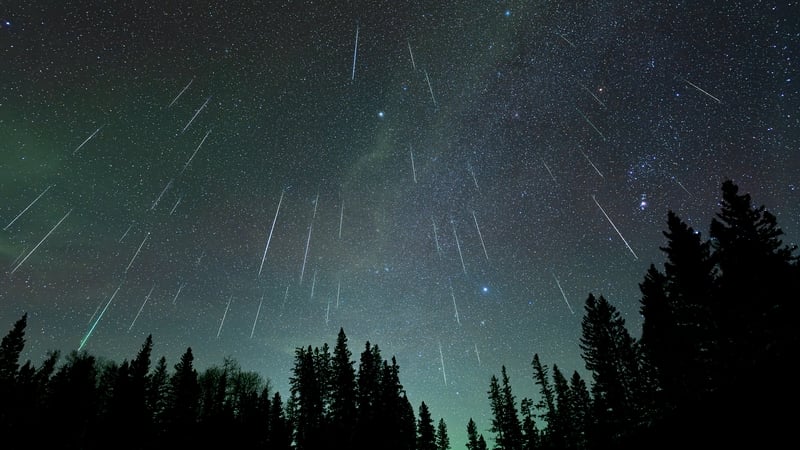
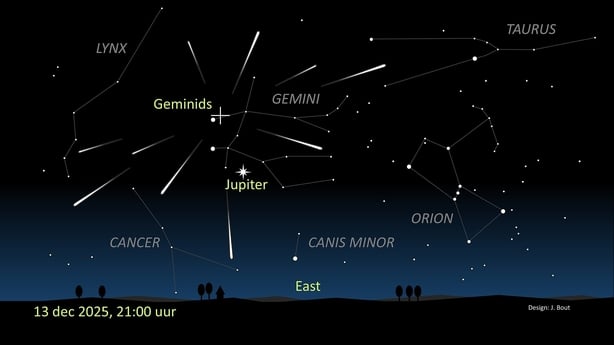
The night of December 13 presents the Geminids meteor shower. Meteors showers occur when Earth passes through the debris tail of a comet, where countless dust particles burn up in our atmosphere as shooting stars. The Geminids are so named as meteors on this evening appear to emanate from the constellation of Gemini to the upper left of Orion. This year's meteor shower should be excellent to view because of the low waning Moon, meaning a dark sky perfect for spotting shooting stars. No instruments are needed, simply wrap up well and go outdoors, where even in city locations many shooting stars will be seen, with dark locations revealing up to 120 per hour!
Jupiter
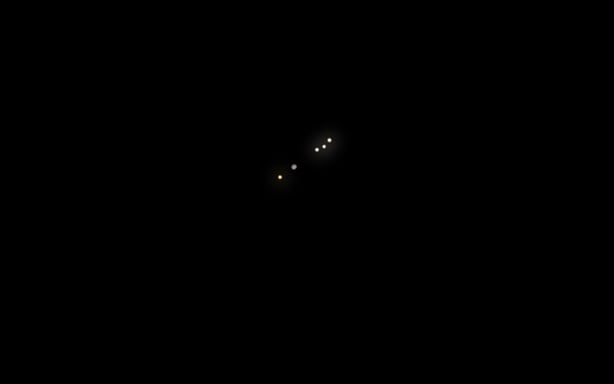
The jewel in the crown of this year's winter sky is the appearance of the planet Jupiter high in the sky every evening in Gemini. Unmistakable as the brightest object in the night sky apart from the Moon, it reaches opposition (when Earth is directly between the Sun and Jupiter) on January 10 2026. Its untwinkling yellow-gold colour is striking. Binoculars and small telescopes beautifully reveal Jupiter's four large Galilean moons, and if you hold your hand very steady perhaps, you'll see the two dark zones of Jupiter's atmosphere too.
Be sure to spend even a short time outdoors looking up this winter, where the wondrous spectacle of Orion, Taurus with its Hyades and Pleiades clusters, and the planet Jupiter, are all ready to enchant.
Follow RTÉ Brainstorm on WhatsApp and Instagram for more stories and updates
The views expressed here are those of the author and do not represent or reflect the views of RTÉ