

Analysis: Instead of being just another fast fashion product, Irish Christmas jumpers could highlight our long association with wool and knitting
The Christmas jumper has become a colourful backdrop to our contemporary Christmas celebrations. What originated in 19th century Scandinavia to keep out the winter chill later evolved into chic 1920s après-ski wear. Over time, as production shifted from hand-knitted wool to mass-produced polyester, the designs grew louder with clashing patterns and novelty motifs replacing subtle craftmanship.
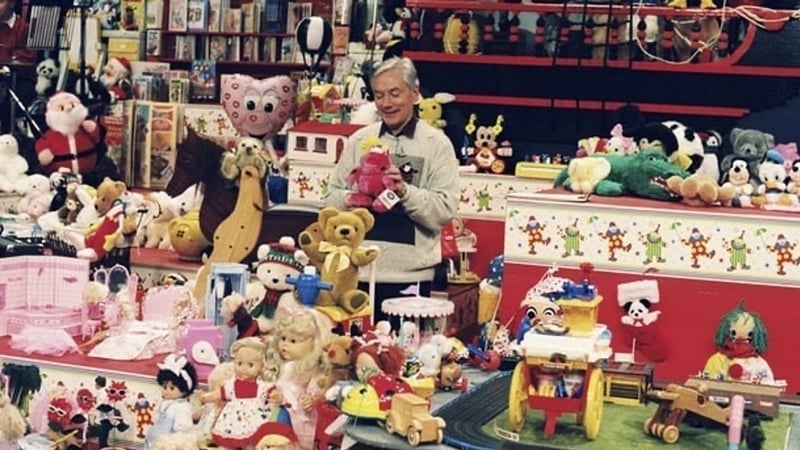
By the 1960s the jumper had become a staple Christmas gift, before tipping into the realm of gag gift by the 1990s culminating in National Ugly Sweater Day celebrated in the US on the third Friday of December. It is said that Christmas jumpers found their way to Ireland when Gay Byrne appeared in one on the Late Late Toy Show in 1975. Since then, Christmas jumper days have served as successful fundraisers across offices, schools and university campuses.
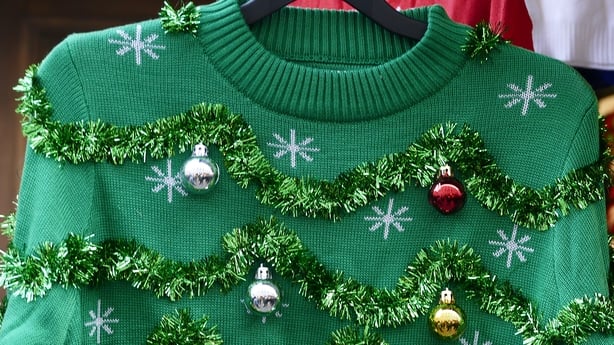
A parody of modern excess: acrylic, flashy and disposable
But in an era of sustainability, the Christmas jumper is also an icon of fast fashion, as millions are purchased to be worn once or twice. Most are made from petroleum-based fibres that shed microplastics into our nature ways and human systems. In fact, 95% percent of Christmas jumpers found on the high street are made from plastic. And then there is the problem of landfill, 110,000 tonnes of textiles are discarded each year in Ireland.
A growing number of initiatives are pushing back against fast fashion. France introduced amendments to a climate bill that specifically imposes penalties on ultra-fast fashion giants. The farm to fashion movement is aimed at creating awareness of the materials that go into our clothes reconnecting the fibres we farm with the clothes that we wear. Even primary schools are joining the action by recycling Christmas jumpers.
But Ireland's relationship with the Christmas jumper tells a deeper and more troubling story. This is a story of industrialisation and globalisation that rationalised Ireland's indigenous wool industry away. Irish wool has gone from a precious natural commodity to a Category 3 waste material. A valuable biofibre has now become a waste by-product.
We need your consent to load this rte-player contentWe use rte-player to manage extra content that can set cookies on your device and collect data about your activity. Please review their details and accept them to load the content.Manage Preferences
From RTÉ Radio 1's Countrywide, the value of wool versus the cost of shearing
Once, knitted Aran jumpers were handmade in homes across Ireland, forming a significant cottage industry fuelled by strong demand in 1950s and 1960s America. In her book Irish Aran, Vawn Corrigan noted that each complex stitch carried its own story, woven into jumpers made to last from wool grown for the damp Irish climate.
Currently, it costs a sheep farmer €2.50 to sheer their sheep, but they can receive as little as 15 cent a fleece on the current market, the same amount you receive for recycling a plastic bottle. Economic mechanisms have devalued wool due to complex global systems, the mass production of cheaper synthetic materials, the loss in demand for durable warm clothes and the perception of Irish wool as scratchy compared to softer merino and cashmere.
It is a death by a thousand factors. For example, China's rapid urbanisation over the last decade means their rural population no longer demand Ireland’s warm wool to protect them against harsh winters in the villages, like the butterfly effect a shift in living patterns halfway across the world leaves our wool rotting in the fields.
We need your consent to load this rte-player contentWe use rte-player to manage extra content that can set cookies on your device and collect data about your activity. Please review their details and accept them to load the content.Manage Preferences
From RTÉ Radio 1's Countryside, Suzanne Campbell reports on how Irish wool has dropped so much in price in recent years that wool from upland sheep is now unsaleable and farmers are now making new products from the wool
Much work is now being done to revive the Irish wool industry. But the future of wool is also dependent on a growing group of artisan entrepreneurs, such as knitters, weavers, spinners and wool producers, who are taking risks because they believe in building something meaningful and not seeking quick profits. These small businesses are reviving skills and old woollen mills by supporting farmers, restoring value to indigenous resources, rebuilding local supply chains and creating products with a sense of place. More custodians of a sovereign industry than marketeers, these craft entrepreneurs are taking a stance of resistance against economic logics that devalued wool in the first place.
Craft has long been associated with activism, craftivism, dating back to Gandhi using the emblem of the spinning wheel in his fight for India's independence, depicting craft as a way to sovereignty, political independence and economic self-sufficiency. More recently, the Pussyhat Project saw knitting circles worldwide make pink hats as an act of solidarity and empowerment for women protesting against Donald Trump in 2017. Closer to home, the Knitting Map and the Tempestry Project knit data into meaning, turning wool into a record of rising temperatures and a call to action.
What if the Christmas Jumper became an act of resistance to fast consumption? Imagine a Late Late Toy Show Great Irish Christmas Knit Along next year? Kits of Irish wool could be sold across the nation to raise money for charities, support local farmers and artisan entrepreneurs. They could become an emblem of slow production where families sit together and create something meaningful, passing on skills for generations.
Our Christmas jumpers do not have to remain a parody of modern excess and we can make them icons for creativity, heritage and a celebration of our natural resources. Most importantly, they can be a source of true sustainable seasonal cheer.
Follow RTÉ Brainstorm on WhatsApp and Instagram for more stories and updates
The views expressed here are those of the author and do not represent or reflect the views of RTÉ