


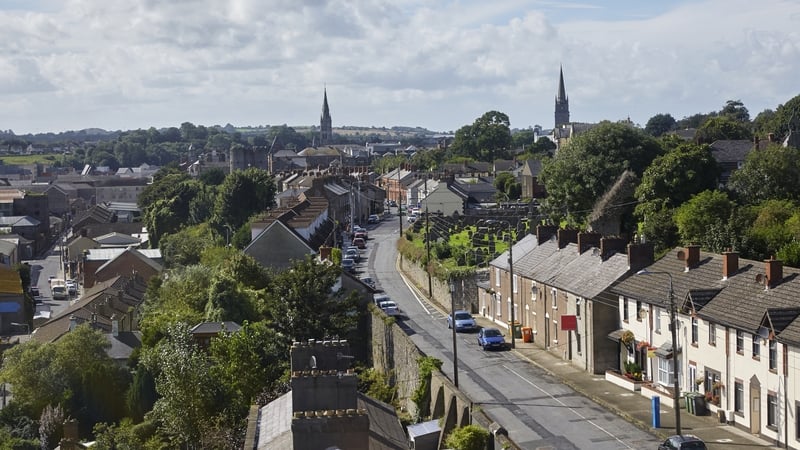

About a third of the Irish population live in towns which have seen massive changes in recent years and can expect more to come
Many typical Irish towns have changed enormously in recent years. A housing crisis means that those towns near big cities are now part of a growing commuter belt as people arrive in search of affordable homes. But housing is just the start of things and towns are facing challenges around such issues as dealing with vacant properties, the impact of climate change, the lack of local development to keep people local and the many problems caused by changing demographics.
What will the Irish town of the future look like and what does it require to thrive? Ronan Kelly discusses all of this with townies Dr Philip Crowe from the School of Architecture, Planning and Environmental Policy at UCD and Dr Susan Hegarty from the School of History and Geography at DCU.
We need your consent to load this rte-player contentWe use rte-player to manage extra content that can set cookies on your device and collect data about your activity. Please review their details and accept them to load the content.Manage Preferences
READ: How to build a new town in Ireland
READ: How to design a transport plan for Enniscorthy and other Irish towns
READ: What a shortage of planners in Ireland means for where you live
READ: How can urban neighbourhoods be made more affordable?
The credits: this episode of the RTÉ Brainstorm podcast was produced by Ciaran O'Byrne, research was by Julia Kennedy and it was recorded by Dave Gibson. RTÉ Brainstorm is edited by Jim Carroll and the assistant editor is Aoife Ryan-Christensen. The series is proudly supported by Taighde Éireann/Research Ireland.
Follow RTÉ Brainstorm on WhatsApp and Instagram for more stories and updates
The views expressed here are those of the author and do not represent or reflect the views of RTÉ
