


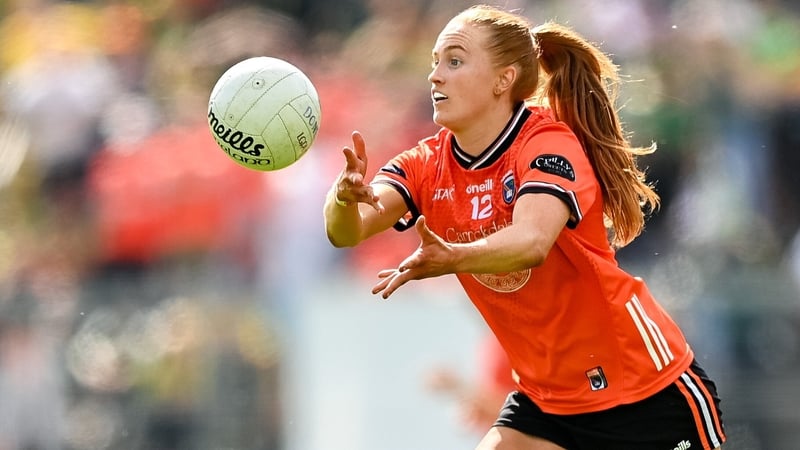
The only thing different is the schedule – and the sunshine. And maybe the shape of the football.
As she prepares for Armagh's Ulster Championship tie with Tyrone in Healy Park this Sunday, Orchard County ace Bláithín Mackin has been comparing her life in Gaelic football with her years spent in the AFLW playing Australian Rules.
Armagh held off Donegal at the Athletic Grounds in a low-scoring affair two weeks ago, and they go to Tyrone on Sunday for a dress rehearsal of the Ulster final - where they will be looking to make it three provincial crowns in a row, having beaten Donegal in Clones last year and the same opposition the year before.
Mackin is all-in with Gaelic football this term having opted not to head back Down Under for a fifth campaign with the Melbourne Demons.
The demands on inter-county players appear to grow larger each year. Mackin sees little difference in the life of a county footballer compared to their counterparts in Oz – the main difference being the absence of a day-job and maybe a more regular feeling of warm sun on your shoulders while you go through it all.
"You're doing a lot of the same stuff in terms of time, gym work and pitch general work, in terms of running load week to week, and your gym exercise is all pretty similar," Mackin told RTÉ Sport this week.
"The main thing is we would do it all on the one day in Australia. You do your gym, your pitch, your meetings, all of that is your day of work. It really is a 7am to 3pm to 4pm sort of a job – on a Tuesday and Thursday for us anyways – in Australia. Your full day Wednesday was a recovery day.
"That is the main difference. You're training in the morning, you're meeting in the morning, you're not working all day and then going to training that night, and then working all day the next day, having to get the gym done that evening.
"That's the cycle of inter-county players, that work, work, training balance. The beauty of over there is the football's your job, you're getting paid to be there, that's the main difference.
"In terms of the actual volume of training, you're doing a lot, inter-county is elite sport, and you're probably doing the same volume of work, but you just have more time for meetings and tactical sessions.
"You do a bit more other sort of sessions, like psychology sessions, you've a bit more random stuff thrown in there as well to fill up the days.
"But in terms of pitch load and that, it's not much different. Even match day, the volume you're covering in an AFLW game is pretty similar to what you'd be covering in an LGFA game.
"Sometimes Gaelic can actually be a bit quicker, depending on your position, like the high-speed running could actually be higher over here than over there."
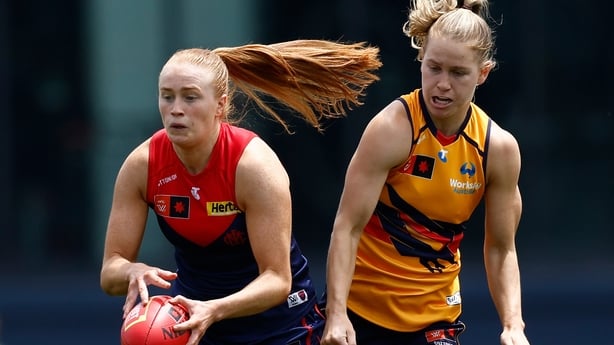
The exodus of talented LGFA stars to Australia in recent seasons could be considered both the biggest compliment to our native games – and perhaps one of the main issues facing the continued development of football, particularly in the women's game, which has been hit harder by the Aussie player drain.
Mackin suggests the rapid development of ladies football in recent years possibly made it inevitable that the Australian game would come calling with cash in hand.
"Gaelic players and LGFA players are so fit now, the fitness levels over here are through the roof," the 2022 Grand Final winner pointed out.
"If you are a part of an AFLW setup or anything, not that it doesn't benefit you, it definitely benefits you, but we're doing so much here. Because we're amateur, you don't actually realise it, but we are basically in terms of how we train, at professional standards.

"And the fitness is, probably, I would say, equal… there's not much in the difference, to be honest. The Irish girls here, and the fellas, they put so much time and effort after work, before work, all these extra hours to get themselves to that level that they would all be fairly fit, like."
The men’s game has been revelling in the refreshed, high-scoring throwback style brought upon by the introduction of new rules designed to return the sport to it’s more traditional roots.
The ladies game adopted similar rules this term as well a more clearly defined tackle rule – something the players have been pleading for for some time – and Mackin is confident the changes will provide a similar boon to the women’s code.
"You definitely see it in the numbers and the high-speed numbers after games compared to last year," Mackin said.
"It was similar to the men's. They noticed a big rise in the high-speed numbers as well. But, it’s definitely, definitely more physically demanding. And now that you're taking the bit of contact as well added to it – obviously that's another dimension of how sore you can be after games.
"It's definitely a harder-hitting game. And more demanding in terms of run volume as well."
Listen to the RTÉ GAA Podcast on the RTÉ Radio Player, Apple Podcasts, Spotify, or wherever you get your podcasts.
