


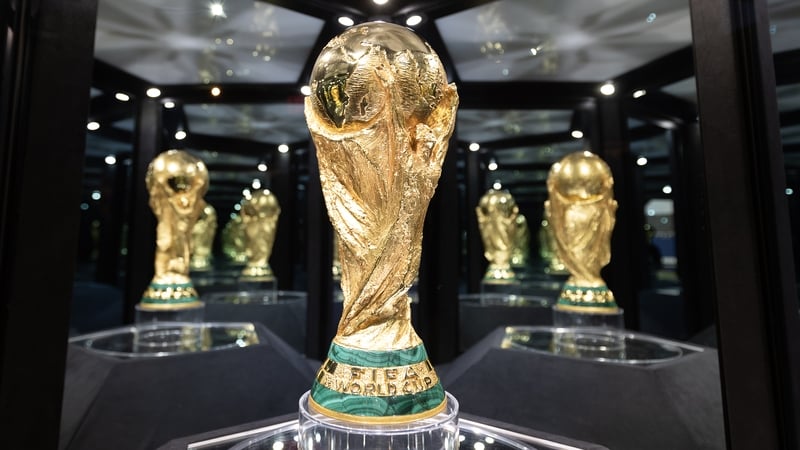

Roll up, roll up, football's greatest show is coming and nothing will derail the spectacle.
Not the war in Iran; not Ebola; not heat conditions considered unsafe to play in; not tickets so hair-raisingly expensive that FIFA is facing a subpoena surrounding the pricing and accuracy of seat locations.
Gianni Infantino, a man with skin thicker than a rhino's hide, says sky-high prices are simply down to supply and demand in an inflated market: "You cannot go to watch in the US a college game, not even speaking about a top professional game of a certain level, for less than $300. And this is the World Cup."
President Donald Trump undermined that remark earlier this month when it was put to him that a standard ticket to the USA's opening group game against Paraguay could cost at least $1,000 (€860): "I'd certainly like to be there, but I wouldn't pay it either to be honest."
Trump, of course, was awarded FIFA's inaugural peace prize by Infantino at the World Cup draw before Christmas, an honour FIFA said was reserved for anyone who has "taken exceptional and extraordinary actions for peace". At the end of the ceremony in Washington, Trump danced along to a performance of YMCA by The Village People.
In 2022, serious human rights concerns dominated the build-up to Qatar World Cup. This time around geo-political, economic and environmental issues clog the news cycle.
Just this week there's been a head-spinning cocktail of developments.
On Monday it was confirmed Iran's squad will stay in Mexico and travel over the border to the USA on the days of their three Group G matches.
Iran take on New Zealand in Los Angeles on 15 June, Belgium in the same city on 21 June and Egypt in Seattle on 26 June. But US authorities don't want them staying in the country.
Iran sought guarantees from FIFA that everyone in their travelling party would receive visas, including those who completed military service with the Islamic Revolutionary Guard Corps (IRGC), which is designated as a terrorist organisation in Canada and the USA.
In March, Trump said it wasn't appropriate for Iran to be in the United States "for their own life and safety".
FIFA, in their efforts to find a base for Iran, approached Mexican President Claudia Sheinbaum.
"We have no reason to deny them the possibility of staying in Mexico," she said.
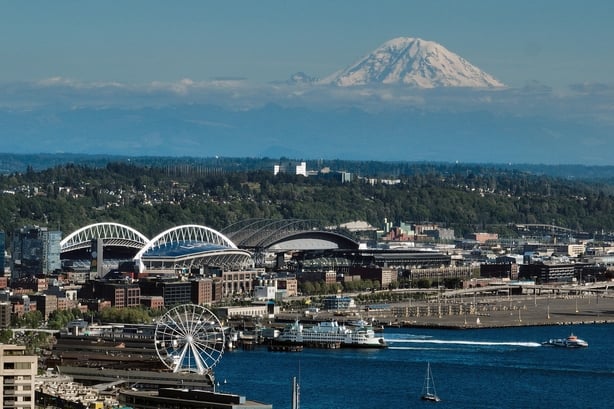
That Iran-Egypt game in Seattle comes with another headache. It takes place during Seattle Pride weekend, and has been labelled a 'Pride Match' (the fixture had been designated as such before the countries involved were confirmed).
A well meaning gesture to promote inclusivity and acceptance has become a cultural flashpoint. Homosexuality in Iran can carry the death penalty. In Egypt, although it is not explicitly illegal, homosexuality is punishable under the country's morality laws.
Both countries are against aligning the game with Pride, saying it would go against their cultural and religious values.
It's an issue that remains unresolved.
Seattle is of several host cities likely to host games in baking hot weather.
Analysis by climate research group World Weather Attribution found that about a quarter of the 104 matches at the tournament might be played in conditions over the safety limits recommended by the global players' union FIFPRO.
That's a much higher risk than, for example, the 1994 USA World Cup, where Tommy Coyne was treated for severe dehydration after the Republic of Ireland-Italy game in New Jersey, and Steve Staunton had to wear a baseball cap during the anthems to avoid getting burnt by the Orlando sun.
FIFA insists it has carried out extensive heat-risk planning. There'll be three-minute hydration breaks in each half, cooling infrastructure for fans and players, and extra medical support.
Meanwhile, with a few extra bucks to squeeze out of the circumstance, broadcasters have been given the green light by FIFA to cut to ads during the water breaks.
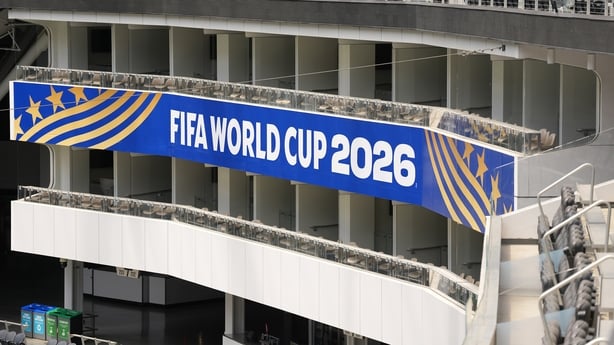
Fans would be forgiven for feeling cynical and tired about the whole thing, but of course millions will still tune in. The games will be round the clock.
Mexico v South Africa kicks off at 8pm Irish time on Thursday 11 June, while Scotland's Massachusetts opener against Haiti on Sunday 14 June is a 2am start. England's clash with Croatia in Virginia on Wednesday 17 June gets going at 9pm, and - much earlier on the same day - the holders Argentina begin their defence against Algeria in Kansas City at 2am. Pico Lopes' Cape Verde rev up their adventure against Spain in Atlanta on Monday 15 June (5pm).
On Thursday, there was relief for Democratic Republic of Congo, whose football federation (FECOFA) confirmed its World Cup delegation has passed US protocols related to the Ebola outbreak.
The World Health Organisation has warned of a "very high" risk of the Bundibugyo strain of Ebola spreading throughout the DRC, but the FECOFA held talks with FIFA and are confident the delegation is compliant with health and safety protocols.
"The Leopards are ready, they are safe, and I have no doubt that the United States will embrace this team," said DRC Ambassador to the United States Yvette Kapinga Ngandu.
Infantino has brazenly declared we're heading for the "biggest, most inclusive and greatest" World Cup of all time.
There may be quality goals and great games, but the whole thing is wobbling under the weight of its own baggage.
A bloated tournament might leave some feeling a little queasy.
