




There are nights in the League of Ireland when you know what the post-match argument will be before the final whistle has gone. Monday night in Waterford was one of them.
Waterford needed a win. Nobody would begrudge them that. Their season had been crying out for a break, Graham Coughlan has only just come through the door, and the Waterford faithful badly needed a night to provide them with some hope.
But there is a difference between a side earning a bit of fortune and a side being handed the decisive moment of the match. Against Drogheda United, it is hard to escape the feeling that Waterford were gifted three points.
The late penalty decision, awarded after Tommy Lonergan went down under a challenge from Drogheda goalkeeper Fynn Talley, was the sort of call that leaves everyone in the ground looking at each other before looking back at the referee.
Waterford won 2-1, Lonergan scored it, leaving Drogheda and Kevin Doherty furious.
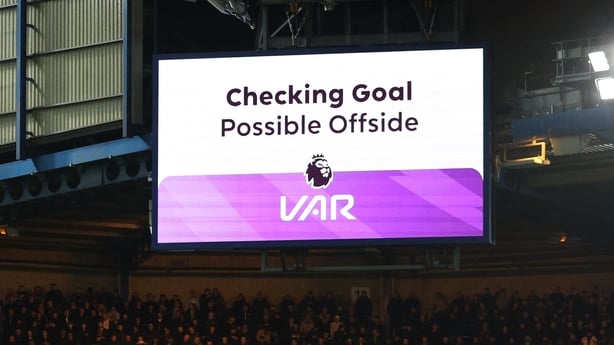
I cannot state this strongly enough - this is not an argument for VAR.
In fact, it is probably the last thing I would ever want to see introduced into the League of Ireland. has not saved football. It has sanitised parts of it, slowed it at times to a crawl, and turned the most instinctive moment in the sport - the celebration of a goal - into a moment of doubt.
Football does not need more screens. It needs better refereeing.
That might sound blunt, and maybe it is, but the standard of officiating has not kept pace with the standard of the game.
The League of Ireland is quicker now than it was ten years ago. Players are fitter, sharper and more tactically drilled. Clubs have pushed standards forward because they have had to.
Full-time environments have improved. Sports science has improved. Analysis has improved. Recruitment has improved. Even at grounds where resources are still stretched, the tempo of matches has changed dramatically.
Watch a League of Ireland game from a decade ago and then watch one now. The difference is striking. The ball moves quicker. The players press harder. Transitions are faster. This difference can be seen at any level of the game.
Tackles arrive at greater speed. Decisions, for players and officials alike, have to be made in a fraction of a second.
The clubs have responded to that challenge. Have the associations done the same with refereeing? It is hard to believe they have.
That’s not to say referees have an easy job. They don’t. It is a thankless role, often performed under immense pressure from players, benches and supporters who have the benefit of hindsight, replays and slow-motion clips.
The tribal certainty within a stadium is another difficult dimension for a referee to manage.
Human error is part of football, and in truth, it is part of the game’s appeal. A corner wrongly given as a goal-kick after a tiny nick off a defender is not a crisis.
A marginal offside call missed in real time is not a scandal. The game lives on opinion, debate and injustice. Half the conversations in pubs and car journeys after matches depend on it.
But there is a line.
The problem this season has not been human error in the normal sense. It has been decisions that should not require the use of VAR to get right. The Waterford penalty is one example. The confusion in the Shelbourne and Shamrock Rovers game, where a goal-kick appeared to be indicated before play was allowed to continue, is another.
Then there are the bookings that seem to be given not for contact, not for recklessness, but for the imagined appearance of force. A player wins the ball cleanly, makes no contact with the opponent, and still ends up in the notebook because the tackle looked dramatic.
That’s not refereeing the game. That’s refereeing the optics of the game.
The decision that led to Waterford's winner 👇 pic.twitter.com/XskyHIID9t
— League of Ireland (@LeagueofIreland) May 18, 2026
Football is a contact sport. It’s supposed to have tackles, collisions, and be physical. Not every strong challenge is a foul. Not every player on the ground has been wronged.
Not every shout from a bench deserves to be validated. Referees should be there to control the game, not to drain its competitive edge.
A frustration of mine is that nobody seems to know if there is a plan for improvement. Are referees being coached to let games breathe? Are they being instructed to punish force more aggressively? Are they being reviewed? Are standards improving, or are we just moving from one weekend of controversy to the next?
I don’t have the answer. But I know the answer is not to throw VAR at a league that is still trying to protect the rawness and rhythm that make it worth watching.
The answer has to be strategy. Better training. Better communication. Better accountability. Better outcomes.
The League of Ireland has moved forward. The players have moved forward. The clubs have dragged standards up year by year.
Now the officiating has to catch up.
The league has progressed and is now a better, faster, more professional product, but too often it seems that the officials are still operating at yesterday’s pace.
Listen to the RTÉ Soccer podcast on Apple Podcasts, Spotify or wherever you get your podcasts.
