




There is nothing better than the business end of a season.
For all the talk of structures, budgets, recruitment models and long-term projects, there came a point on Wednesday night when football stripped itself back to its emotionally charged self.
A ball into the box. A referee staring at a monitor. A hand, or a head, or a shoulder, depending on your colours. And a slotted penalty from 12 yards, provoking a mood change in a great football obsessed country that nearly broke the internet!
Wednesday night in Scotland was one of those nights.
Celtic's 3-2 win at Motherwell, sealed by Kelechi Iheanacho's stoppage-time penalty after a contentious VAR handball decision, has set up the kind of final day that Scottish football has been crying out for.
Hearts had already done their part, beating Falkirk 3-0 at Tynecastle to remain a point clear at the top. Celtic, seconds from handing Hearts the clearest possible route to history, were dragged back from the edge by a decision that will be argued over long after this title is decided.
And that is the beauty and the madness of it. I don’t think it was a penalty. The arm is up, yes, but from the angles available the ball looks as though it comes off Sam Nicholson’s head.
The trajectory of it doesn’t convince me it is handball. It felt rushed and uncertain, and for a decision of that magnitude, uncertainty should not be enough.
VAR was supposed to remove doubt. But as we’ve seen over and over again, it has simply given doubt a bigger stage.
Yet, for all that, the wrong decision has delivered entertainment. Celtic against Hearts at Parkhead. Final day. Winner takes all, or close enough to it. Hearts know a draw is enough.
Celtic know a win retains the title. You could not script it much better, unless you were from the maroon side of Edinburgh and fancied leaving out the 99th-minute intervention altogether.
For Martin O’Neill, this is already some achievement. Celtic have spent large parts of the season looking like a club fighting itself. The fan unhappiness with the board was intense.
That disconnect between supporters and decision-makers was real. Then came the brief and disastrous Wilfried Nancy reign, a spell that seemed to deepen the uncertainty rather than solve it.
O’Neill was not brought back into a calm room. He walked into noise, doubt and a team that looked in danger of letting the season run away from them.
Somehow, he has dragged them to the last day with the title still in their hands.
That is not to say Celtic have been good, or even especially convincing. At times they have looked like a side surviving on muscle memory and expectation. But there can be value in that too.
Clubs that win relentlessly develop habits that are hard to kill. Celtic have won 13 of the last 14 league titles. On Saturday, they can make it 14 from 15. Even in a season of turmoil, the old machine has found a way to keep moving.
That, of course, is precisely what makes Hearts’ opportunity so extraordinary.
The last club outside the Old Firm to win the Scottish title was Aberdeen under Alex Ferguson in 1984-85. Forty-one years have passed since then. Forty-one years of Celtic and Rangers taking turns, sheer Glasgow dominance.
I played in Scotland and even then it felt impossible to imagine that run being broken. Even when Rangers were forced to start again from the lower tiers, Celtic were too strong, too rich and too settled for anyone else to truly take advantage.
There were good sides, and some well-coached sides. But over 38 games, the gap was always too big.
This Hearts team have made people believe differently.
Derek McInnes deserves huge credit. His leadership is clear, their recruitment has been sharp, and they have held their nerve impressively. Tony Bloom’s involvement and the influence of Jamestown Analytics will be watched closely in Ireland, not least by Shelbourne supporters who are hoping they get a return for their investment in the model.
When it works, when the model identifies value before the market catches up, the impact can be transformative.
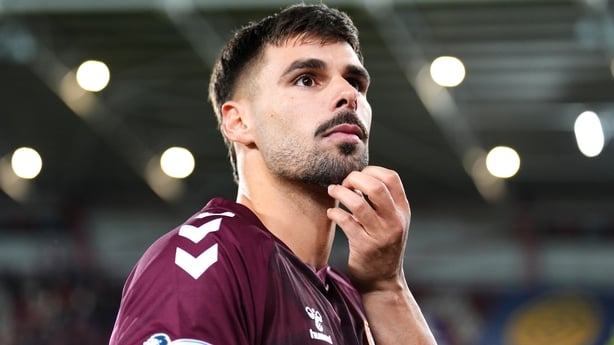
Hearts have found that in Claudio Braga. Signed from Norwegian side Aalesunds last summer, he has become one of the stories of the season, a player whose rise captures what smart recruitment is meant to do: not just fill gaps but improve results.
Still, this feels like now or never.
That might sound harsh on a club sitting top going into the final day, but opportunities like this do not come around often. Hearts have been excellent, but they have also been helped by the underperformance of both Glasgow clubs.
Celtic and Rangers have steadied themselves under O’Neill and Danny Rohl. With their financial power, supporter pressure and institutional standing, it’s hard to imagine either allowing another season like this to unfold so kindly.
Hearts go to Celtic Park carrying more than a one-point lead. They carry 41 years of history and the knowledge that they may never get a better chance.
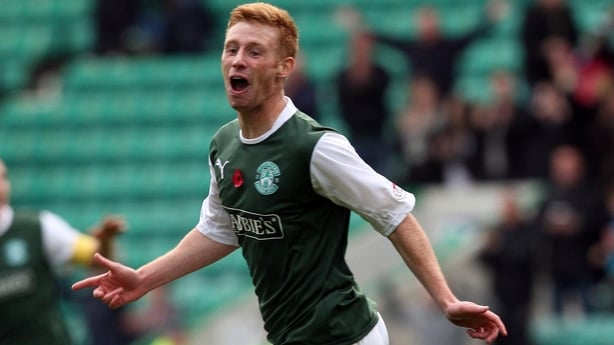
As a former Hibee with a soft spot for Celtic, I know exactly where my instincts lie.
For Scottish football, it would be historic if Hearts did it. Maybe even healthy for the game as a whole.
For me?
I hope it’s never.
Listen to the RTÉ Soccer podcast on Apple Podcasts, Spotify or wherever you get your podcasts.
Watch Republic of Ireland v Grenada on Saturday from 5pm on RTÉ Player. Follow our live blog on RTÉ.ie/sport and RTÉ News app
