


17 November 1993. While Ireland are embroiled in the derby game from hell in Windsor Park, 1,800 miles south in Seville, 10-man Spain are engaged in a heroic stand-off against reigning European champions Denmark.
The permutations are such that, should Ireland fail to win in Belfast, they will need a draw and hope that the game in Spain produces a winner.
Spain's fun-to-say goalkeeper Andoni Zubizarreta was sent off after 10 minutes, handing an international debut to Celta Vigo keeper Santiago Canizares.
Fernando Hierro - not the last time he rescued Ireland - nodded the Spaniards into the lead on the hour mark.
The young Canizares made a string of saves for the 10 men, making his pitch for inclusion in the Gary Mackay Hall of Fame. He subsequently was the Valencia keeper when they reached successive Champions League finals, though his later international career was blighted by misfortune and he missed the 2002 World Cup after dropping a can of shaving foam on his foot.
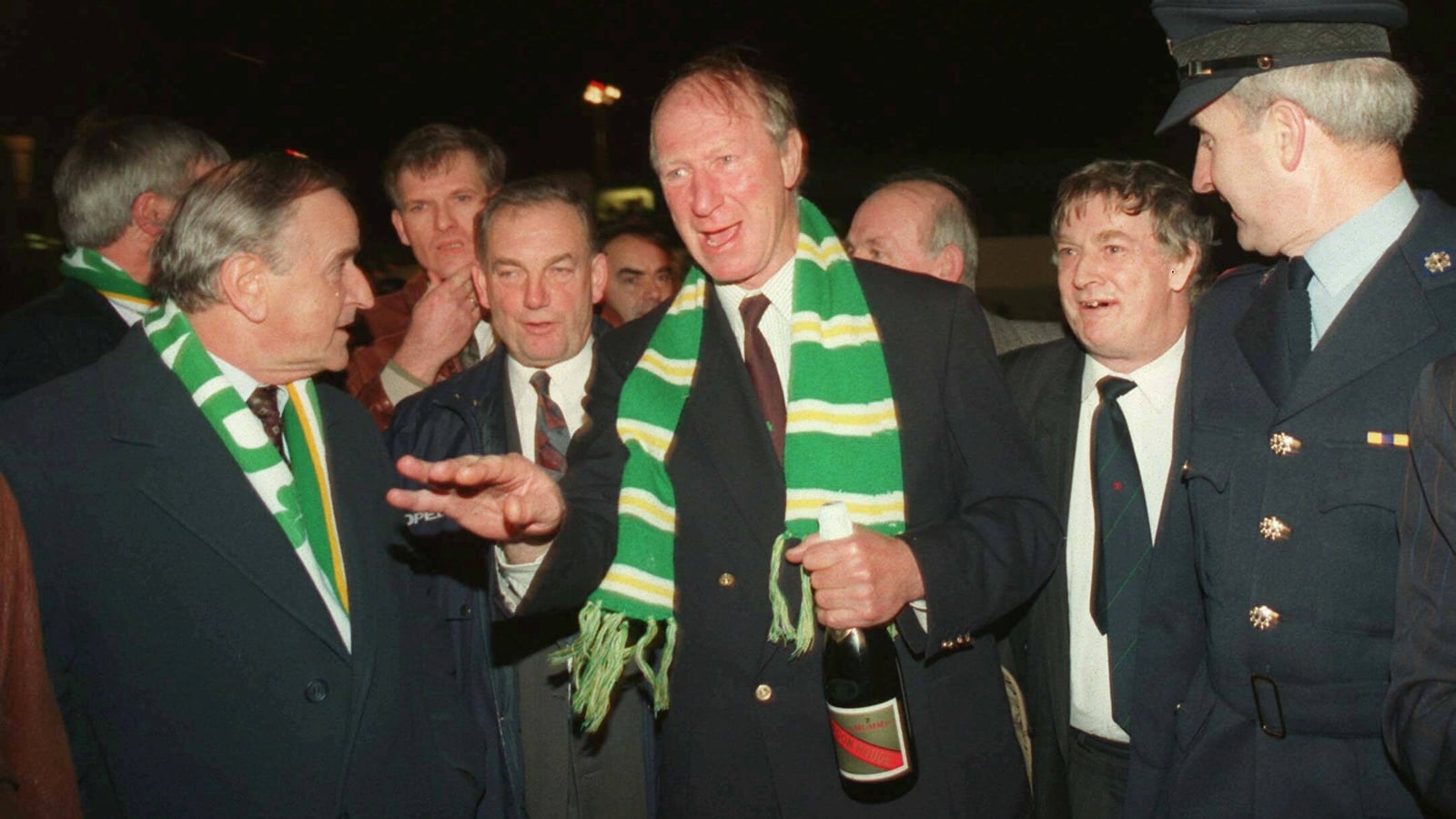
Ireland could have assured qualification with a win but were relieved enough to get a draw and then had a wait to see whether Spain had hung on. The livescore app was unavailable so Jack Charlton spent the post-match barking "IS IT OVA'?" at every reporter and aspiring well wisher who crossed his line of sight.
After hearing the third or fourth breathless reply of "T'is Jack, it is... it is...", he was finally prepared to accept it was over and that Ireland were bound for America. Back in Donnybrook, Billo, Giles and Dunphy poured some champagne for themselves live on air. The team flew back to Dublin airport where Charlton was embraced by Albert Reynolds on the tarmac.
In this instance, the Spaniards, while primarily focused on helping themselves, were also re-paying a 26-year old favour.
In November 1967, an Ireland team whose prospects of progressing had already passed, secured their only ever competitive win in Prague to deny their hosts a spot in the next phase of the European Championships and allow the grateful Spaniards to advance.
"The defeat of Czechoslovakia by Ireland surprised us," the President of the Spanish federation Jose Luis Costa said the following day.
"Ireland's victory is worthy of praise and shows the professional honesty of its players, since they had already lost their hopes of qualifying for the quarter-finals before the last game."
The Czechoslovakians only needed a draw and had won 2-0 in Dalymount six months earlier. Meanwhile, Ireland's ambition was to lift themselves off the bottom of the table for posterity's sake.
Turlough O'Connor, then at Fulham, headed home the winner with four minutes remaining on his international debut to stun the home crowd into silence.
The Spaniards were keen to show their appreciation.
"The Spanish association sent on a crate of beautiful wine to the association," O'Connor tells RTÉ Sport.
"I always remember Eamon Dunphy saying, 'yeah, but we didn't see any of it!' (laughs). We didn't get to sample the wine."
Dunphy, in his book 'The Rocky Road', has a slightly different recall. He remembers that the players were presented with a bottle of Rioja ahead of a friendly in Dalymount the following May. But Eamo had elsewhere established that the FAI had been sent 24 cases of the stuff. "The rest of the Spanish wine," he wrote bitterly, "remains unaccounted for."
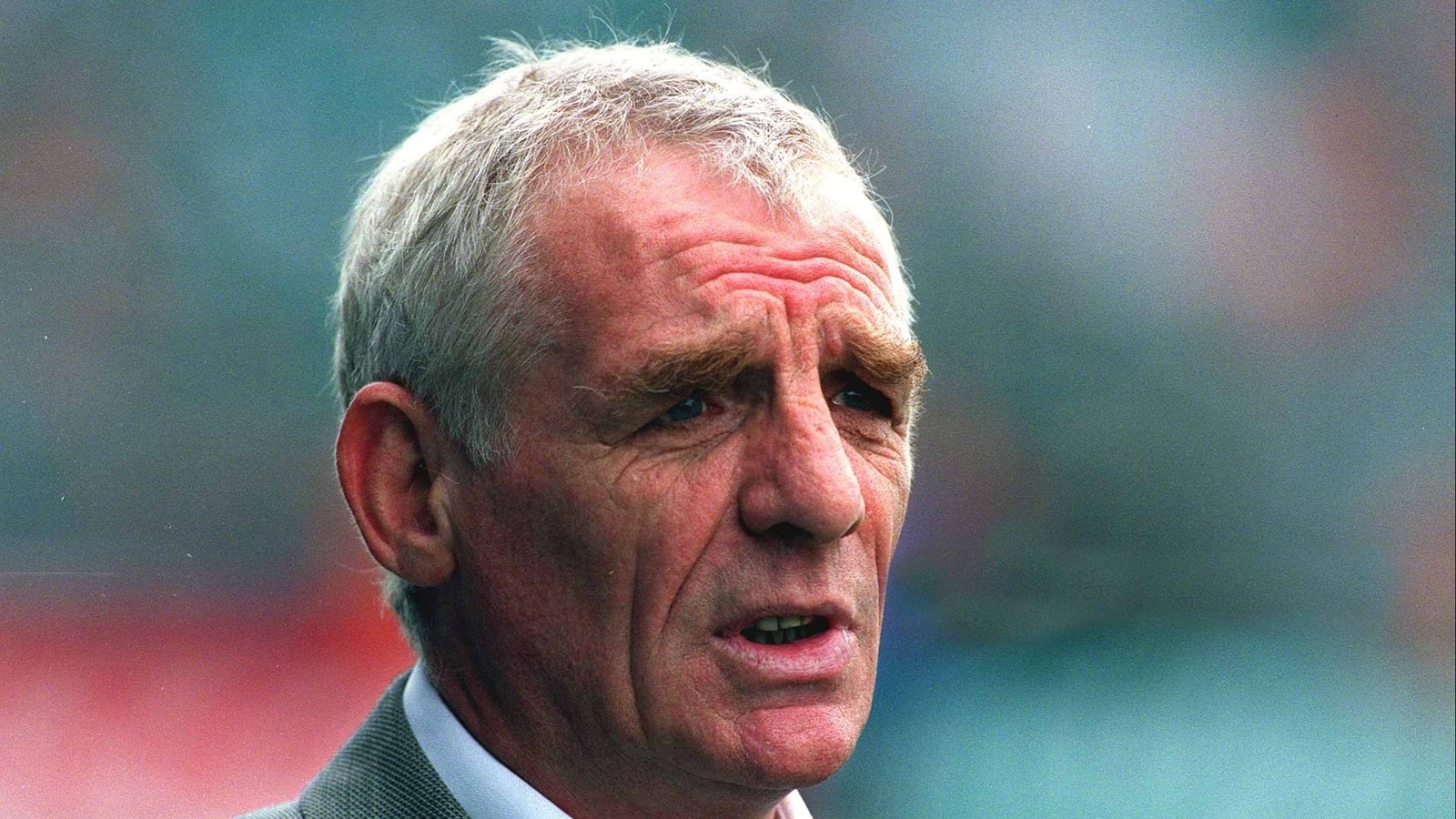
Eamon Dunphy was bemused as to where the Spanish wine went
As it happens, the result didn't actually send Spain into the European Championship finals proper, which was just a four-team affair at the time. It booked their spot in a two-legged April quarter-final, which they lost to England.
An interesting bit of trivia arises here. When was the first time Ireland reached the last eight in the European Championships? Not 1988 but 1964, when they beat Iceland and Austria to reach the quarter-finals of what was then a knockout competition.
The Czechoslovakia-Ireland game was considered something of a formality for the hosts beforehand. They had played in the World Cup final in Chile five years before and were captained by Slovak defender Jan Popluhar, a veteran of that campaign.
Irish fans have been dismayed and somewhat bemused to learn that the Czechs only have a 19,000 seater stadium to offer for the March play-off but it would easily have been able to accommodate the crowd for the '67 qualifier. Officially, just over 7,000 turned up, whether through complacency regarding the result or apathy concerning the European Championships altogether.
Ireland were out of the reckoning following a 2-1 away loss to Turkey, who were considered whipping boys at the time, the previous February.
Jackie Carey had stood down as 'manager' in the intervening months, though the Manchester United great was only ever a figurehead given that the power to select the team was still vested in the infamous 'Big Five'. Charlie Hurley took on the duties of player-manager, such as they were, for the Prague trip.
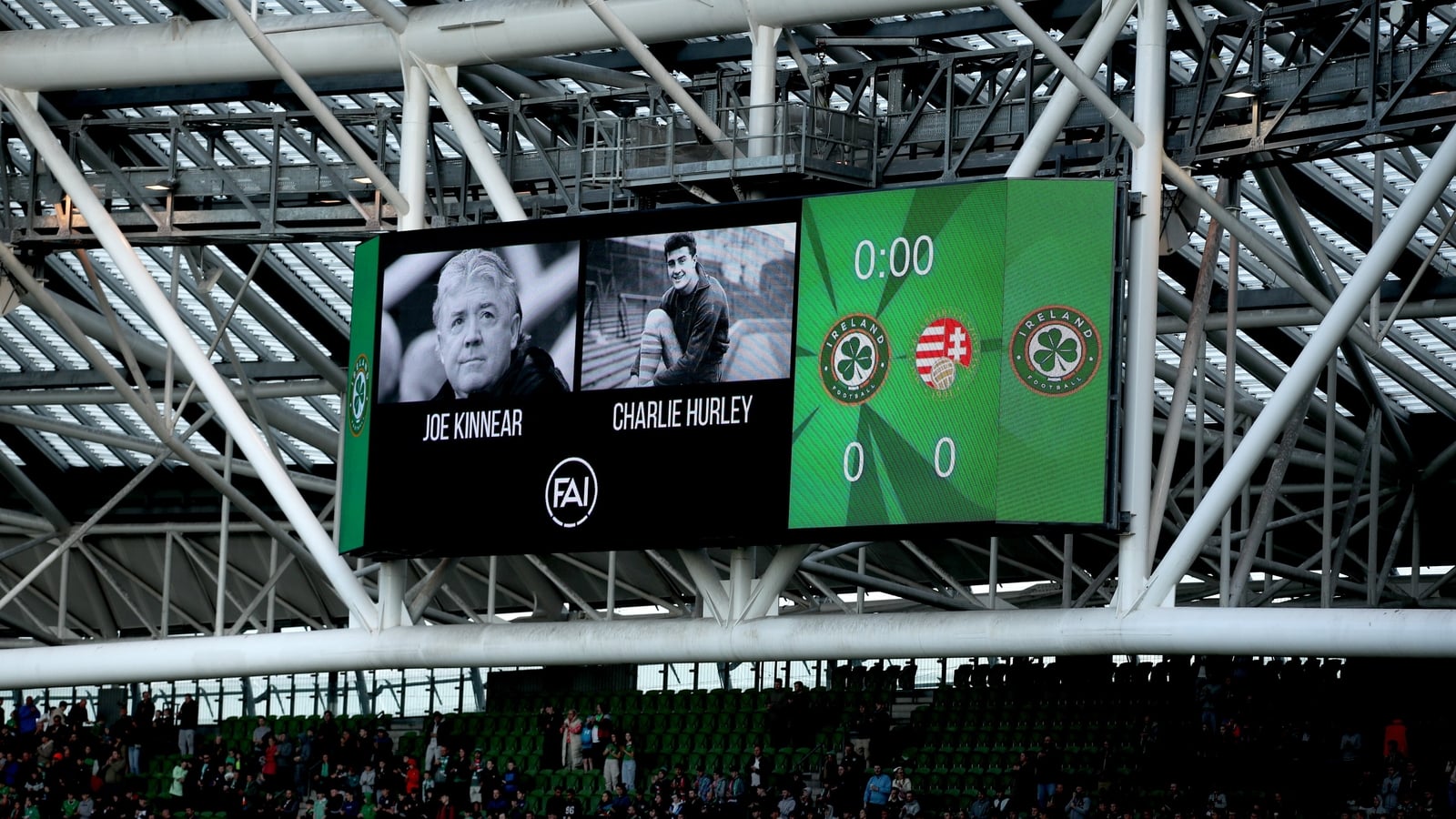
Both Charlie Hurley and Joe Kinnear started in Prague
With nothing much on the game from an Irish perspective, John Giles, Noel Cantwell and Tony Dunne were all unavailable due to club commitments.
Giles' patchy attendance record at internationals in this period was a particular bugbear of FAI officialdom. He said in his autobiography that disillusionment had set in with the national set-up after he discovered that the 1966 World Cup play-off against Spain had been moved to Paris after the association were thrown a few bob for agreeing to the switch.
"Weighing it all up, I didn't need much encouragement or excuse to miss a few matches," he wrote. "I wouldn't be serving my country in any way by going along with this racket."
The midfield consisted of Dunphy, Eamonn Rogers (Blackburn Rovers), Jimmy Conway (Fulham) and Ollie Conmy (Peterborough United) - the latter being the last Mayo man to play for Ireland.
Alan Kelly Snr was in goal in front of a defence which consisted of full-backs Mick Meagan and Joe Kinnear, with Hurley and John Dempsey as the centre-halves, while O'Connor made his debut alongside Ray Treacy up front.
A Dempsey own goal early in the second half caused the Czechs to relax.
"The pitch was icy, barely playable... when the Czechs took the lead, our goose seemed cooked. Needing only a draw, they stopped pushing forward," Dunphy wrote.
"Eamon Dunphy crossed the ball, and Ray Treacy scored a brilliant header to make it one-all," O'Connor recalls.
"In the 86th minute, I couldn't believe it when Ray got the ball off their centre-half Popluhar, who was a huge name at that time.
"Ray stole the ball off him. I was coming in [to the box]. I wouldn't have scored many headed goals in my career. But I got my head to the ball. There was a stunned silence, I would say.
"It was a long four minutes after that but we ended up winning 2-1."
🇮🇪 20 days to go... Czechia v Republic of Ireland in 2026 World Cup play-off semi-final.
— RTÉ Sport (@RTEsport) March 6, 2026
A chance for another generation to dream...#COYBIG #rtesoccer #FIFAWorldCup26 pic.twitter.com/u2khM9XiyK
As the Czechoslovakians stumbled out into the cold night, their plans for the following year derailed, the Irish squad and their travelling party embarked on a hell of a session.
"Back in the Prague Hilton, the blazers were euphoric," wrote Dunphy. "Backs were slapped, hands shaken. Big Charlie [Hurley] held court in the lobby explaining to eager members of the Fourth Estate how he'd done it. Joe Kinnear and yours truly hit the town. Champagne cocktails was our tipple for a delightful evening."
'Irish Heroes Shock The Czechs' read the headline above Seamus Devlin's report in the Irish Times, accompanied by the subtitle 'Avoid wooden spoon and put Spain in the finals'.
That kind of rugby nomenclature was less triggering to football people back in the 60s.
Hurley declared it "the greatest win I've ever been associated with and made me proud of being an Irishman".
The Times also printed the grateful words of the Spanish football chief, reprinted above, in a sidebar.
"Charlie Hurley said to me and Jimmy Conway afterwards, that you're only starting out in your careers but ye'll never have a better win than you've had here tonight," O'Connor says.
"Back in the Prague Hilton, the blazers were euphoric," wrote Dunphy. "Backs were slapped, hands shaken. Big Charlie [Hurley] held court in the lobby explaining to eager members of the Fourth Estate how he'd done it. Joe Kinnear and yours truly hit the town. Champagne cocktails was our tipple for a delightful evening."
Unfortunately, this was no Prague spring for Irish football, quite aside from the fact that the game was in November.
Instead of being the springboard to a brighter future, it precipitated a four-year winless streak.
Dunphy finished his career with 23 international caps but this was his second and final win.
"John Giles often reminds me that between my appearance [on the scene] and Ireland's losing streak, there may be a connection there," he told RTÉ's 'Would You Believe?' programme, with typical self-deprecation, back in 2000.
To be fair to that generation of players, we should put some context on the period here. Ireland's four-year winless streak between the start of 1968 and the end of 1971 (they won their last international of '67 and their first of '72) consisted of 20 games, one of which was abandoned halfway through due to a floodlight failure at Dalymount Park.
It included no games at what we might now understand as fifth and sixth seed canon-fodder. There were no Gibraltars and San Marinos in the fixture schedule. The smallest population countries Ireland played in this spell were Scotland and Denmark.
Nonetheless, it was bleak enough times for the national team, who hit rock bottom at the turn of the 70s.
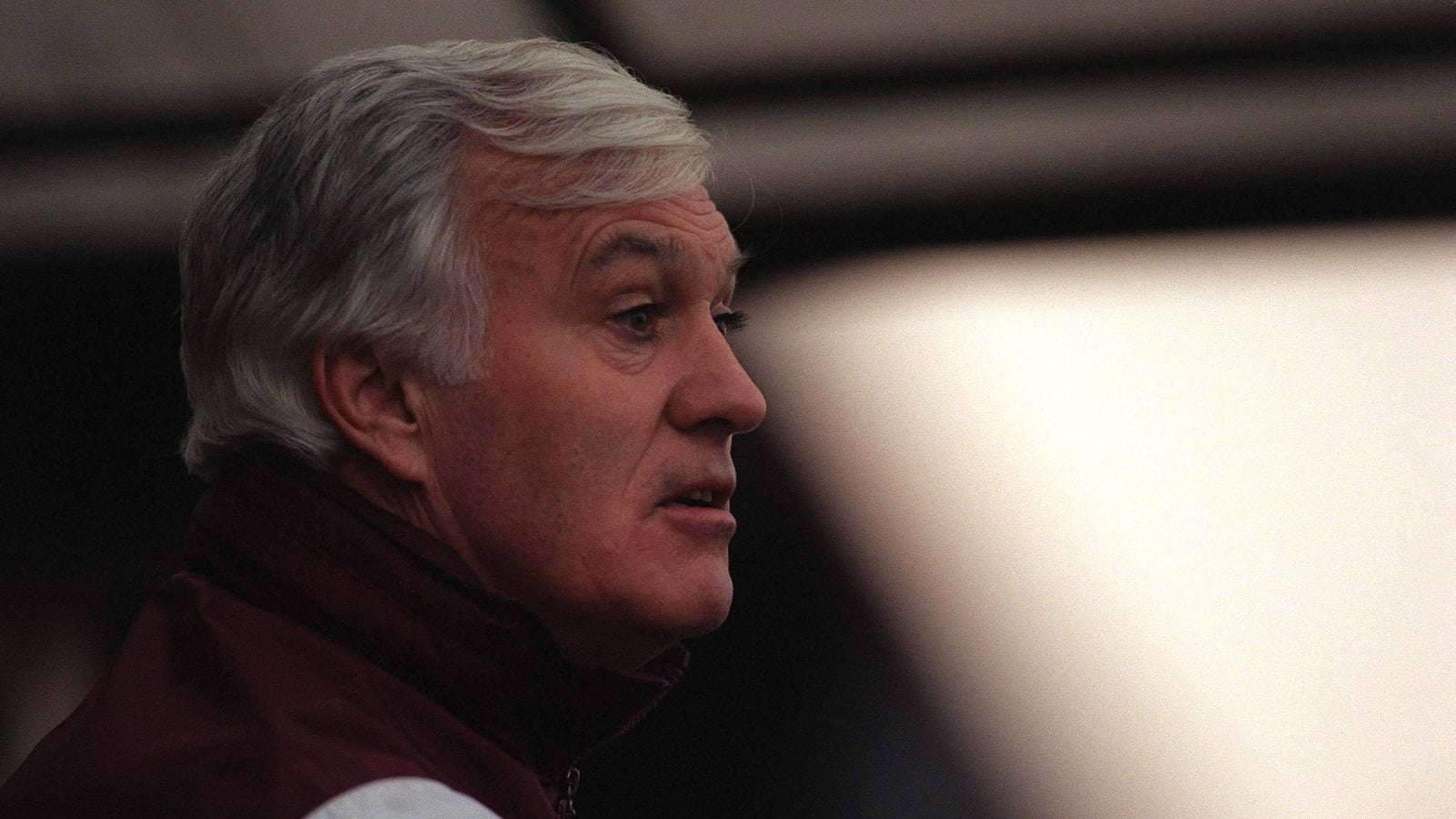
Turlough O'Connor during his period as Bohs manager
In The Rocky Road, Dunphy contended the losing run had its roots in the aftermath of the Czechoslovakian upset and the overly giddy conclusions drawn from it.
"Victory over the Czechs gave the blazers notions. On the journey home some crazed consensus seemed to form: a commitment to the shirt was what mattered. Did Ireland need Giles, Cantwell and Dunne, who turned up for duty when it suited them? Maybe not."
Giles played just seven of the 20 games - a number which included the abandoned game - during that barren four-year stretch, even though he was an ever-present on the Leeds' 1968-69 championship winning team right in the midst of it.
Ireland wouldn't emerge from the trough until 1972. They secured back-to-back wins over Iran and Ecuador in a tour of Brazil that summer and beat France 2-1 in a Dalymount qualifier later the same year.
O'Connor scored the winner against Ecuador, his second international goal from seven caps overall. The Athlone-born striker was back in the domestic league at that point, where he racked up 178 league goals across spells with both Dundalk and Bohemians, winning two league titles with the latter.
While it remains Ireland's only competitive victory in Prague, the nation they defeated no longer exists.
The Czechoslovakians won their sole major tournament at the 1976 European Championships, a tournament now exclusively remembered for the birth of the Panenka. The old nation made their last appearance at a major tournament at Italia 90, where they, like Ireland, reached the quarter-finals, losing 1-0 to the West Germans.
The country was split up relatively amicably - or at least as amicably as it's possible for these things to occur - on New Year's Eve 1992. The impetus came more from the top than the bottom, with a Slovakian separatist party gaining in strength while the free-marketeer Czech faction resented having to subsidise the poorer Slovak region and we're happy to get shot of it. The Czech hero of the Velvet Revolution, and then President, Vaclav Havel was trenchantly opposed to the dissolution and went on regretting it. Most opinion polls showed a majority of both Czechs and Slovaks were of the same mind.
An outfit called 'The Representation of Czechs and Slovaks' saw out the remainder of the USA 94 qualifiers, which had already begun - a temporary, placeholder entity similar to the CIS, which represented the qualified but recently dissolved Soviet Union at Euro 92.
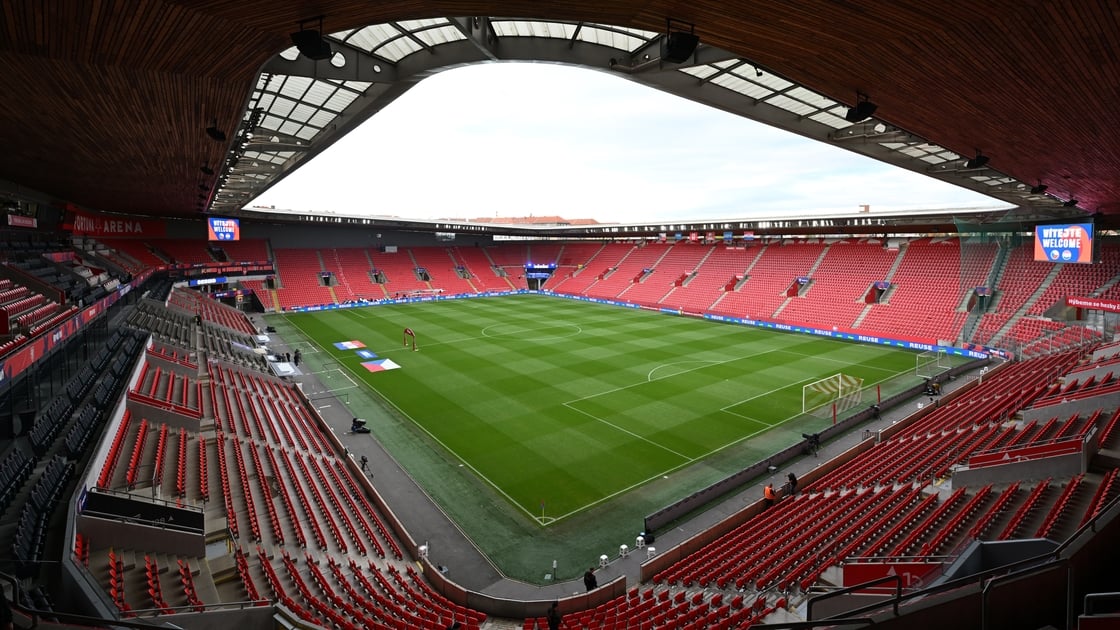
The Fortuna Arena where Czech Republic host Ireland later this month
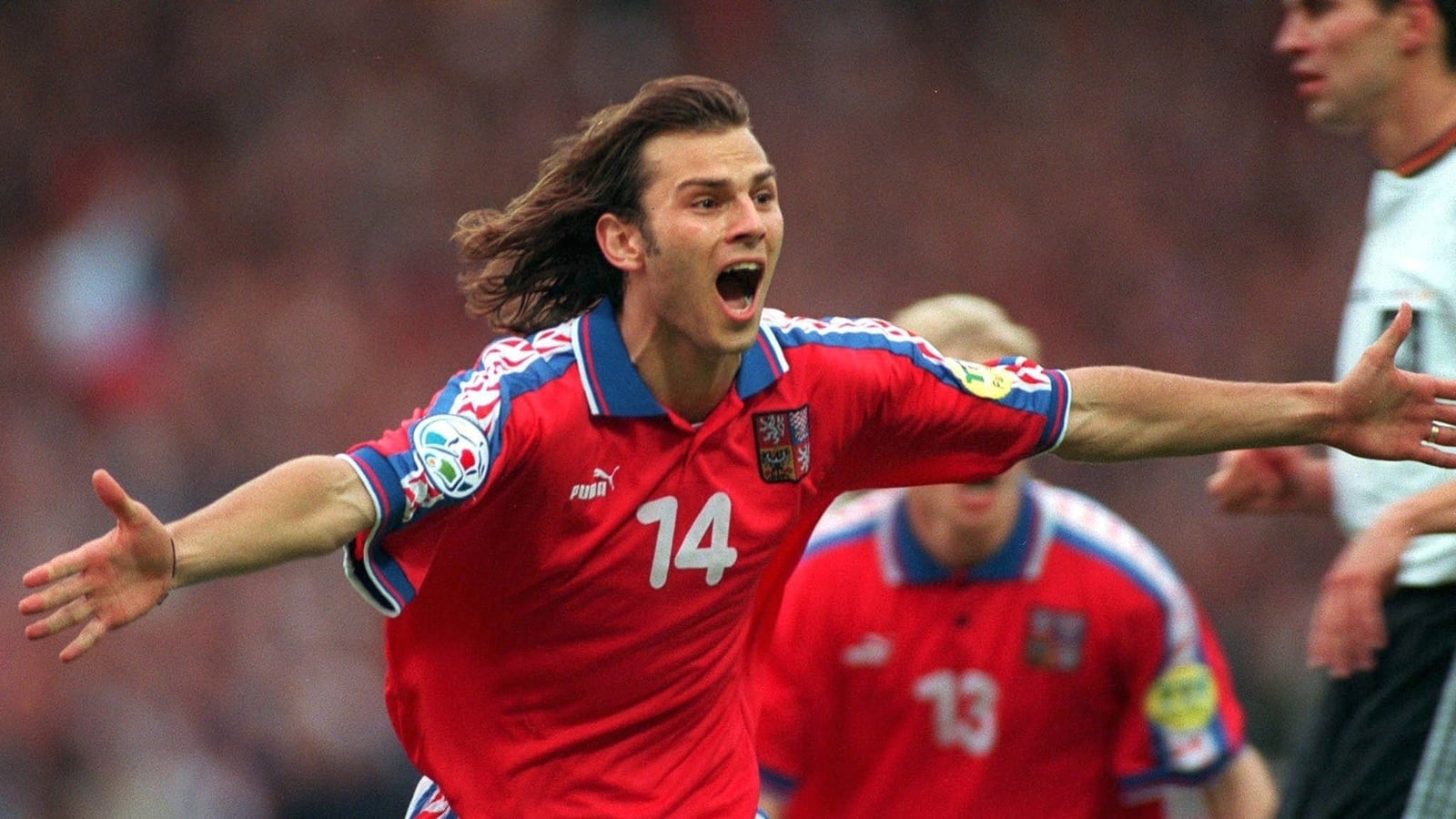
Patrick Berger celebrates putting Czech Republic ahead in the Euro 96 final
The new Czech Republic were less than 20 minutes away from winning the first tournament they entered at Euro 96 only for Oliver Bierhoff's late double at Wembley.
The name Czechoslovakia remains forever lodged in the vocabulary of a certain generation. As late as September 2007, Steve Staunton was still referring to 'the Czechoslovakians' ahead of Ireland's crunch game in Prague - even though Slovakia were also in the same group. (Paulie Walnuts also had them on the brain when he misheard Tony referring to Chechen rebels over a dodgy phone line.)
After a dream-like November, there is a belief that Heimir Hallgrimsson's side are catching the Czechs at a decent time.
As usual after the draw, fans were anxiously plotting their co-ordinates on the shakes-o-meter and the result was coming back 'No great...' A perusal of their form-guide throws up a 2-1 loss away to the Faroe Islands which supporters are hoping is a proper measure of their current status.
There isn't much from the late 60s that Irish football would wish to relive but another Prague victory would be a more than pleasant throwback.
