


That dream that lives in the minds of most young players in the League of Ireland.
In lads that are staying back after training to practice crossing and finishing or doing extra gym work.
The dream, more often than not, involves a ferry or a flight to play across the water.
For so many of our young aspiring footballers, success is measured by that move to the UK. The system over there is viewed as the pinnacle - bigger stadiums, bigger crowds, bigger wages.
And to be fair, for some, it delivers exactly that. Long, distinguished careers across the Championship, League One, League Two and, if they are good enough, the Premier League.
For others, it's a shorter chapter. Ruthless, intense, unforgiving. The conveyor belt doesn’t ever stop.
Most end up back home sooner than planned.
But the ones who establish themselves, the ones who build a career across the water, coming home isn’t as straightforward as it may seem.
When you're fortunate enough to become a senior pro, you can find yourself in conversations about coaching badges, pathways into management, recruitment roles - discussions that only a couple of years earlier you assumed were reserved for staff.
There was a major period in my own career when I thought I would never get back. You become embedded. The money - even in the lower leagues in England - is difficult to walk away from.
The infrastructure, the professionalism, the sheer scale of it all. And if you’re playing regularly, if you’re valued, making a conscious decision to move home doesn’t seem logical.
Yet the pull of home is constant. For me, it was subtle at first, becoming louder as the years went on.
Timing becomes everything. You don’t want to return too early and feel you’ve left something on the table. You don’t want to come back too late either - when the legs have gone and you’re no longer capable of contributing meaningfully to a side that takes a chance on you.
There’s pride involved. You want to add something. You don’t want to simply arrive with a half-decent CV.
For me, the family dynamic was the loudest voice. Wanting your children to grow up around grandparents and family and for them to be educated in Irish schools. That stuff matters more than you can ever imagine when you’re a young fella and signing your first deal over there.
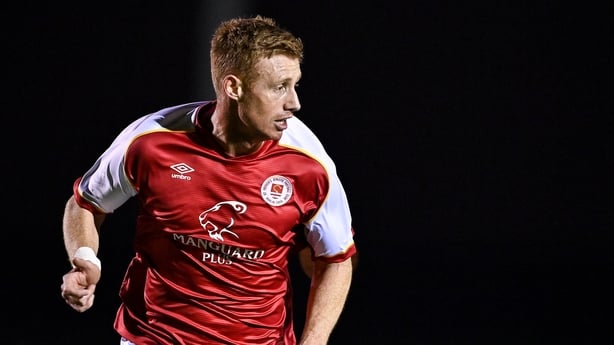
I’ve played for a lot of clubs throughout my career, but moving home to finish at St Pat’s was one of the greatest achievements of my life in terms of personal happiness. Knowing my family were settled. No more sudden house moves. I knew I was finishing my career in the league that shaped me.
Not everyone’s return goes the same way.
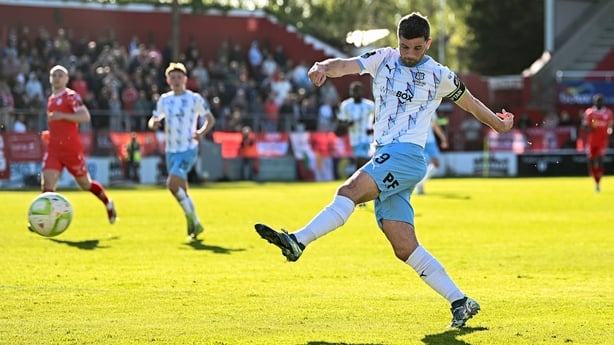
Take Pádraig Amond (above) - a brilliant example of someone who came home and thrived, bringing standards and goals with him. Or Gary Deegan, who returned and gave Drogheda some outstanding years, leadership etched into every performance.
Others, like me, might admit, it didn’t quite hit the heights I’d hoped for. One of my biggest mistakes was not moving my family over immediately.
For the first six months I travelled relentlessly back and forth. It wasn’t how an ageing footballer should prepare.
Recovery suffers. Focus drifts. If I could turn back the clock, that’s the only thing I’d change - bring them from day one.
Then there are the practical surprises.
You expect to clean your own boots and kit again. That’s fine. It keeps you grounded.
But I hadn’t played on an astro pitch in over a decade in the UK. Maybe five training sessions in ten years, usually during heavy snow and they would have been light sessions.
Suddenly you’re playing competitive matches on it. The body feels it. The body aches differently. Recovery is different.
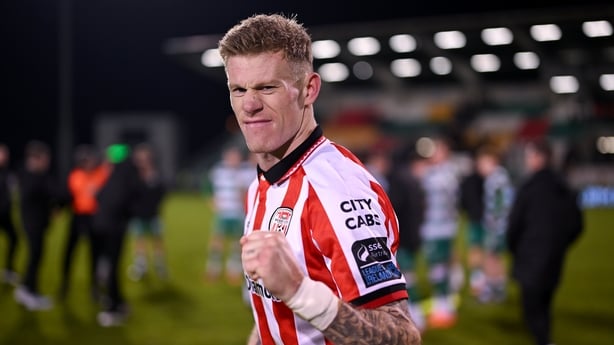
Look at James McClean now at Derry City. Nearly 15 years in the UK, barely a sniff of an artificial surface, and he’s had to put in a shift in his opening four games on an astro straight away.
There’s an adjustment period no one really talks about. The game is played completely differently on an artificial surface.
Expectation is another funny one.
In England, I never felt weighed down by it. Maybe because I was rarely anywhere long enough. Maybe because I was just another player in a huge system.
But local expectation is different. When it’s friends, former team-mates, family in the stand - that can hit differently. That feeling of letting down your own weighs heavier.
And yet, despite all of that, I look back on my move home as a success.
Would I have liked to perform better? Of course. I’ve no doubt the St Pat's fans would say the same!
Every player would. But success isn’t always measured in goals and assists. Sometimes it’s measured in school runs, in seeing your family at matches, in finishing your journey where it started.
The League of Ireland is stronger now than when many of us first left. Facilities are improving. Crowds are growing. There’s a different energy around the place.
For young lads heading across the water today, the pathway home doesn’t have to feel like a step down. It can be a full-circle moment.
The dream will always exist - and it should. Ambition drives standards.
Returning home and pulling on a St Pat’s jersey was my real success, knowing my kids were in the stand, and realising that sometimes the best move you’ll ever make is the one that brings you back to where it started.
Watch Netherlands v Republic of Ireland in World Cup qualifying on Saturday from 7.15pm on RTÉ2 and RTÉ Player. Follow a live blog on the RTÉ News App and on rte.ie/sport. Listen to live commentary on RTÉ Radio 1
