


Another French ex-Arsenal footballer enters the FAI hall of infamy. After Thierry Henry's handball you can now include Patrick Vieira’s plucking of the Republic of Ireland ball out of the UEFA bowl in Brussels as a malign move that has created a diplomatic nightmare for the football association here.
Vieira’s grab placed Ireland into Israel’s group alongside Austria and Kosovo, and into a maelstrom of controversy that will dominate the discourse when the Nations League comes around in the autumn.
There was a 25% chance of Ireland meeting Israel, but it would have been so much easier if it were Scotland, Hungary or Poland that were raised from League B, pot one.
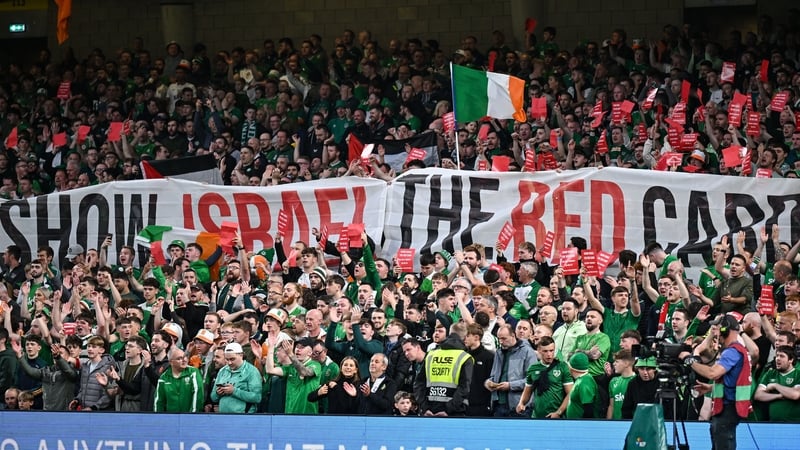
Last November at an EGM in Dublin a motion citing Israel’s breach of UEFA statutes and calling for their suspension from European football competitions was passed by 74 votes to seven.
A UN commission of inquiry report found that Israel had committed genocide during the war in Gaza and the motion highlighted two breaches of UEFA laws, violations which Israel disputes.
Immediately after the draw, in a move that had been clearly planned in advance, the FAI reacted in a statement which said that the Republic of Ireland will fulfil their fixtures against Israel.
President Paul Cooke had made it clear to a gathering of the General Assembly on the previous Tuesday that Ireland would face Israel if drawn against them in the future.
He pointed out that refusal to participate in competitive games on the grounds of protest could risk suspension from the Nations League.
An Taoiseach Micheál Martin says that Ireland fixtures with Israel should go ahead while RTÉ has also confirmed it will broadcast the games should they proceed @Corktod with the latest on the One News pic.twitter.com/Td1at1aeo0
— RTÉ Sport (@RTEsport) February 13, 2026
And of course with the co-hosting of the Euros in 2028, the Republic of Ireland need to stay onside with their UEFA overlords.
That’s perfectly understandable on one level; after all the FAI remains in debt to the tune of €38m and needs the engine of international competition to drive finances at the association.
But the level of support for the motion to sanction Israel from grassroots level among the FAI delegates speaks to the revulsion so many feel at what has been described as a genocide in Gaza.
This has been one of the most emotive issues in Irish life and Irish sport, reflecting the support that so many have shown here for the plight of the people of Palestine, notwithstanding how horrified and revolted people were following the 7 October terror attacks by Hamas in southern Israel.
Political reaction has been swift, with Taoiseach Mícheál Martin saying that the FAI had made the correct decision and that the games should go ahead. He pointed out that there is no official boycott of Israel in Ireland and the focus now is on peace in the Middle East.
However, Sinn Féin TD Joanna Byrne, who is a co-chairperson of Drogheda United and a member of the FAI’s General Assembly, said UEFA is displaying double standards having expelled Russia from all competitions in 2022 following the invasion of Ukraine.
Social Democrats spokesperson on Sport, Sinead Gibney, said UEFA must read the room and ban Israel from taking part in its competitions, but that isn’t looking likely any time soon.
SIPTU trade union members employed by the FAI have raised their serious safety concerns regarding the hosting of the home fixture and have called on the FAI to reconsider its position in relation to fulfilling these fixtures.
And safety could be the biggest factor in all of this as the autumn dates loom larger.
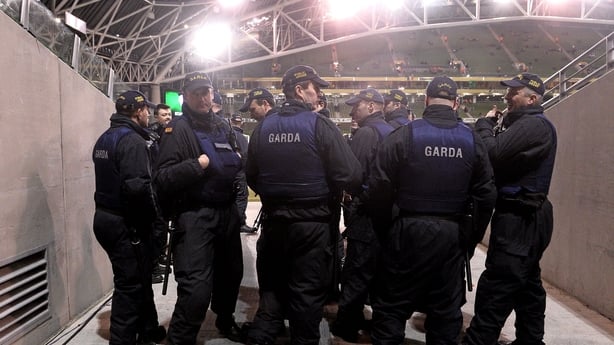
Israel say they have "no concerns" in travelling to Dublin but the safety of the team, delegates and supporters will be uppermost in the mind of the Garda Commissioner as the authorities assess the situation.
Protests are inevitable - possible boycotts by Irish fans for the home and away fixtures as well - and the players and manager Heimir Hallgrimsson will come under immense pressure to take a side.
The FAI remains silent since its post-draw statement in the face of increasing criticism and concern. Is that diplomacy or indecision?
Sport and politics have never been more intertwined and for Ireland this autumn, walking a diplomatic tightrope without falling could well be a better result than three points.
