



The most striking figure to emerge from the League of Ireland's pre-season discussions is not about attendances or budgets. It is about betting.
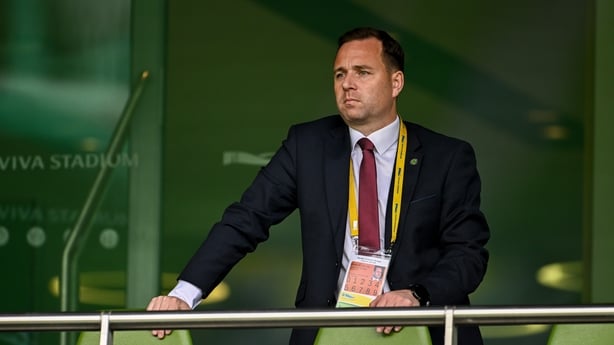
League director Mark Scanlon has said that around €6m is now wagered globally on a single men’s Premier Division match.
RTÉ has previously reported a figure of approximately €5m per game as part of the league’s recent gambling awareness initiative.
Either way, the direction of travel is clear. As interest in the league grows, so too does the volume of money flowing through betting markets linked to its matches.
For administrators, integrity is no longer a peripheral issue. It has become central to protecting the credibility of the competition itself.
A changing risk profile
Football has long been a major part of global betting markets, but scale matters. Smaller leagues can face greater challenges because they combine international wagering interest with more limited financial and staffing resources at club level.
Modern integrity concerns are not confined to attempts to influence full match results. Spot-fixing, the manipulation of a specific event within a game, can be harder to detect and easier to monetise.
In 2024, the League of Ireland acknowledged it was aware of a Garda inquiry after a player reported being contacted in relation to potential spot-fixing. The player declined and raised the matter through established reporting procedures. No charges have been reported publicly in connection with the approach, but the case illustrated how integrity concerns now intersect with law enforcement and betting markets.
The league’s response has increasingly focused on prevention and reporting, rather than solely on punishment.
Monitoring betting markets
One pillar of the integrity framework is monitoring. The Football Association of Ireland works alongside UEFA and international betting integrity bodies to identify irregular betting patterns linked to domestic competitions.
In late 2023, the FAI confirmed it had received information from UEFA concerning unusual betting activity connected to Athlone Town fixtures and began an internal review in line with its disciplinary procedures.
This approach means irregular movements in betting markets can be detected even when no issues appear evident during a match itself.
Integrity is now shaped as much by data as by events on the pitch.
Governance and resources
The challenge is whether all clubs have the same capacity to support these systems.
While the League of Ireland has strengthened its central frameworks, clubs differ significantly in staffing and budgets. Larger clubs can more easily assign compliance or welfare roles than smaller First Division sides.
This raises a governance question. Integrity is a collective responsibility, but vulnerabilities can emerge where resources are thinnest.
Club licensing now plays a role in this area. FAI licensing requirements include integrity-related compliance measures, such as participation in education programmes and reporting structures linked to the FAI Integrity Officer.
Licensing is no longer concerned solely with facilities and finance. It increasingly reflects standards of governance and risk management.
Education and prevention
In January 2026, the League of Ireland launched a gambling awareness and integrity programme for players in partnership with the EPIC gambling harm service.
The programme provides training aligned with UEFA betting integrity standards and FAI regulations and is intended to ensure players understand how approaches are made, what constitutes a breach of rules and how concerns should be reported.
RTÉ reported that the initiative marked the first league-wide programme of its kind in Irish football focused on gambling harm prevention and integrity awareness.
Officials involved in the programme have stressed that education is not only about rules. It is about establishing a culture in which reporting is normalised and players feel supported if they come forward.
Reporting mechanisms
Confidential reporting pathways are central to that culture. The Professional Footballers’ Association of Ireland issues guidance to players on how to report betting-related contact or behaviour that raises concern.
In 2024, a League of Ireland player was recognised for bringing forward information about an approach that prompted a Garda inquiry. Authorities pointed to the case as an indication that education programmes and reporting channels were operating effectively.
The emphasis from both the league and the PFAI has been consistent. Early reporting is viewed as the strongest defence against corruption.
A changing legal environment
The legal backdrop to gambling is also evolving. The Gambling Regulation Act 2024 provides for the Gambling Regulatory Authority of Ireland and a new framework for licensing and oversight across the sector, with implementation being phased.
While the Gambling Regulatory Authority is not specific to football, the legislation points to a stricter regulatory approach to betting, advertising and consumer protection.
For sport, this means integrity is no longer handled solely within football’s own structures. It now sits between football governance, public policy and commercial regulation.
Trust as a business asset
Integrity work rarely attracts attention unless something goes wrong. Its value lies in prevention.
For the League of Ireland, credibility underpins every aspect of growth, from broadcasting and sponsorship to supporter confidence and investor interest. The risk is not simply that a match could be manipulated, but that doubt could take hold about the reliability of the competition itself.
Recent cases have shown that approaches can be reported, betting patterns can be monitored and education programmes can be delivered across squads.
The long-term question is whether these systems can be sustained across all clubs and all seasons as betting volumes continue to rise.
As the commercial profile of the league expands, protecting trust is no longer optional. It is part of the cost of running a modern competition.
