


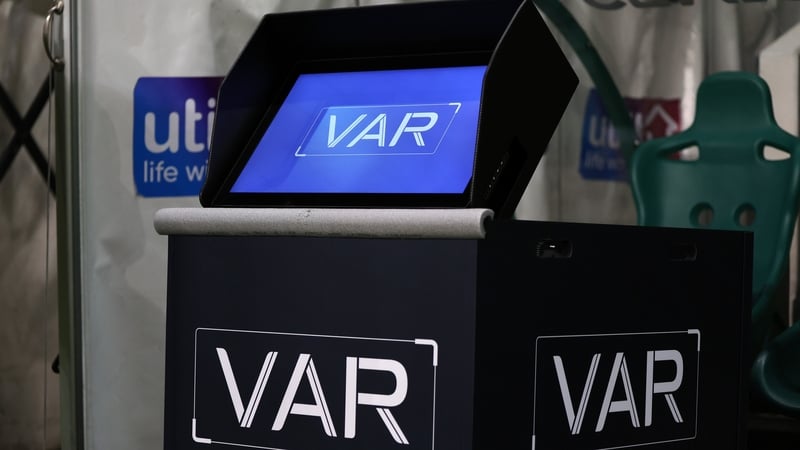
Competitions are set to be given a choice over whether to use VAR to check corner kicks, with some concerned it is a further step towards re-refereeing the game.
FIFA is keen on corner kick awards being checked at the World Cup this summer, with its referees' chief Pierluigi Collina saying last month it would be a pity if an "honest mistake" decided a match at the finals.
For that to happen, a trial would need to be approved by the game’s lawmaking body, the International Football Association Board, either at next week’s annual business meeting in London or at the annual general meeting in Wales on 28 February.
Approval is considered likely but there is resistance from a number of quarters to corners becoming a compulsory part of the VAR protocol, even if FIFA’s trial is judged a success.
Competitions may therefore be able to opt to use technology to check corners, while others can stick to the existing VAR protocol which covers goals, penalties, straight red cards and mistaken identity.
We need your consent to load this rte-player contentWe use rte-player to manage extra content that can set cookies on your device and collect data about your activity. Please review their details and accept them to load the content.Manage Preferences
There have been concerns expressed that opening the door to checking corners could be the thin end of the wedge and lead to matches being re-refereed by VAR, at a time when many feel VAR should be doing less, not more.
Collina has stressed that corner kick checks must be done quickly, and only to correct clear mistakes.
The Italian said last month: "It normally takes 10 to 15 seconds to get the attackers ready. In these 10 to 15 seconds, if the corner kick is wrongly given, everybody has the evidence that the start of play is wrong and to me, it’s difficult to understand (why you would not check) if they have the possibility to see that. Why do we have to hide our heads under the sand and hope that nothing happens on the corner kick which is taken?"
One area where the VAR protocol could be extended at next month’s IFAB AGM is a check on the awarding of second yellow cards.
This would not mean VARs looking out for offences which might have warranted a second yellow card but were not given onfield, and would only focus on overturning second yellows given on the pitch which the VAR may feel was incorrect.
The IFAB is also considering further measures to tackle time-wasting, following on from the success of the eight-second rule for goal kicks out of hand.
Lawmakers may approve trials giving referees the power to place a time limit on a goalkeeper at a dead-ball goal kick and on throw-in takers if they feel too long is being taken.
Time limits on substitutions where there is no injured player may also be trialled with a view to eventually being adopted into law.
Where a team exceeds the time limit – potentially 10 seconds – the substituted player will come off but the new player must wait a period of time, possibly until the first restart after a further minute’s play, before coming on.
Major League Soccer in the United States has conducted its own trials in this area which have been judged successful in cutting down the time substitutions take.
