


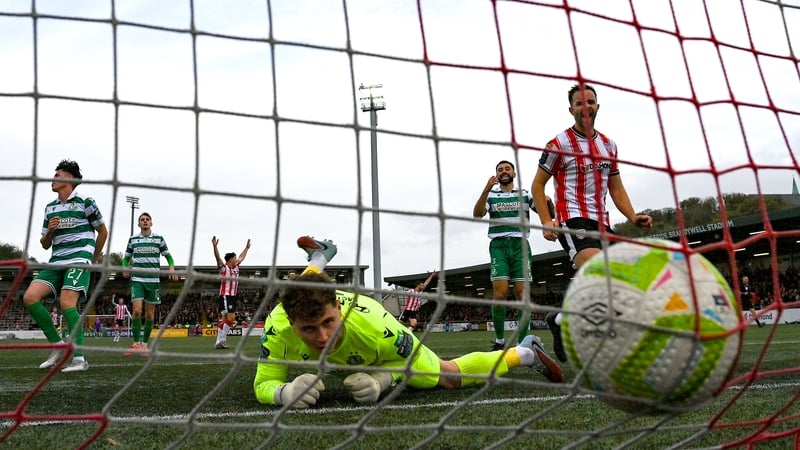

What is rare is golden and goals have become increasingly rare in the Men's Premier Division in the last two years. Every team will be looking to add more goals to their side in 2026 but the question of how to do so is never an easy one.
Only two players in the last seven seasons have scored more than 15 league goals (Aidan Keena 17 in 2022 and Georgie Kelly 21 in 2021) so there is not a long list of proven individual scorers who can be recruited to guarantee goals.
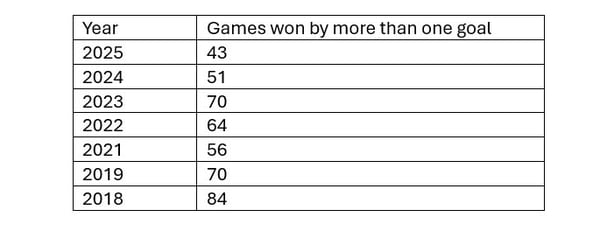
Prior to 2024, in only one full season since 2009 did the average goals per game drop below 2.51 but in the last two years it has been 2.27 and 2.43 respectively. The number of games won by more than one goal has nearly halved since the first year back to a 36-game season in 2018.
The value of goals is shown in how six of the last eight champions were the highest scorers, one of the exceptions was Shamrock Rovers in 2021 who had only one fewer than leaders Bohs. The same holds true at the bottom where the last placed side has been the lowest scorers for eight of the last nine seasons.
So, managers throughout the league will be looking for solutions to increase their sides' scoring power for 2026, but what are key specific areas they may be targeting?
Bohemians – Find a number nine
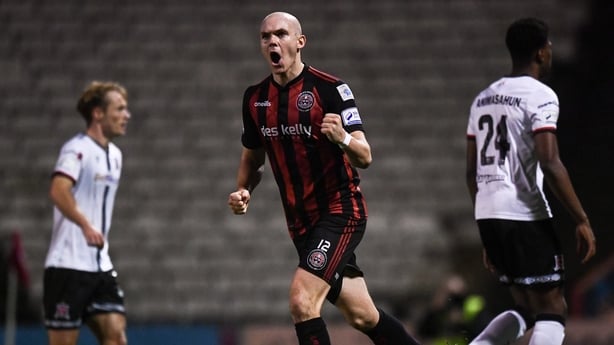
It’s no secret in Dublin 7, that a number nine has been lacking in Dalymount Park. Jonathan Afolabi’s 15-goal season in 2023 and Georgie Kelly’s 21-goal return in 2021 seem a long time ago. The last two seasons have seen no individual score more than eight league goals and, in both years, their leading goal getter came from midfield.
Patrick Hickey has been brought in, but he has nine goals in his two Premier Division seasons and hasn’t always played centre forward. Last year’s gambit with Lys Mousset didn’t pay off so where Alan Reynolds searches this time round remains to be seen.
Derry City – More shooting
Derry City were not a high possession team in 2025, but they still had an average of 53.4%, more than most sides. Despite this they were just seventh for touches in the opposition penalty area at 15.46 and sixth in shot attempts per 90 minutes at 10.14. That’s even lower when just accounting for open play shots where they ranked seventh. They were third best for xG per shot and shots on target, so the priority was on quality of attempts over quantity.
But to bridge the gap to Shamrock Rovers they may have to be willing to take more chances. Especially when their leading shooter Michael Duffy took more attempts than second, third and fourth on that list combined. The league’s player of the year needs more help from his fellow forwards to add to their 52 goals from 2025.
Drogheda United – Headed goals
Drogheda’s goal number will need to improve, despite competing for Europe they only scored one more than Galway United and four more than Cork City in 2025. One specific area that could be improved is with headed goals. They had the fewest in 2024 (4) and the second fewest in 2025 (6).
Teams who play with a back three and two strikers, as Drogheda do, typically score more headers as they always have two in the box with three centre-backs to join in from set-pieces. Even though Conor Keeley had an impressive seven goals, his only headed goal came on the final day of the season.
Dundalk – Early season Oriel Park goals
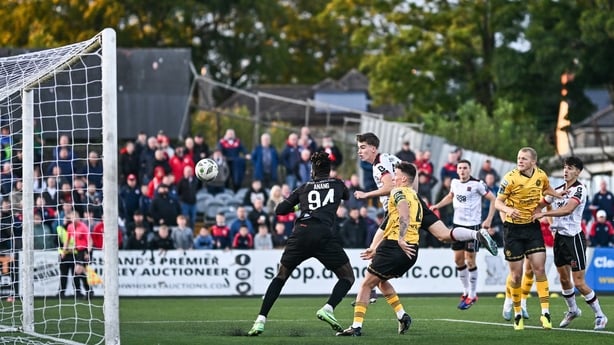
Dundalk return to the Premier Division a very different side from the one relegated in 2024 and they had an impressive scoring season in last year’s Frist Division with 2.05 scored per game in the top 10 over the last 14 seasons. But an important lesson from 2024 can still be learned. They scored only nine goals at home all season, the joint-fewest (with Drogheda United from 2017) in the summer era and they played two fewer games.
Of particular weakness was the early part of the season where they failed to score in their first five games at home, putting them in a difficult spot straight away. They had only failed to score at home 12 times in the seven seasons between 2013 and 2019. With four players reaching double-figure scoring in all competitions last year (Daryl Horgan 13, Gbemi Arubi 12, Dean Ebbe 11 and Eoin Kenny 11) they will hope they have enough options this time around to avoid a similar fate.
Galway United – Better finishing
Galway United’s problem in 2025 carried on from their 2024 return to the Premier Division. For all the quality chances they were creating, they were not putting them away. They had the biggest xG underperformance in 2025 having had the second biggest in 2024.
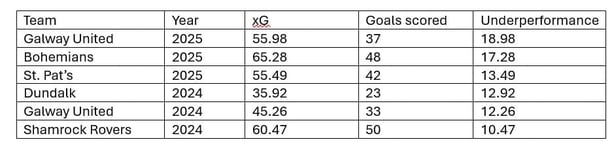
An aspect of particular concern was that Moses Dyer did a lot of their scoring last year (10) but he actually outperformed his own xG (9.05). With Patrick Hickey also gone, there will be new faces required to show more efficiency in front of goal in 2026.
Shamrock Rovers – Early goals

A goal counts all the same whenever it is scored and as defending champions and leading scorers, there is not much to pick at. But it is surprising to see that Shamrock Rovers scored just three times in the first 15 minutes of games, the fewest in the league. This can partially be explained by teams coming to Tallaght and looking to keep it tight and defend early but it kept up throughout the first half of games. They held just 10 half-time leads, only four teams had fewer.
While they were still able to kick on in second halves for wins, a team who must play as many games as they do with very little off-season may want to have some games sewn up earlier to afford more time to rest in the later stages.
Shelbourne – Goals from set-pieces
Shelbourne scored eight more goals in 2025 than in the league winning season but there’s still room to improve. Shels scored just five goals from corners last year and with none from free-kicks that gave them the lowest total in the league from set plays. With this aspect of the game getting more attention recently, Joey O’Brien will want to put in work to improve this.
Shels' top scorer in the league was Harry Wood with nine goals so without a centre forward with a track record of scoring double figures, they will want to get contributions from elsewhere on the pitch. But without a set-piece threat, they are not getting any from centre-back. Paddy Barrett hasn’t scored for two seasons; Kieran Ledwidge hasn’t got a goal in 94 games and Sean Gannon has yet to score in his two years with the club.
Sligo Rovers – Home goals
Only one team scored more away goals than home in 2025 and that was Sligo Rovers (23 to 19). Consequently, they took only took one more point at The Showgrounds than on the road. It was nothing new as in 2024 they were one of two teams (along with Bohs) to score more on their travels. Over the four-year period since 2021, The Bit o’Red have three more away goals than home. Of the teams who have played all those seasons, the nearest difference is St. Pat’s who have 25 more home goals.
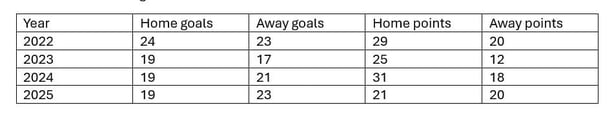
Much of this is down to the counter-attacking style which favours sitting back and targeting chances on the break which is more difficult at home. As a result, they had easily the best xG per shot (0.132) and hit the target with the highest proportion of their shots (39.7% which is 3% more than any other team) but they took the second-fewest attempts per game at just 9.17.
St. Pat’s – Mata replacing Melia
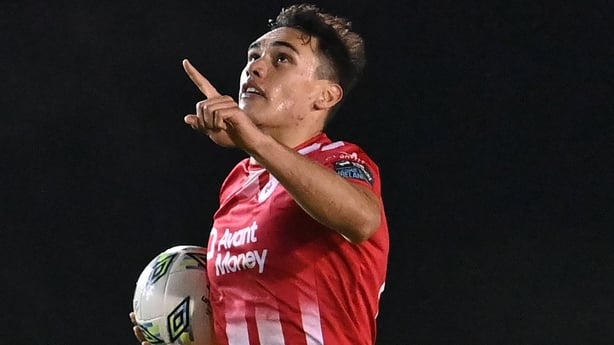
Losing Mason Melia and his 13 league goals will be a big blow but Stephen Kenny has replaced him with another proven goalscorer in Max Mata. Melia’s minutes per goal last year, 199 is only slightly better than Mata’s from his time with Sligo Rovers of 208. But how they score their goals is quite different and may require some adjustment.
During his time in Sligo, Mata scored 16 headers which accounted for 36% of his output. Melia had 23% of his goals come this way in 2025. Kenny has always used wingers so should be able to adjust to suit Mata’s style, but they will need to improve the quality of their crossing. They had the lowest crossing accuracy in the league last season on 28%.
Waterford – Goals from midfield
For Waterford to have Padraig Amond in their team is of major benefit but they have been highly reliant on him over the last two seasons. No one played has contributed a higher proportion of their team’s goal than Amond.
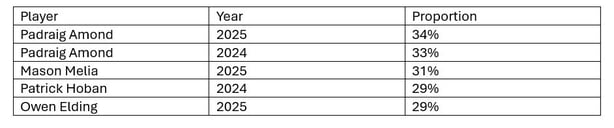
While he did get help from fellow striker Tommy Lonergan with nine and attacking midfielder Conan Nonan’s six, the rest did not contribute. Only Kyle White got more than one from midfield and his last goal was on 3 March. New manager Jon Daly will be looking for others to take the burden off 37-year-old Amond.
Of the top 12 individual scorers from last year, five are into their 30s (Amond, Duffy, Gaffney, Burke, Boyce) and two have already departed the league (Melia, Dyer). That means there will be plenty of opportunities for new players to be the leading lights in front of goal this season.
Attack versus defence is one of the many different battles that take place during a season, and defences will be working on counters to all the above to retain its supremacy of the last two years. Fans will generally favour the offence and be hoping for more goals to celebrate from their beloved side in 2026.
