


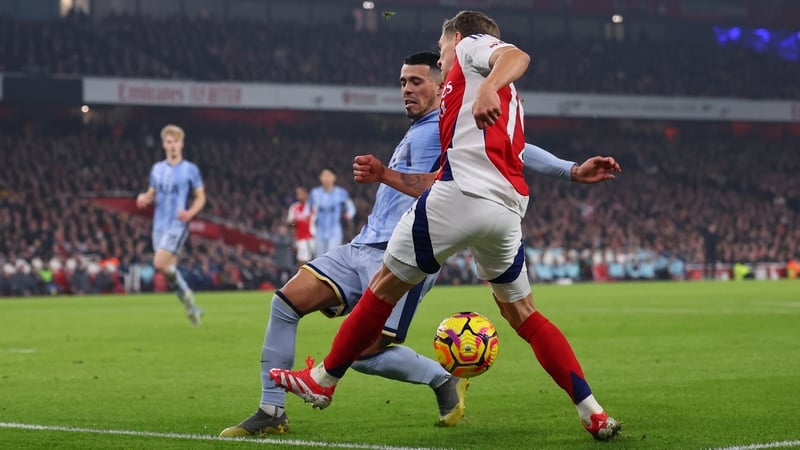
FIFA referees' chief Pierluigi Collina is in favour of using VAR to rule on corner kicks at next summer’s World Cup, saying it would be a pity if an "honest mistake" by a referee decided a match.
It was reported earlier this week that FIFA was keen to extend the VAR protocols to cover corner kicks at the finals in the United States, Canada and Mexico.
For it to happen at this late stage, it would have to be adopted as a trial by the sport’s lawmaking body, the International Football Association Board (IFAB) which is holding its annual business meeting next month.
Collina, the chairman of FIFA’s referees committee, said at a briefing in Washington DC on the eve of the World Cup finals draw that he was open to introducing it.
"I think we should all have as the objective to make correct decisions on the field of play," the Italian said.
"It would be a pity if the result of a competition is decided not by what the players do on the field of play, but by an honest mistake made by the decision-maker.
"This is what convinced us 13, 14 years ago to start thinking how to support referees (with technology). So if we can get this, to me, it’s positive.
"We discuss and we will see what will be the outcome because I think the objective would be worth it."
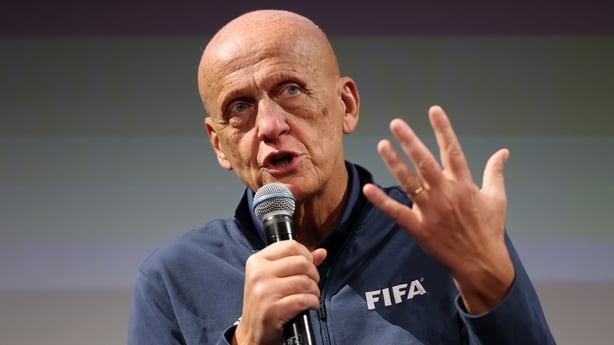
Asked whether checking corners risked further delays to matches, Collina (above) replied: "The main criteria is no delay.
"With corners, there is a physiological delay because when a corner is given, normally you wait until the two centre-backs come up.
"It normally takes 10-15 seconds to get the attackers ready. In these 10-15 seconds, if the corner kick is wrongly given … everybody has the evidence that the start of play is wrong and to me, it’s difficult to understand if they have the possibility to see that (the decision is wrong).
"Why we have to hide our heads under the sand and hope that nothing happens on the corner kick which is taken."
The IFAB announced in October that there had been discussions around giving VARs the power to intervene where a second yellow card has been incorrectly awarded, which could be a further new innovation at next summer’s World Cup.
Football Association chief executive Mark Bullingham, a director of the IFAB, has previously said he is opposed to further extending the VAR protocol, telling the BBC in July that there was no need to expand its remit.
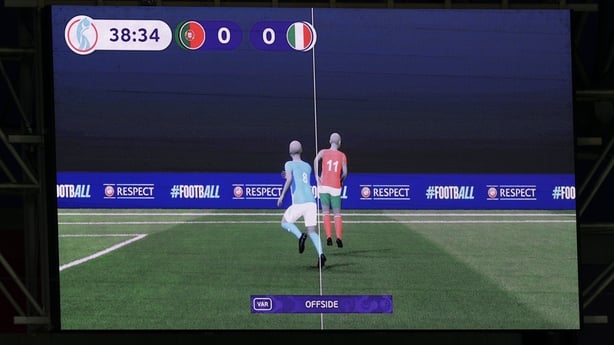
Meanwhile, FIFA is weighing up the introduction of new refereeing technologies and stricter timekeeping rules at the World Cup as it looks to build on trials conducted at this year's Club World Cup in the United States.
Johannes Holzmueller, FIFA's director of innovation, said the governing body wanted to expand use of a referee body camera system and an advanced version of semi-automated offside, both tested at the Club World Cup, but first needed to secure regulatory approval.
"We want to build on the success of the FIFA Club World Cup that happened this year in the US, where we very successfully trialled the referee body camera," Holzmueller said.
He said adding the system - branded "referee with you" - fed images into the live television feed and on to stadium giant screens to show spectators "what the referee saw in that special moment".
"That's definitely something we want to bring forward," he said.
"But of course... so far it was a trial. We need to get the approvals so we can bring that to the World Cup as well."
Any rule changes would have to be approved by the International Football Association Board at its meeting in Wales in February.
Holzmueller said FIFA had also quietly advanced its semi-automated offside technology in the Club World Cup by sending certain offside alerts directly to assistant referees instead of only to the video assistant referee, reducing delays.
"For positional offside, the information was via an audio alert directly sent to the assistant referee... and they could raise the flag," he said.
"So we had not really any longer delay for positional offside."
He rejected the idea that technology was creating a new version of the sport, arguing it was instead restoring the game's traditional flow.
"For us it's always a balance between what we can improve and what is the tradition of our sport," he said.
"Technology can help to support the referees but also support coaches, medical staff, fans... without changing the game."
Additional reporting: Reuters
Watch the draw for the FIFA World Cup 2026 on Friday from 5pm on RTÉ2 and RTÉ Player. Follow a live blog on the RTÉ News App and on rte.ie/sport
