


By Glenn Mason
After almost four months of searching, the FAI and their three hired guns have finally got their man. But just who is Giovanni Trapattoni?
We laughed when John Delaney suggested in the Mansion House that we had a world-class management team; this time around it appears we have. Ireland seem to have followed England's lead by taking the best man available for the job regardless of age, price, association or how many times he pulled on a green jersey.
When Giovanni Trapattoni arrives to take up his position as Republic of Ireland manager, he will bring with him over 45 years' experience of football at the highest level and over 30 of those as a manager.
His record of 23 major titles is among the best in Europe: only Alex Ferguson and Jock Stein have amassed more trophies.
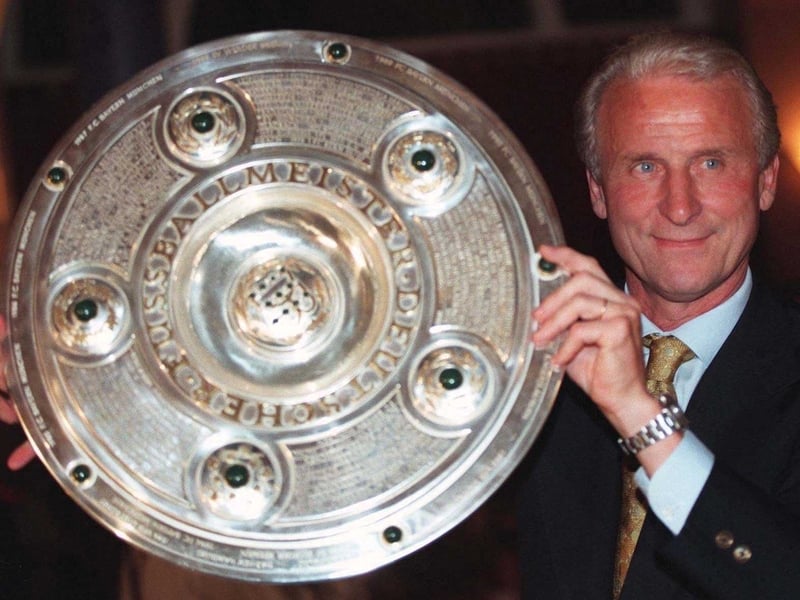
Trapattoni is part of a select band of coaches to win domestic titles in four different countries: seven in Italy with Juventus and Inter Milan, one with Bayern Munich, another with Benfica in 2005 and last year's success with Red Bull Salzburg. Not to mention the complete set of European trophies and World Club Cup with Juventus.
Lucky Omen?
Trapattoni will turn 69 on St Patrick’s Day - a lucky omen perhaps - but, rightly, some have questioned his age. Yet he still retains the passion for football that he had in his youth.
 'Il Trap', as he is known in Italy, still likes to get out on the pitch with the players and thrives on a close working relationship with his squad. He looks fit for his age and so can carry off that old-man-in-a-tracksuit look that is usually only seen in nursing homes.
In the past few days, we have all seen the footage from that Bayern Munich press conference where Trapattoni delivers an invective to the German press in his own form of pidgin German and Milanese dialect.
This enthusiasm for his job manifests itself in his antics on the touchline. Former Lazio boss Sven Goran-Eriksson has said his performance on the line is worth the price of a ticket alone.
Trapattoni is famed for his behaviour during games: banging away at the dugout, often stomping up and down the line muttering to himself and using his famous two-fingered, ear-piercing whistle. In 2002, his touchline antics took on a new form when he carried a bottle of holy water to the bench (his sister is a nun).
He is renowned in Italy for his often incomprehensible TV interviews. Nothing new there. Yet journalists speak of a man with an easy-going attitude and old-school manners, which is a world away from his touchline and training ground persona. He is how Italians like to say 'Buono come il pane' (good like bread).
Glittering Playing Career
Trapattoni's success as a manager was preceded by a glittering playing career with the great AC Milan side of the 1960s. He played a key role in their European Cup victories of 1963 and 1969. In the latter, he nullified the threat of a youthful Johan Cryuff as Milan crushed an inexperienced Ajax 4-1.
Trapattoni’s role as a player was as a defensive midfielder or medino. It was his job to stop others from playing and to give the ball to those on his side that could such as Gianni Rivera. These players were also called francoballatore, for sticking to opponents like a stamp, or the more menacing distruggitiore del gioco.
He brought this into his style of management when he took over the Old Lady of Italian football in 1976 and led them to unprecedented success over the next decade. He tweaked the catenaccio (padlock) form of defence to suit his own needs and it worked to great effect.
 Trapattoni's teams always contained the best Italian players alongside the pick of overseas talent once the ban on foreign players was relaxed in 1980. Hard-tackling players such as Claudio Gentile were augmented by playmakers such as Liam Brady, Zbigniew Boniek and Michel Platini.
Trapattoni once gave an observation of how he saw football. He said: 'Football is like a rose window; you need lots of hard stones and only a few will glitter.'
Azzurri Failure
The one blot on Trapattoni’s copybook was his period in charge of the Azzurri from 2000 to 2004. Italy struggled to and during the 2002 World Cup where they suffered the humiliation of exiting at the hands of co-hosts South Korea in the second round.
Trapattoni’s circumspect tactics were blamed for the exit, although the Italian media, as they are wont to do in such situations, placed most of the blame on poor refereeing decisions.
In 2004, Italy were again on their way home early as they went out of the European Championships at the group stage. This time the media did call for the manager's head. Trapattoni's tactics were labelled 'inbred, maddening and defensive' and one journalist was compelled to write: 'a mad manager who swore, rolled his eyes, attacked people and objects. The whole world witnessed his memorable fit of nerves.'
Even the notoriously divided Italian parliament was united in calling for an end to Trapattoni’s reign. Perma-tan Prime Minister Silvio Berlusconi laid the blame at the manager’s door, saying 'with that character on the bench, our players had no chance of succeeding. Trapattoni made a mistake in pinning all his hopes on a solid defence.'
Portuguese Success
 As his star seemingly began to fade, Trapattoni confounded his critics when he led Benfica to their first Portuguese title in 11 years in 2005. From there, he returned to Germany take over at VfB Stuttgart where his cautious methods did not go down well with some of the players.
Two senior players came out to say that their esteemed coach was too afraid to play attacking football; they were promptly dropped. However, Trapattoni did not last much longer as he received his marching orders during the same season.
Trapattoni’s grasp of English is even poorer than that of his German but one of the reasons for success in foreign climes is his willingness to immerse himself in local culture.
He said: 'You have to use your experience and knowledge of international football if you want to fit in to different cultures. You have to adapt to the language, the food and customs of a country and, above all, never try and improvise when you're trying to be accepted. Otherwise, you end up like a bull in a china shop.'
In Ireland’s case it will be to try to get the most out of talented but under-performing stars. He is not just a coach who barracks players but has shown that he can coax good performances out of them through a softer approach. He once said: 'I would like to be remembered as someone with a human touch. With some players, criticism must be given privately, otherwise you destroy them. You need to be sensitive to the players and the situation.'
Enthusiasm and Professionalism
His appointment can only be viewed as a good thing for both sides. The much-maligned FAI have finally delivered a man capable of taking Ireland to major tournaments on a consistent basis; a man who will bring both enthusiasm and professionalism to the job.
It gives the man himself a chance to once again prove his critics wrong. It is perhaps because of his failure to lead the Azzurri to success befitting a top international team that Trapattoni has taken on the challenge of managing ours.
When the draw was made for the 2010 World Cup qualifying campaign, current Italian coach Roberto Donadoni said that Ireland would present a tough challenge even though we had no football tradition. It now lies with Trapattoni and his backroom staff, whoever they may be, to create one.
Trapattoni's penchant for defensive, though not necessarily always negative, football will surely mean an end to five-goal hammerings from Cyprus and maybe even bring an end to Ireland's shocking away record.
 It should herald an era of respect for the national team and usher in a period where Irish teams can realistically expect to compete on an international stage and not just be happy to make up the numbers.
Here is hoping we hear that whistle echoing across Malahide, Drumcondra and Ballsbridge for years to come.
