


by Glenn Mason
The 26th African Cup of Nations, which kicks off in Ghana on 20 January, promises to be one of the most competitive in the tournament’s history. The continent’s traditional powerhouses will challenge once again but they could be upstaged by some of the new kids on the block.
African football has done much to rid itself of the stereotypes attached to it, such as naïve defending, corruption and poor organisation. High-profile European or South American coaches have brought a lot of professionalism and discipline.
Just as hundreds of players have left their base in the leagues of Europe, there are those who see the competition as a chance to put themselves in the shop window. As a result, hundreds of scouts will descend on Accra, Kumasi, Tamale and Sekondi looking to unearth the stars of the future.
Like many countries in Africa, Ghana is obsessed with football and the country has worked itself into a frenzy in anticipation. The 16 teams should reward them with a feast of attacking football between now and the final on 10 February.
Group A
Ghana, Guinea, Namibia & Morocco
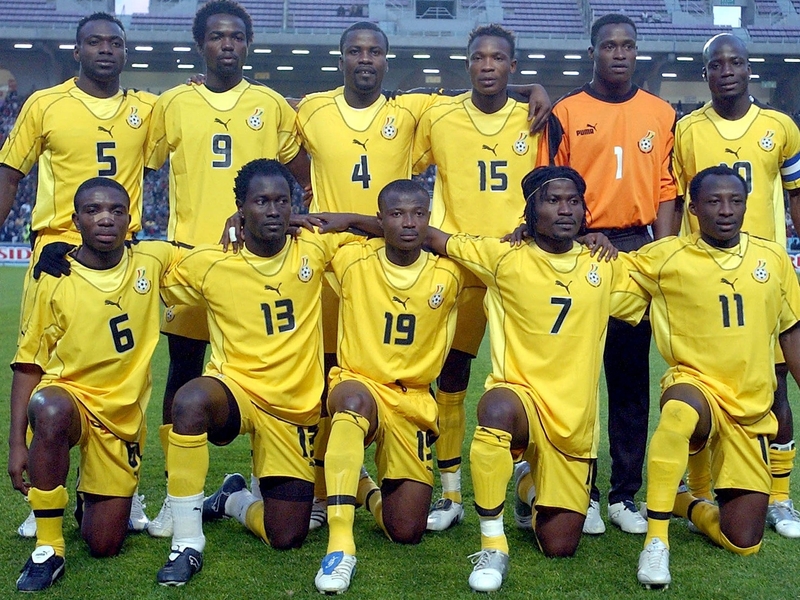
Hosts Ghana are many people’s favourites to win the competition.  They are on home soil and include the likes of Michael Essien, John Pantsil, Asamoah Gyan and Sulley Muntari in their squad. They will be without injured skipper Stephen Appiah but the Fenerbahce star has been included in the squad to act as an inspiration to his fellow players.
Guinea will be something of an unknown quantity to many European fans but their youthful side could cause a surprise. Interestingly, they are ranked above the Republic of Ireland in the latest FIFA world rankings. Striker Pascal Feindouno is believed to be on Rafael Benitez’s shopping list.
It is ten years since Morocco humiliated Scotland in a World Cup game in St Etienne. At the time they were one of the most feared sides in Africa but they have struggled to reach the heights of a decade ago. Youssef Hadji is still on the scene and they should at least challenge Guinea for the runners-up spot.
Namibia are the outsiders of Group A and will do well to avoid embarrassment. They reached their second African Cup of Nations by beating such African heavyweights as Ethiopia and Libya in qualification.
Group B
Benin, Ivory Coast, Mali & Nigeria
Every major tournament seems to have an obligatory ‘Group of Death’ and in Ghana it is the group of Nigeria, Ivory Coast, Mali and Benin. Nigeria are still one of the continent’s powerhouses and coach Berti Vogts can boast the likes of John Obi Mikel, Obafemi Martins, Nwankwo Kanu and Joseph Yobo in his ranks. A real threat if they can avoid off-field distractions and in-fighting.
Ivory Coast have a squad to match that of Nigeria and in Didier  Drogba they possess a world class goalscorer. Their chances were dealt a blow when coach Uli Stielike's son fell into a coma and the German resigned to return home. The Elephants were runners-up to Egypt two years ago and Kolo Toure and Co will fancy their chances of going one step further this time.
Mali have a disappointing record in the competition with just one final appearance to their name. But that could be about to change as they have assembled possibly their best ever squad. Mohammad Sissoko will join the Spanish-based trio of Freddie Kanoute, Seydou Keita and Mahamadou Diarra, although Sissoko has been struggling to pass water of late. Mali will be there to capitalise if one of the big boys slip up.
Benin will be the whipping boys of Group B, even if they did knock out Emmanuel Adebayor’s Togo in qualification. Razak Omotoyossi will be familiar to Drogheda United fans after his performances for Helsingborgs in the UEFA Cup last year. Devoid of any star players, Benin rely on Omotoyossi and 22-year-old captain Romuald Boco who plays for Accrington Stanley. Exactly.
Group C
Cameroon, Egypt, Sudan & Zambia
The Indomitable Lions of Cameroon remain a major force in African football but they are currently a team in transition after the retirement of several key players over the past few years. Any team that contains Samuel Eto’o deserves respect and they may benefit from not being under as much pressure as they have been in previous tournaments.
Egypt embark on their title defence without two of their star  players: Ahmed Mido and Hossam Ghaly. Mido has missed much of the season with Middlesbrough through injury and Ghaly was allowed to concentrate on his stalled club career. Egypt should get out of the group but find it too difficult to win their sixth continental title.
Sudan, the champions of 1970, are competing in their first tournament for 30 years. Their poor form in the run-up to the event suggests that they will find it almost impossible to repeat the feat of the 1970 side. Coach Mohamed Abdallah has drawn his 23-man playing squad from just two clubs: Al Hilal and Al Merrikh.
Zambia have been one of the continent’s most consistent sides of the past 20 years. This is their eighth appearance at the event in nine attempts, which included a final appearance in 1994. They have an outside chance of qualification.
Group D
Angola, Senegal, South Africa & Tunisia
This group is the most open of all the groups, as all four sides will believe they have a chance of progressing.
Angola look the least likely side to make the quarter-final despite easily topping their qualification group. They will rely heavily on midfielder Figueiredo who stood out as their playmaker during their appearance at the 2006 World Cup.
Roger Lemerre won the European Championship with France in 2000 but he will have his work cut out to match that achievement with Tunisia. The 2004 winners should reach the last eight but will have to do it without the injured duo of striker Ali Zitouni and defender David Jemmali.
El Hadji Diouf and his Senegal team-mates caused a sensation when they beat France on their way to the quarter-final of the 2002 World Cup. They might not be the team of six years ago but they still possess players such as Henri Camara, Pape Bouba Diop and Marseille’s Mamadou Niang. Semi-finals at best.
South Africa’s focus is on the World Cup in 2010 when that tournament comes to Africa for the first time. World Cup winning coach Carlos Alberto Parreira will have to do without the services of Benni McCarthy as the Bafana Bafana go in search of their second title. Everton’s Steven Pienaar and Blackburn’s Aaron Mokeana are the star attractions.
