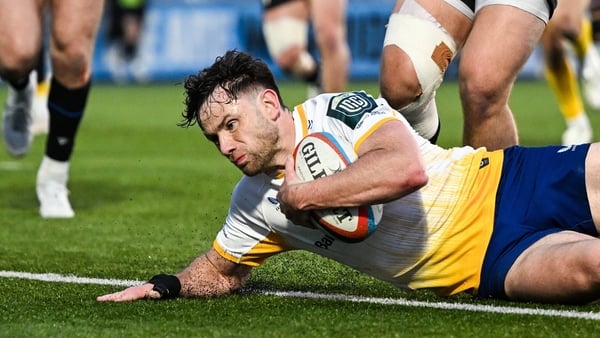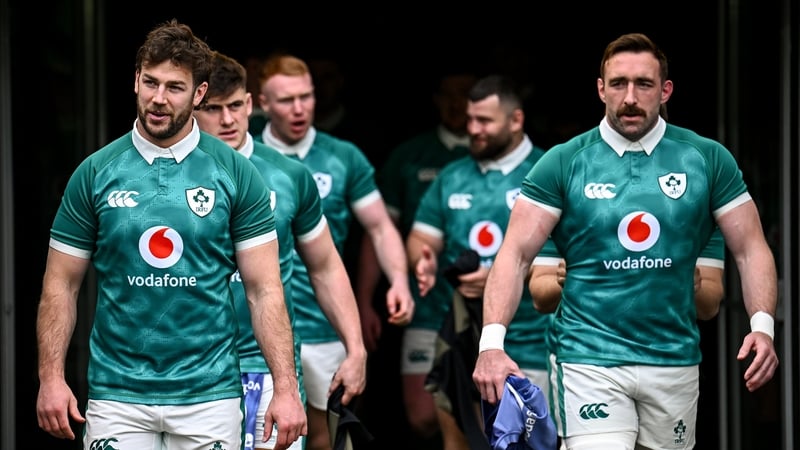

Last week, the RTÉ Archives dug out a news package from 1984, previewing Ireland's Five Nations meeting with Wales at Lansdowne Road.
Ireland had been favourites to pick up their first win of that year’s championship, but their head coach of the time, Willie John McBride, wasn’t so convinced.
"I would never be extremely confident as long as we play with a ball that shape," he told RTÉ in that clip. Ireland lost 18-9 that afternoon, the second of four defeats in a wooden spoon campaign.
Thankfully, wooden spoons have become a thing of the past in Irish rugby, but McBride’s words still ring true.
It may be nine years and 11 meetings since Ireland were last beaten by Scotland, but the bounce of a rugby ball is a fickle thing, particularly in a game now dominated by aerial contests and a fight for the scraps on the floor.
If this Six Nations is anything to go by, nothing is a given.
Who would have thought that after their opening defeats to France and Italy, Ireland and Scotland would be facing off in the final round with their title hopes alive?
Who would have predicted that after hammering Wales 48-7 for their 12th win in a row, England would lose their next three and be scrambling to avoid a worst championship for 50 years?
Even Andy Farrell has acknowledged that this Saturday will have a major say on how we remember this Six Nations from an Irish perspective.

Asked to rate the current campaign out of 10 on Thursday, the head coach was pretty honest in his assessment, scoring it "six-and-a-half or seven" for the opening four games, leaving scope for it to climb up to nine, depending on how the weekend goes.
It’s a long shot that Ireland will be crowned champions tonight. It starts with beating Scotland and setting the clubhouse lead, before needing England to flip the form book around and defeat France in Paris.
For either Ireland or Scotland, this evening will be a long wait, with a gap of roughly six hours between full-time at the Aviva and the final whistle at Stade de France.
Whichever side is waiting for that final game, they’ll at least have a Triple Crown beside them for company, and something tangible to hold for their efforts in the championship.
For Ireland it would be a fourth Triple Crown in the last five seasons, but for Scotland under Gregor Townsend, it would be a major breakthrough.
Even allowing for the strides Scotland have made under the former out-half, they’re yet to finish higher than third since he took charge in 2017.
They haven't won a title since lifting the last-ever Five Nations in 1999, while their wait for a Triple Crown goes all the way back to 1990, three years before Townsend even made his debut as a player.
They’ve become Calcutta Cup specialists, and as shown in their sensational 50-40 win against France last weekend, they have the talent to beat almost anyone on their day.
'There's no second chance here' - Captain Caelan Doris wants Ireland to start quickly against Scotland #RTESport #RTERugby pic.twitter.com/S6YIWpU6hH
— RTÉ Sport (@RTEsport) March 13, 2026
Their problem, however, is having their day consistently, and having their day against Ireland.
Farrell and his fellow coaches and players have done their best to talk down their dominant record in the fixture. The head coach said their 11 wins in a row against Scotland would be "irrelevant" this weekend.
While they’ve talked down their own dominant record, they’ve talked up their opponents at every available opportunity, and refused to bite at the suggestion from Scotland wing Darcy Graham that they are "there for the taking" this weekend.
"He's entitled to his opinion first and foremost," Farrell replied, when presented with those comments.
"They were outstanding last week against France, and we've been preparing for another Scottish performance like that.
"We know that we'll have to be at our best to beat them, as they're a side that we've always respected."
While the Ireland coach insists the past is irrelevant in this fixture, it does offer a window into what Ireland need to do to maintain their winning run.
The common thread through much of those 11 previous games has been forward dominance; controlling territory and possession and dictating the terms of engagement.
With the majority of Scotland’s weapons coming behind the scrum, Ireland have previously removed Finn Russell and his backline from the equation; in the last five meeting of the sides, Scotland are averaging just over 11 points per game.
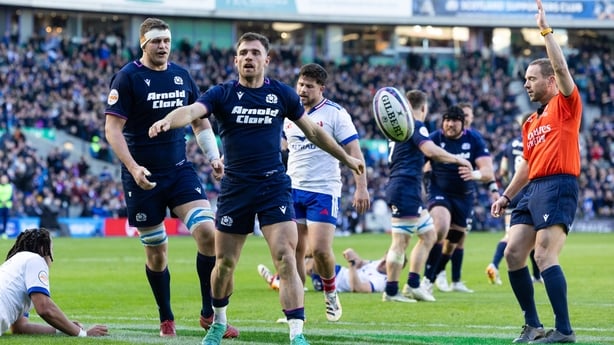
Through the opening four rounds, Ireland lead the championship for dominant carries with 91, while their gainline success rate of 50% is a good deal better than their opponents (39%).
Both sides have been dealt a blow this week with the loss of a British and Irish Lions lock, with Ireland’s James Ryan ruled out due to a calf injury, while Scotland’s Scott Cummings also misses the game, as well as his second row partner Gregor Brown.
The loss of Cummings and Brown will be a major blow for Towsend’s side, but their forwards showed remarkable efficiency at Murrayfield last week, winning 100% of their 125 rucks, helped by powerful running by Pierre Schoeman, Jack Dempsey and Matt Fagerson, as well as their captain Sione Tuipulotu in the centre.
So dominant were they in possession, they didn’t need any Rory Darge heroics without the ball, with their openside flanker still leading the championship with eight turnovers won, six of those coming from jackals at the breakdown.
At the setpiece, both sides have struggled with their scrum. Ireland’s 82.6% record on their put-in is only better than the Scots on 81.8%, even with Scotland winning five out of five on their own ball last week.
Similarly, Scotland reversed their lineout issues a week ago, winning 14 from 15, but that will have been scrutinised heavily by Paul O’Connell, whose pack lead the Six Nations with five lineout steals.
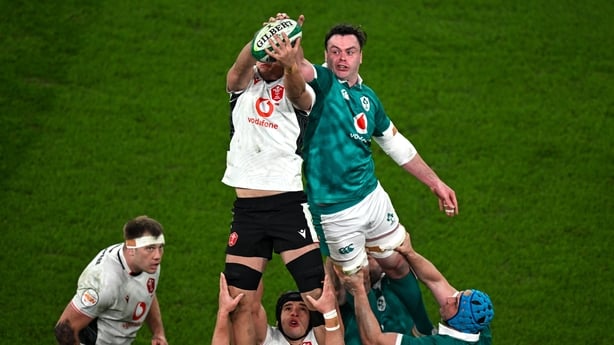
Defensively, Ireland have improved drastically as the championship has progressed, allowing just 1.9 points per opposition entry to their 22, the best in the championship.
That figure does come with a health warning, however, with only Wales allowing more entries to the 22 than Ireland. Giving this Scottish side similar access is unlikely to have similar results.
While Scotland lost their starting locks, that loss was offset by Kyle Steyn being cleared to play after suffering a bad cut on his leg while trying to prevent Antoine Dupont’s second half try last week.
With Steyn fit, Townsend has made three changes to his side, with Grant Gilchrist and Max Williamson starting in the second row, and Zander Fagerson restored at tighthed prop, D’Arcy Rae dropping to the bench.
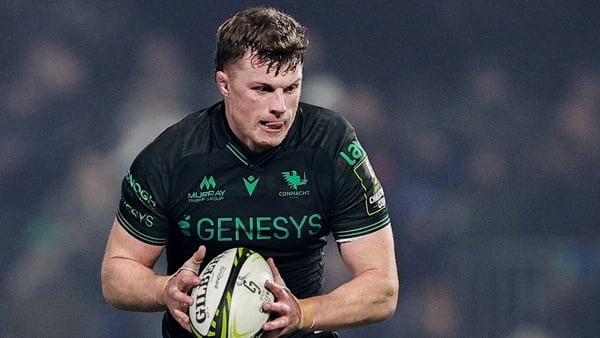
Ryan’s absence for Ireland means it’s straight swap for Joe McCarthy in the second row, and Connacht lock Darragh Murray drafted into the subs bench for his championship debut.
The 24-year-old, who was initially meant to be just a training panellist for the pre-Six Nations camp in Portugal, has stayed with the squad since then, and has been credited with a lot of the behind-the-scenes improvements in the Irish lineout over the last six weeks.
Elsewhere, Dan Sheehan, Josh van der Flier and Tommy O’Brien come into the side, replacing Rónan Kelleher, Nick Timoney and Jacob Stockdale.
The third quarter has been a lucrative period for Scotland in this championship. The 20-minute block after half time has been where Townsend’s side have scored 45 of their 122 overall points, and it’s also been when they’ve shut out the opposition, giving up just 12 of their 101 conceded.
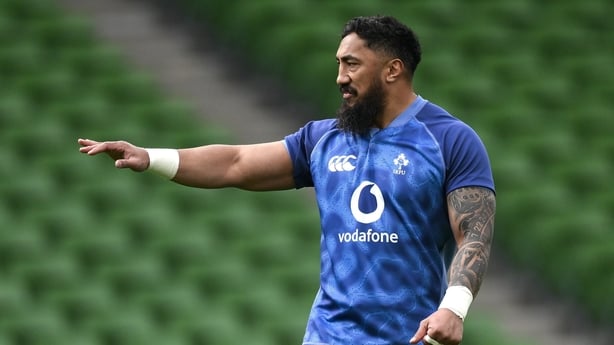
With that in mind, expect Bundee Aki (above) to be primed for a major impact early in the second half.
The Connacht centre, who missed Ireland’s opening three games of the championship due to suspension, has been given a shot at redemption by Farrell for this Triple Crown decider.
He’ll be eager to make up for lost time.
Verdict: Ireland
Ireland: Jamie Osborne; Rob Baloucoune, Garry Ringrose, Stuart McCloskey, Tommy O'Brien; Jack Crowley, Jamison Gibson-Park; Tom O'Toole, Dan Sheehan, Tadhg Furlong; Joe McCarthy, Tadhg Beirne; Jack Conan, Josh van der Flier, Caelan Doris (capt).
Replacements: Rónan Kelleher, Michael Milne, Finlay Bealham, Darragh Murray, Nick Timoney, Craig Casey, Ciarán Frawley, Bundee Aki.
Scotland: Blair Kinghorn; Darcy Graham, Huw Jones, Sione Tuipulotu, Kyle Steyn; Finn Russell, Ben White; Pierre Schoeman, George Turner, Zander Fagerson; Max Williamson, Grant Gilchrist; Matt Fagerson, Rory Darge, Jack Dempsey.
Replacements: Ewan Ashman, Rory Sutherland, D'Arcy Rae, Alex Craig, Magnus Bradbury, George Horne, Kyle Rowe, Tom Jordan.
Referee: Luke Pearce (RFU).
Listen to the RTÉ Rugby podcast on Apple Podcasts, Spotify or wherever you get your podcasts, and email us at sportpodcasts@rte.ie
Follow a live blog on Ireland v Scotland in the Six Nations on Saturday from 2.10pm on the RTÉ News app and on rte.ie/sport. Listen to commentary on Saturday Sport on RTÉ Radio 1.
Watch Wales v Italy (4.40pm) and France v England (8.10pm) on RTÉ2 and RTÉ Player this Saturday.