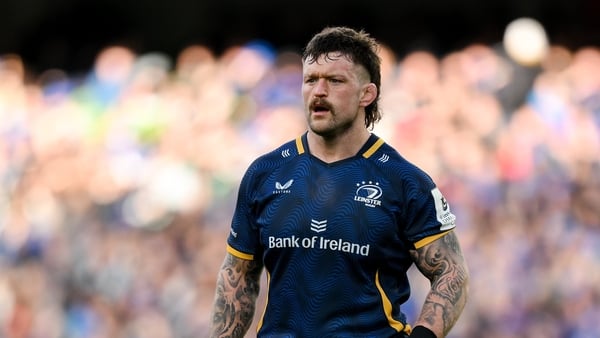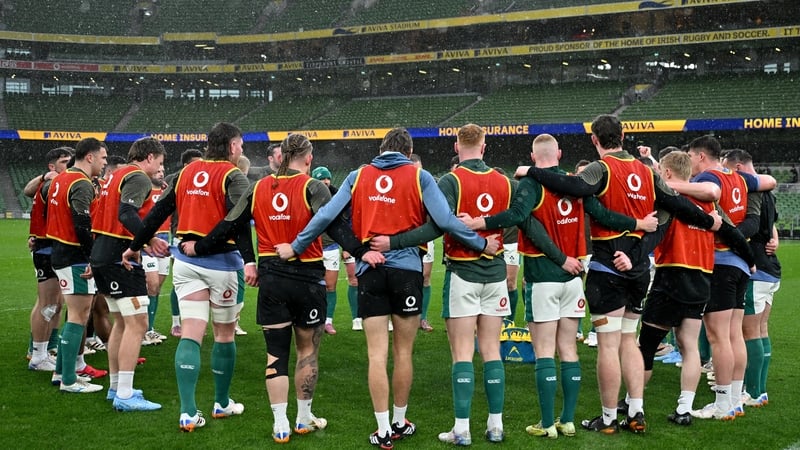

Having been accused of conservatism in his selections over the past couple of seasons, there's no doubt Andy Farrell has attempted to cast the net a bit wider so far in 2026.
After Edwin Edogbo’s debut against Italy, Nathan Doak will become the second new Ireland cap of this year’s Guinness Six Nations championship if he comes on against Wales tonight.
Assuming Tom Stewart and Tom Farrell also get called in from the bench at some stage, the Ireland head coach will have used 32 players across his opening four Six Nations games, and the only time he’s gone higher than that in his time coaching Ireland was in 2020, when the Covid-impacted championship was played over two blocks, eight months apart.
Generally speaking, Farrell has used between 30 and 32 players across most of his Six Nations campaigns, but it’s worth remembering that this run of games has been played without several of his established frontline stars.
Andrew Porter, Robbie Henshaw, Mack Hansen and Hugo Keenan have all been sidelined with injury, while Bundee Aki has missed the opening three games due to suspension.
Stuart McCloskey has taken his game to a new level at the age of 33, Robert Baloucoune and Nick Timoney have revived their international careers in recent weeks, while Tom O’Toole looks like a viable long-term option at loosehead prop.
Cian Prendergast’s development has continued impressively, while Jamie Osborne has grown game-by-game at full-back.
This is still a side relying heavily on players the far side of 30, and while a major rebuild will likely be needed after the next World Cup in 2027, there is a sense that Farrell will feel a bit more confident about how many of those players will be able to squeeze another 18 months out of their bodies, to get to Australia next year.
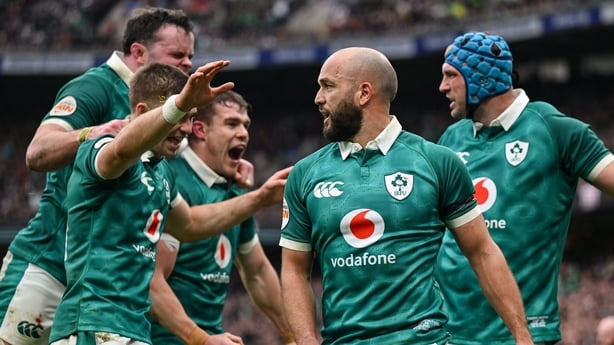
Having got the result and performance he had been waiting for against England last time out, it would have been very easy to run it back for the visit of Wales tonight, particularly with a weekend off between these games, but the Ireland head coach pulled a surprise with five changes from the 42-21 Twickenham win, albeit two of those are injury enforced through James Lowe and Jeremy Loughman.
Farrell scoffed at the suggestion that this week’s selection was a case of "squad rotation", and while those who have come into either the starting team or bench this weekend have all earned their chances to impress, the tinkering does paint a picture of how this weekend’s opponents have fallen from grace.
Six of this week’s Ireland matchday squad were playing when Wales last beat Ireland in 2021, the first leg of their championship success that year.
Only seven years ago this game was a Six Nations decider, as Wales overpowered Ireland 25-7 in the pouring rain to secure the Grand Slam, their fourth title and third slam of the Warren Gatland era.
Fast forward to 2026, and Steve Tandy’s side are potentially staring at a third wooden spoon in a row, bringing a 14-game winless run in the championship to Lansdowne Road, where they haven't won in the Six Nations since 2012.
While their form was deteriorating before the last World Cup, it’s crumbled since with just two wins in their last 26 Test matches, and both of those coming against Japan.
The reasons for that fall have been well-documented; financial issues in the regions, retirements of their golden generation, the slowdown of players coming through, and a multitude of off-field issues.
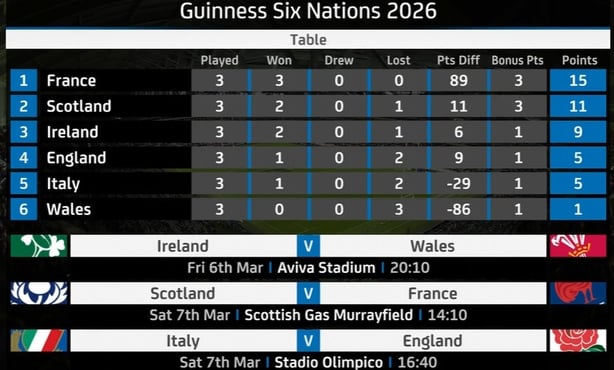
It leaves Ireland as an overwhelming favourite for this evening’s game, where a win would set up a Triple Crown decider against Scotland in Dublin next week.
Their championship hopes would also remain alive, although a bonus-point win for France at Murrayfield on Saturday afternoon would see them wrap up the title with a round to spare.
Both camps have said the right things coming into the week.
Wales captain Dewi Lake leaned into the role of underdogs, referencing "an obvious gulf" between the two sets of players, while Farrell, Simon Easterby and Paul O'Connell have all emphasised how they will be preparing for the Wales side that came within a whisker of defeating Scotland last time out, rather than the version that were hammered by England and France.
As obvious as the gulf looks on paper, last year’s meeting of the sides will be enough of a warning for Farrell’s team against any complacency.
Ireland went into that fixture in Cardiff last year off the back of impressive wins against England and Scotland, while the Welsh appeared to be at their lowest ebb, with Matt Sherratt rushed in to take interim charge of the team following Gatland’s departure the previous week.
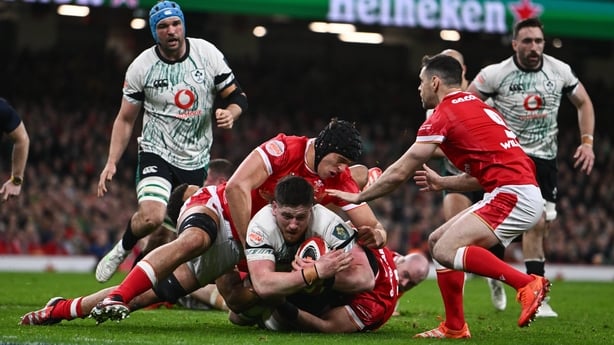
In the end, a lacklustre Ireland survived a Garry Ringrose 20-minute red card, and were 18-10 down at one stage in the second half, before scrambling to get the job done and eventually winning by nine.
Even off the back of a record 42-21 win against England at Twickenham, there will have been more than enough areas for Farrell to pick apart in the video review.
While the attack was slick and ruthless, they had to weather a ferocious early storm defensively, and had George Ford not inexplicably missed touch twice with penalties in the opening half, it could have been a very different game.
Their scrum remains a major worry. Granted, Ireland have already been without their three main options in that position – Porter, Paddy McCarthy and Jack Boyle – but the setpiece was already an area of concern before that injury crisis.
Through the opening three rounds, they have committed 13 scrum offences according to stats provider Oval Advantages, the most in the competition, and more than double that of this week’s opponents, who took the Irish setpiece apart 12 months ago
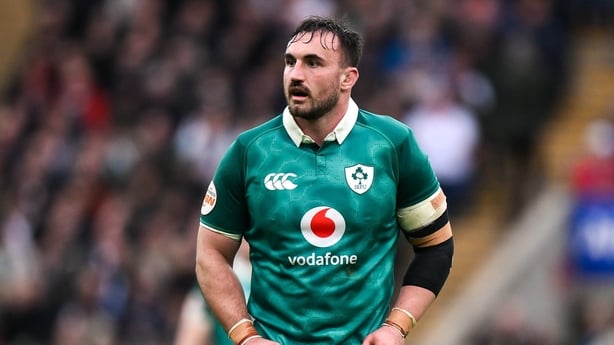
To combat that, Rónan Kelleher (above) has been drafted in to start, with the 28-year-old regarded as a better scrummager than the taller Dan Sheehan. At loosehead, Loughman’s injury sees O’Toole promoted to the starting team, with the versatile Ulster prop looking solid on the left side of the scrum in his last two games.
"Tom has really come on in that position," Farrell said on Wednesday.
"He’s scrummaging really well and he’s a tremendous player around the field as well. So if it goes like we hope and feel it’s going to go tomorrow night, that’s another opportunity we’re going to take."
As well as O’Toole and Kelleher coming in, Jacob Stockdale, Timoney and Jack Conan also come into a starting team that contains five Ulster representatives, while the inclusion of Tom Stewart and debutant Doak gives them their highest representation in an Irish matchday squad since 2021.
Wales’ plans to build on their impressive performance against Scotland last time out received a huge blow this week with confirmation that out-half Sam Costelow has been ruled out due to an ankle injury, while Taine Plumtree is also unavailable, with Dan Edwards and James Botham coming in to replace them.
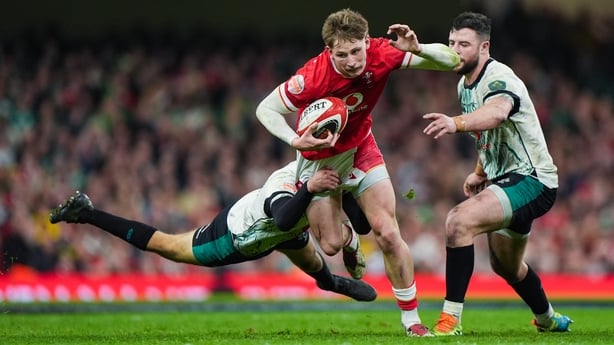
Ellis Mee (above), who impressed against Ireland last year, also returns on the wing in place of Gabriel Hamer-Webb, who made his Test debut last time out.
Farrell sidestepped the question on Wednesday when asked what would constitute a successful night for Ireland, given some of the large scorelines Wales have found themselves on the wrong side of in the last few months, instead focusing on layering another "performance" on top of their win against England.
They answered some questions in London two weeks ago. Anything less than a bonus-point win would likely see those questions being asked again.
Verdict: Ireland by 24
Ireland: Jamie Osborne; Rob Baloucoune, Garry Ringrose, Stuart McCloskey, Jacob Stockdale; Jack Crowley, Jamison Gibson-Park; Tom O'Toole, Rónan Kelleher, Tadhg Furlong; James Ryan, Tadhg Beirne; Jack Conan, Nick Timoney, Caelan Doris (capt).
Replacements: Tom Stewart, Michael Milne, Thomas Clarkson, Joe McCarthy, Josh van der Flier, Nathan Doak, Tom Farrell, Ciarán Frawley.
Wales: Louis Rees-Zammit; Ellis Mee, Eddie James, Joe Hawkins, Josh Adams; Dan Edwards, Tomos Williams; Rhys Carre, Dewi Lake (capt), Tomas Francis; Dafydd Jenkins, Ben Carter; Alex Mann, James Botham, Aaron Wainwright.
Replacements: Ryan Elias, Nicky Smith, Archie Griffin, Adam Beard, Olly Cracknell, Kieran Hardy, Jarrod Evans, Louie Hennessey.
Referee: Karl Dickson (RFU)
Listen to the RTÉ Rugby podcast on Apple Podcasts, Spotify or wherever you get your podcasts, and email us at sportpodcasts@rte.ie
Watch Ireland v Wales in the Six Nations on Friday from 7pm on RTÉ2 and RTÉ Player. Follow a live blog on the RTÉ News App and on rte.ie/sport. Listen to commentary on an extended Inside Sport on RTÉ Radio 1