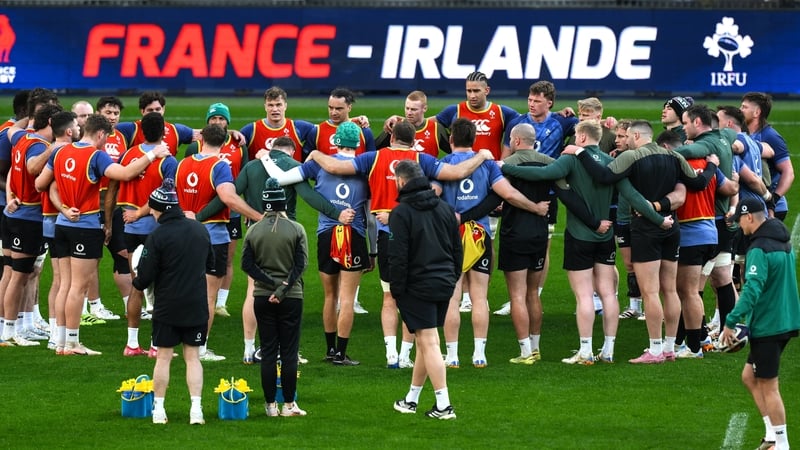

Late Monday evening, not long after the Ireland squad arrived at their team hotel in La Defense on the west side of Paris, news broke on the other side of the world which served as a reminder of what their north star is for the next 18 months.
The 2027 Rugby World Cup draw was completed back in December, but confirmation of when and where Ireland would be playing their games in Australia next year just sharpens the focus heading into the penultimate Six Nations before their latest crack at an elusive World Cup run.
In 607 days, Ireland will take on Portugal in Sydney in their tournament opener, and six days later they'll face Scotland in what looks set to be the crucial game of Pool D.
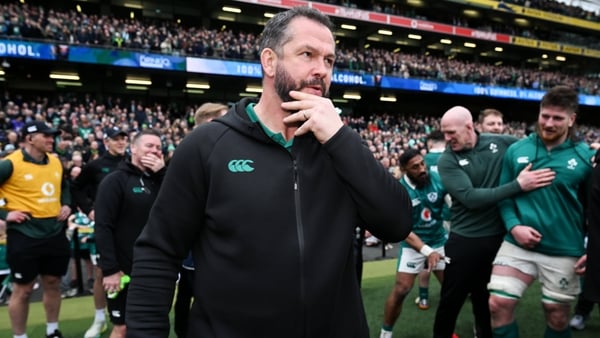
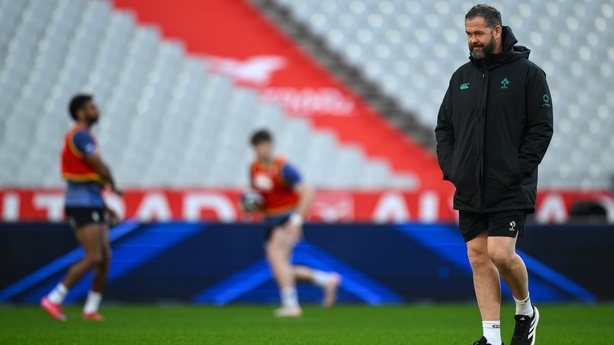
The next six weeks will give Andy Farrell (below), and us all, an idea around whether his experienced core of players can recapture their 2023 best, or if drastic surgery is required a year out from a World Cup.
It all starts in Paris today with a novel Thursday night Guinness Six Nations kick-off at Stade de France against the defending champions, a daunting prospect where Ireland are considerable underdogs.
It doesn’t feel too long ago since Ireland were the team to beat.
Two Six Nations championships put a target on their back, and the feeling entering this season’s championship is that they are just another good rugby team now, rather than a great one.
There’s a body of evidence to back up that theory. Performances have precipitously declined since they were last at the Stade de France in October 2023 for the World Cup; their attack doesn’t have the same cold-blooded efficiency when they get into scoring positions, and their discipline has been a point of difference in all the wrong ways.
Even Farrell is conscious that their status has changed, with the head coach remarking last week that they need to embrace the idea of being the hunter rather than the hunted.
In a case of perfect timing, they also come into this Six Nations with a lengthy injury list – and a suspension - which has deprived them of their first three looseheads on the depth chart, their main tighthead prop, one of their regular hybrid forwards, two centres and two of his first-choice back three.
Farrell always claims he loves adversity. That will be put to the test in Paris.
At the very least, he’s going to find out a lot about his team this week.
While all eyes were on who would start at loosehead prop and full-back, it was on the left wing where he made his biggest call, dropping James Lowe and rewarding the impressive form of Jacob Stockdale with a place in the starting side.
Stockdale is hardly a new face; only eight players in this week’s matchday squad have more than the Ulsterman’s 40 caps. Incredibly, it’s his first Six Nations outing since March 2021.
Given the vacancy at full-back, and Stockdale’s familiarity playing there, it would have been an easy call to put the 29-year-old into the 15 shirt, particularly with Jamie Osborne making his first appearance since November after a shoulder injury.
But in starting Stockdale (below) on the wing ahead of Lowe, who has been a nailed-on starter for Ireland in recent years, it sends a message to several others that there is only so much credit in the bank.
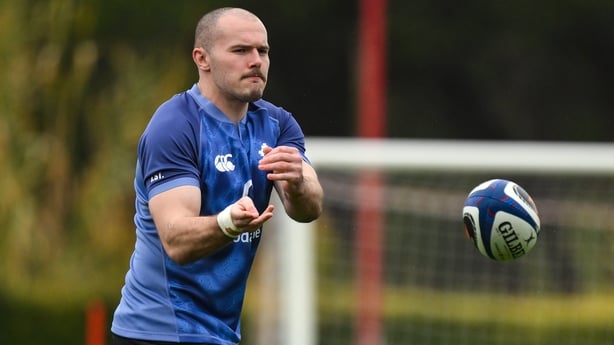
Last summer, the Ireland head coach brought 17 Irish players on his British and Irish Lions tour, and after a large portion of them have struggled to hit those same heights this season, now is the time for Farrell’s loyalty to be repaid.
To beat France, the Ireland head coach will need his big hitters to produce their best form of the season; Tadhg Beirne will need a smart lineout plan and execution against a French pack sensing vulnerability, Joe McCarthy has to find the balance between disruption and indiscipline, Dan Sheehan and Caelan Doris have to carry better than they have all year, Jamison Gibson-Park needs to keep Ireland playing at their desired pace, and Garry Ringrose’s defensive gambles have to meet the target.
Even with so many injuries, there are eight Lions in his starting team, with another four to call from the bench.
It’s not a young squad, but there is quite a bit of inexperience. Jeremy Loughman starts at loosehead prop for his sixth cap and first start, while Tommy O’Brien, Cian Prendergast, Michael Milne and Nick Timoney all make their first Six Nations appearances, O’Brien and Prendergast in the starting team.
Given Ireland’s depleted resources at loosehead, and the battering they took against South Africa in November, there will be a spotlight on the scrum, which has drawn the ire of referees since the World Cup.
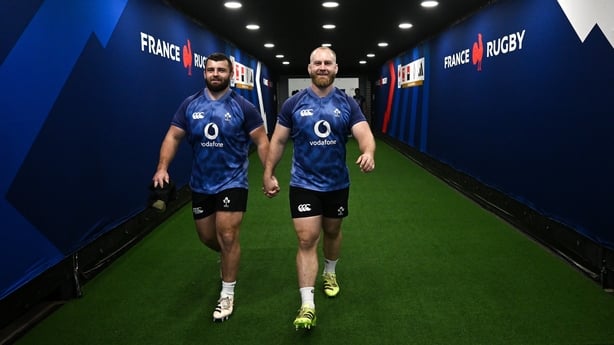
A front row trio of Loughman, Dan Sheehan and Thomas Clarkson has never packed down together before, and while that brings its own risks there’s a case to be made that the lack of previous baggage or reputation means they will be starting this game with a clean slate for referee Karl Dickson.
For their part, France have picked a forward pack which appears, on paper, to be going after Ireland’s lineout rather than their scrum.
The shock medical retirement of Uini Atonio obviously factors into that, with Toulouse veteran Dorian Aldegheri coming in as a steady hand on the tiller, but there’s been a conscious decision from Fabien Galthie to make his pack more mobile, at least for this week.
Emmanuel Meafou (below), their 6ft 8in, 140kg colossus is named on the bench, and they have gone with a lighter lock pairing of Mickael Guillard and Charles Ollivon, the latter of whom has moved from flanker to second row just this season.
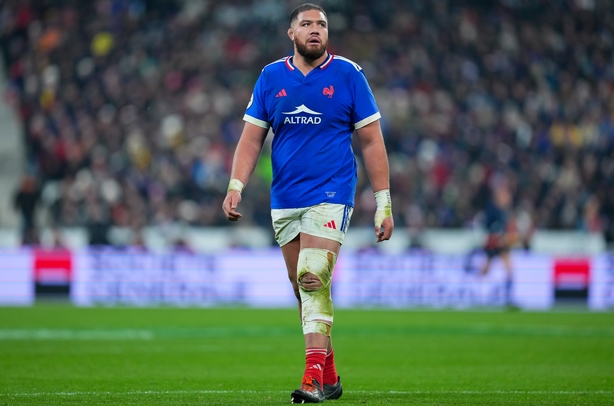
Their back row is littered with breakdown threats in Francois Cros and Anthony Jelonch, while Oscar Jegou tormented Ireland last year despite moving into the centre for part of the game.
Gaining parity with the French pack is only a small part of the job, however, with their backline littered with unpredictable, lightning quick, running threats, conducted by the master Antoine Dupont.
"He's done me several times," Ireland captain Caelan Doris said of the French scrum-half, who is now back at full speed after returning from a torn ACL.
"I can think of one particular incident in 2023 where I feel I have him coming off one side of the breakdown, and then he twirls and goes around me and beats three defenders the other side.
"I've described him before as one of those little fish you try and touch, and they dart away from you, and it's true.
"He's a big threat, he's the heartbeat to their attack and it's going to be a big challenge for us."
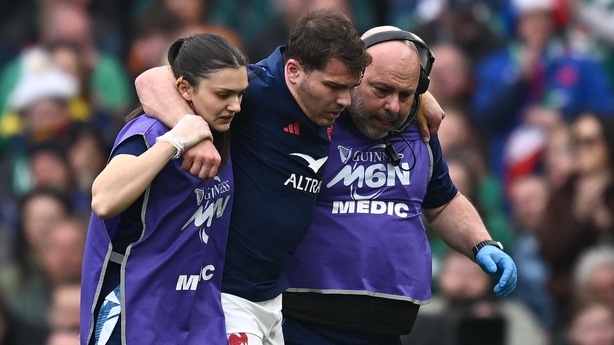
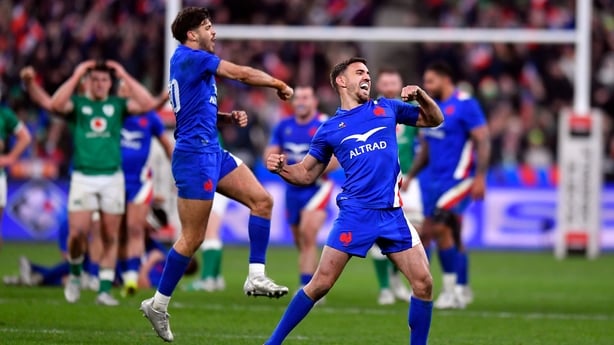
France looked far below their best in November without their captain (above), even if they picked up two wins from three, while Ireland's 38-17 hammering of the French in Marseille came when he was also absent during his Sevens sabbatical.
With so much attention needed to limit Dupont’s influence, it makes the pitch bigger for their pace out wide, where Louis Bielle-Biarrey and Theo Attissogbe are at their most lethal.
The pair combined for 11 tries in last year’s Six Nations, while Bielle-Biarrey – one of six Bordeaux-Begles backs in the starting team – has scored 18 tries in 17 games this season.
If Ireland allow that backline to express themselves, it could be a long night.
Verdict: France
France: Thomas Ramos; Theo Attissogbe, Nicolas Depoortere, Yoram Moefana, Louis Bielle-Biarrey; Matthieu Jalibert, Antoine Dupont (capt); Jean-Baptiste Gros, Julien Marchand, Dorian Aldegheri; Charles Ollivon, Mickael Guillard; Oscar Jegou, Francois Cros, Anthony Jelonch.
Replacements: Peato Mauvaka, Rodrigue Neti, Regis Montagne, Hugo Auradou, Emmanuel Meafou, Lenni Nouchi, Baptiste Serin, Kalvin Gourgues.
Ireland: Jamie Osborne; Tommy O'Brien, Garry Ringrose, Stuart McCloskey, Jacob Stockdale; Sam Prendergast, Jamison Gibson-Park; Jeremy Loughman, Dan Sheehan, Thomas Clarkson; Joe McCarthy, Tadhg Beirne; Cian Prendergast, Josh van der Flier, Caelan Doris (capt)
Replacements: Rónan Kelleher, Michael Milne, Finlay Bealham, James Ryan, Jack Conan, Nick Timoney, Craig Casey, Jack Crowley.
Listen to the RTÉ Rugby podcast on Apple Podcasts, Spotify or wherever you get your podcasts, and email us at sportpodcasts@rte.ie
Follow a live blog on France v Ireland in the Six Nations on Thursday from 8.10pm. Listen to live commentary on RTÉ Radio 1