
As tempting as it is to start rebuilding for a World Cup crack in 2027, there is a significant piece of Six Nations history for Ireland to target in the short term.
No team has ever won the Guinness Six Nations outright – or even the old Five Nations - three times in a row.
Ireland's previous crack at the three-peat never really got off the ground as they drew with Wales and then lost to France in a World Cup hangover in 2016.
If Ireland are to go where no team has ever gone and win three in a row, doing it without head coach Andy Farrell would be a remarkable achievement.
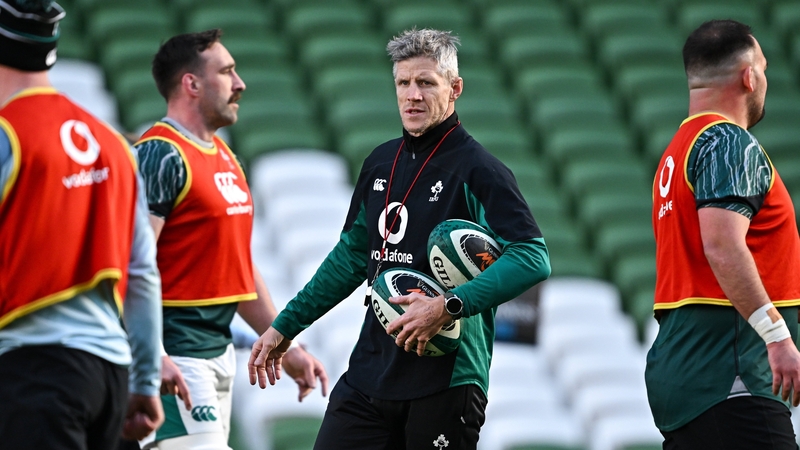
While Farrell is away prepping his British and Irish Lions tour to Australia this summer, Simon Easterby steps in as the night watchman for this Six Nations championship, and the summer fixtures against Georgia and Portugal.
The early signs are that the Ireland interim boss isn’t going to move the furniture around too much, with a settled squad named for this tournament. Saturday’s matchday squad to face England contains a total of 1190 caps for an average of 51 per player. Even discounting centurions Cian Healy and Conor Murray, the starting team are averaging 45 caps apiece.
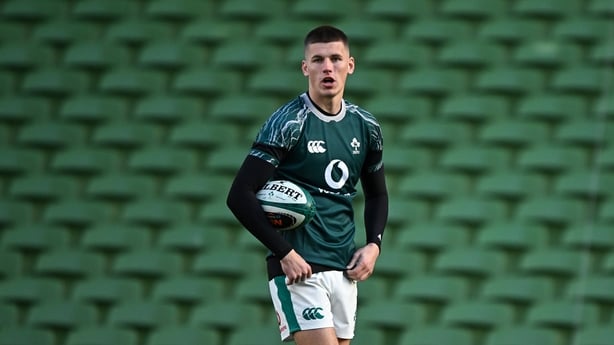
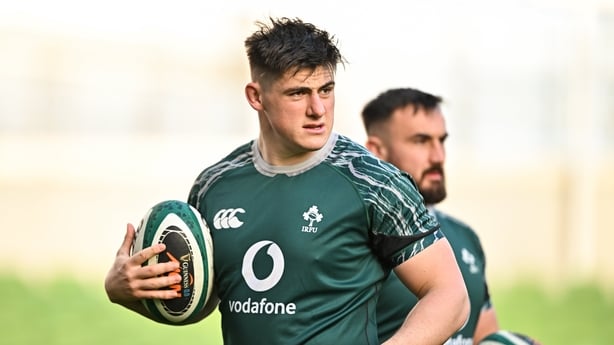
The most inexperienced man in the starting team is in arguably the most pivotal position. All eyes will be on Sam Prendergast (above) as he makes his Six Nations debut, having held off Jack Crowley for now. The 21-year-old has all of the weapons to run Ireland’s attack, but how he copes defensively will have a major say in their bid for a third title in a row.
There is unlikely to be any great evolution in terms of personnel, but Ireland’s performances in the Autumn Nations Series show that evolution will be required in their overall game.
While Ireland won three out of four games in November, the lack of fluidity in their attack was jarring to witness. They averaged 21 handling errors per game across the month, topping out at 28 in the final win against the Wallabies, while they also conceded just under 15 turnovers per game.
That high error count ensured their much-vaunted multi-phase attack never fully clicked, and caused some to draw the conclusion that Ireland were dealing with a side effect to Leinster’s hard focus on defence under Jacques Nienaber. Similar issues in the Six Nations opener against England will be major cause for concern.
When it comes to the setpiece, Ireland’s lineout is now under the magnifying glass. Their issues at the lineout appeared to have stabilised in last year’s championship where they had a 91% return on their own throw, but that fell to 81.9% in the second half of the year, which ranked ninth out of the 10 Six Nations and Rugby Championship sides.
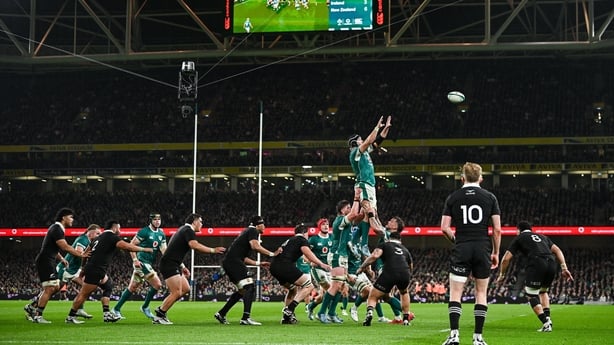
The selection for this afternoon’s meeting with England looks like a direct response to those issues. While Joe McCarthy is unavailable due to concussion, the inclusion of Ryan Baird in the back row gives Ireland an extra ball winner in the air along with James Ryan and Tadhg Beirne, while Iain Henderson’s inclusion on the bench over the more dynamic Cormac Izuchukwu is also a nod towards winning clean lineout ball.
Even during its inconsistent periods, the Irish lineout remains a crucial platform for their attack to launch. Of the 38 tries scored by them in 2024, 26 started with lineout ball.
By contrast, England have gone light with their lineout options. The surprise decision to leave the towering Ollie Chessum on the bench leaves just Maro Itoje and George Martin as the primary lineout options, although England did show real creativity in that area when the sides met last season at Twickenham, moving players in and out of the line to isolate clean jumpers.
While none of their back row trio of Ben Earl and twins Tom and Ben Curry are particularly tall, they have clearly been picked with the breakdown in mind.
In last year’s Six Nations, Ireland operated off an average ruck speed of 3.62 seconds, the best in the competition, and that number improved to 3.02 seconds in the second half of the year, which was also the best of the Tier 1 nations.
However, there were warning signs in November when the All Blacks and Wallabies each made five breakdown steals in their games at the Aviva, and with both Currys and Earl all recognised jackal threats, England head coach Steve Borthwick looks set to attack that area hard.
"Some of the best practice images came in the ruck in the autumn but we probably turned over more ball in the autumn than we have in a long time and it’s probably a big strength of ours," forwards coach Paul O’Connell said of Ireland’s attacking breakdown this week.
"Even if we go back to the South African games in the summer where they’d have big ruck pressure. I think we turned over one ball in each Test so I think they [ruck and lineout] are two important facets of our game that need a little bit of attention and a little bit of care."
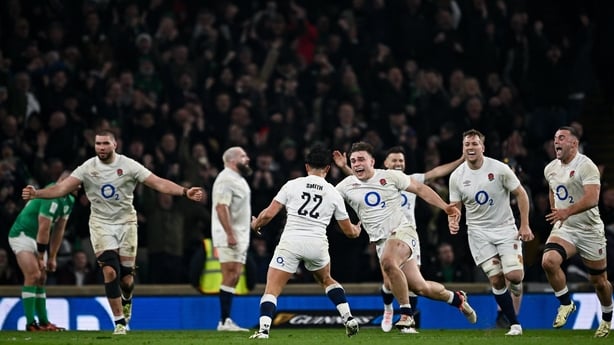
While England beat Ireland at Twickenham last year, Borthwick’s side won just two of their eight games since, with both wins coming against Japan.
All but one of those losses were one-score games, and the England coach is tackling those late game struggles by picking a powerful bench, with the likes of Chessum, Chandler Cunningham-South and Tom Willis part of a 6:2 bench split which can cause Ireland a lot problems if the game is close down the stretch.
Defensively, there is an air of unpredictability around this England team. Their aggressive blitz was improving game on game before Felix Jones’s shock departure after the summer tour of New Zealand, with his replacement Joe El-Abd reportedly changing that strategy.
Implementing a new defensive plan is rarely an overnight job, and Ireland will be looking to exploit any uncertainty.
Verdict: Ireland
Ireland: Hugo Keenan; Mack Hansen, Garry Ringrose, Bundee Aki, James Lowe; Sam Prendergast, Jamison Gibson-Park; Andrew Porter, Rónan Kelleher, Finlay Bealham; James Ryan, Tadhg Beirne; Ryan Baird, Josh van der Flier, Caelan Doris (capt).
Replacements: Dan Sheehan, Cian Healy, Thomas Clarkson, Iain Henderson, Jack Conan, Conor Murray, Jack Crowley, Robbie Henshaw.
England: Freddie Steward; Tommy Freeman, Henry Slade, Ollie Lawrence, Cadan Murley; Marcus Smith, Alex Mitchell; Ellis Genge, Luke Cowan-Dickie, Will Stuart; Maro Itoje (capt), George Martin; Tom Curry, Ben Curry, Ben Earl.
Replacements: Theo Dan, Fin Baxter, Joe Heyes, Ollie Chessum, Chandler Cunningham-South, Tom Willis, Harry Randall, Fin Smith.
Listen to the RTÉ Rugby podcast on Apple Podcasts, Spotify or wherever you get your podcasts.
Follow a live blog on Ireland v England in the Guinness Six Nations on Saturday from 4.45pm on rte.ie/sport and the RTÉ News app or listen to live commentary on Saturday Sport on RTÉ Radio 1
Watch Scotland v Italy on Saturday from 1.30pm on RTÉ2 and RTÉ Player.