


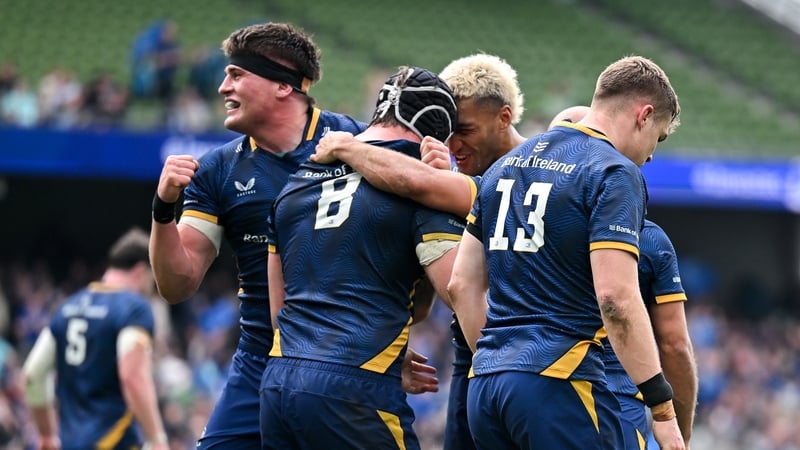

Leinster fans descend on Bilbao this weekend hoping to end their recent hoodoo in European finals.
The Basque city should evoke fond memories, it being the site of their last Champions Cup victory in 2018.
They had played champagne rugby that season but the final was a cagey try-less affair, Leinster winning 15-12 courtesy of an Isa Nacewa penalty.
That maintained their then flawless record in European finals. Things have gone south on that front in the intervening years.
So too has wider interest in the Champions Cup.
The competition's lustre has faded in the last decade or so, damaged by sub-standard group-stage formats, the sense that many teams pay scant regard to it amid an obsession with their domestic leagues, and its complete disappearance behind a TV paywall.
The fact that it is not alone no longer on terrestrial TV, but not even on a satellite channel that many people might have - aka, Sky or TNT - is hardly boosting its profile.
The pool stages, which used to boast such jeopardy until 2014 when just eight teams emerged, are now a tedious drag.
The latest wheeze dreamed up by the English clubs - who are perpetually in tinkering mode regarding European club rugby - is a charmingly retro one.
Jettison the group states altogether. Go back to a 16-team straight knockout comprised of home and away legs until the final. Like the European Cup of old in football.
"It would make every game box office," a source told The Telegraph.
"The competition needs to become elite again," another source said. "Everyone can see this set-up is not working."
This, of course, would go against the grain of the last two decades, where the trend has been towards protracted group stages, with increasingly generous safety nets.
It's become harder and harder to get knocked out of many blue riband competitions in this day and age.
Maybe it's the case that this proposal heralds a switch back to 'less-is-more' romance?
The beauty of do-or-die knockout. Perhaps the Premiership collective are embracing the spirit of the traditional GAA man, who yearns for a return to straight knockout and the end of all this second chance nonsense?
More likely, its chief attraction of this format from the perspective of the English and French clubs is that it would reduce the footprint of the European Cup within the overall calendar, freeing up more weekends to focus on their domestic leagues. That it is, again, a reflection of their priorities.
Of course, there's nothing new under the sun here. The English sides took issue with the schedule in the competition's earliest days. They've been brexiting from European Cup rugby before Nigel Farage was even elected as an MEP.
They sat out the inaugural tournament in 1995-96 on the basis that it was interfering with their league schedule. They did the same again in 1998-99 - the season that Ulster won it - alongside additional reports that they were unhappy with the distribution of TV money.
It was their restlessness and dissatisfaction that led to the crisis in 2013, when it briefly looked like the competition might be discontinued altogether. Incessant complaining about the alleged advantages of the Irish sides was the constant soundtrack from across the water throughout this era.
The 2006-12 period, when Irish teams won five of the seven European Cups on offer, were certainly the halcyon days of the competition on this side of the water, both in terms of on-field results and general spectator interest.
The Heineken Cup reached its zenith in this country in the 2009 Croke Park semi-final, memorable for youthful upstart Johnny Sexton informing Ronan O'Gara, by means of the hairdryer treatment, that Leinster had just scored a try.
It ended with Brian O'Driscoll intercepting an O'Gara pass and tearing away under the posts to guarantee the win. The balance of power in the Munster-Leinster relationship shifted violently in that moment.
The Munster-Leinster rivalry was so box office in those years, it even resulted in the Good Friday drink ban being lifted for a RaboDirect Pro 12 in April 2010. The Limerick vintners won a famous victory, striking a blow for the separation of church and state.
In the years after, Leinster would hit a higher gear under Joe Schmidt, winning back-to-back European Cups in 2011 and 2012, beating Ulster in an all-Irish final in Twickenham in the latter.
Munster's gradual decline to their present parlous state has obviously robbed the Champions Cup of much of its vibrancy.
Latterly, it has generally been taken for granted that Leinster, with its world class feeder system from the Dublin private school network, will speed through the pool phase and the early knockout rounds without much fuss.
Particularly when they're coming up against salary-capped English Premiership outfits who regard participation as an encumbrance more than anything else.
Munster's near misses in the early 2000s were seen as emotionally stirring affairs, staging posts on the quest for the Holy Grail.
By contrast, Leinster's recent run of final losses is regarded as under-performance and a sign of mental frailty. The default assumption is that they should be winning.
Crowds have dipped appreciably this year. Two years ago, they sold out Croke Park for the semi-final win over Northampton. This season, less than 39,000 showed up for the nervy victory against Toulon.
Some of the disparity may be down to the Croker novelty factor. Also in the mix is the sense that Leinster aren't playing with the same brio and fluency of previous years.
Unlike in the two final defeats against La Rochelle, Leinster go in as clear underdogs this time against a Bordeaux-Begles team which boasts a big chunk of the French backline.
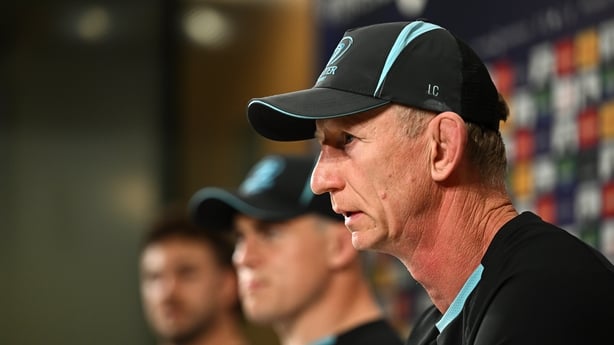
For this final, Leo Cullen is dabbling in 'siege mentality' psychology, remarking after the semi-final that the "you guys [aka, the media] love throwing the boot into us."
The portrayal of Leinster Rugby as put-upon outsiders was naturally greeted with much eye-rolling. But they did successfully trade off much the same energy on that famous day in 2009, when they finally revolted against Munster's triumphalism.
If they do turn over the champions today and flip the prevailing narrative, that the apathy that accompanied their campaign will likely be forgotten.
