


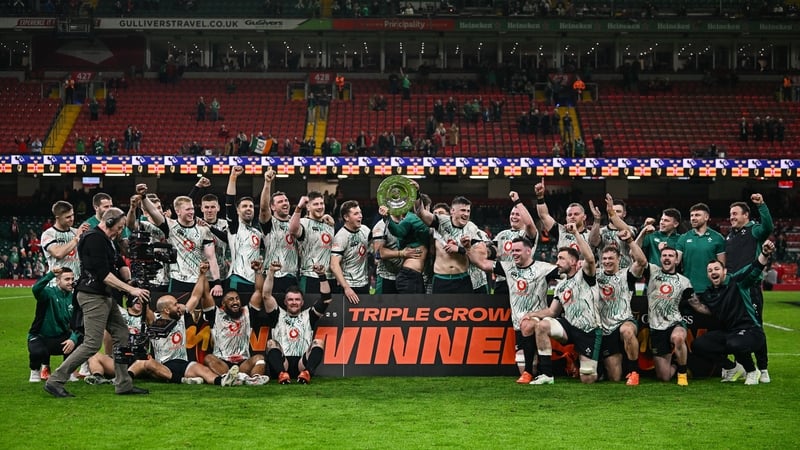

The close-up of the charred remains of the former Six Nations trophy proved to be one of the more popular news stories of the 2026 edition of the old competition.
The trophy was damaged beyond repair by a small fire which broke out in the back of a lorry while in transit from Limerick to Dublin.
It joins the ranks of other blue riband trophies that have been through the wars.
The original (football) World Cup trophy - aka, the Jules Rimet trophy - was stolen while on display in London in March 1966.
It was discovered a week later wrapped in a newspaper and tucked into a hedge in south-east London. A dog called Pickles had famously unearthed it while out for a leisurely stroll with his owner, David Corbett.
A few days earlier, a local villain named Edward Betchley, working under the pseudonym 'Jackson', had put in a £150,000 ransom demand to FA chief Joe Mears.
Alas, the plan was scuppered when Mears contacted the old bill and one of their undercover operatives went along to the ransom handover. Betchley was eventually apprehended after he attempted a getaway.
A few months later, Bobby Moore was to receive the same trophy from Queen Elizabeth II - so all was well that ended well as far as En-ger-land and the FA were concerned.
The fire-damaged Six Nations trophy will not be presented to Antoine Dupont or anyone else this weekend. It has had to be replaced.
After 10 years of celebrating Grand Slams and Six Nations Championships, the trophy will be replaced! 🤝
— Guinness Men's Six Nations (@SixNationsRugby) March 2, 2026
The exhibition trophy will be used for the remainder of the 2026 Championship. This trophy is identical to the original 🏆
A new trophy will be created using materials and… pic.twitter.com/bqwg4dGAWQ
A back-up ceremonial trophy will be handed out this year. It remains to be seen whether there's a replica on standby in Dublin.
It was cut down in its prime to an extent, having only been first minted in 2015. It replaced the original, which was itself only first handed out in 1993, with France emerging as the first winners.
"This team has won a Cup," their slightly defensive head coach Pierre Berbezier said when asked by the unimpressed French media to explain the difference between his team and the supposedly more flash championship-winning sides of the 1980s.
Before then, the IRB were content to leave the Five Nations title as a trinket of the imagination.
It was 13 years before the dear old Triple Crown was finally rendered in trophy form, Ireland winning the first such one in 2006, Shane Horgan's out-stretched arm snatching victory at the death in Twickenham.
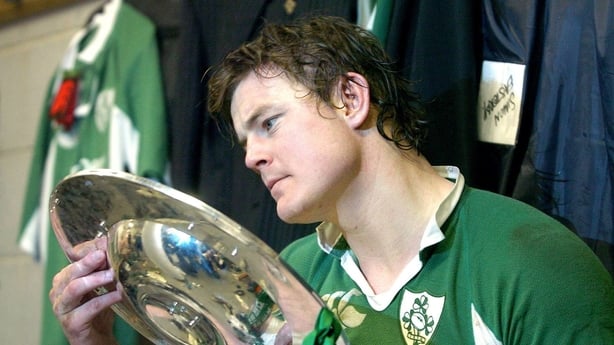
On the RTÉ panel, George Hook, ever the traditionalist, bemoaned the new trophy and asked were our minds now so impoverished that we could no longer conceptualise a mythical trophy.
(Last we heard from George on rugby was on Hugh Cahill's podcast during the 2023 World Cup. When Hugh breezily remarked that Andy Farrell was surely the greatest Irish coach ever, George hit the roof and demanded to know how he could overlook Syd Millar and Ronnie Dawson. Our Hugh mollified him by belatedly adding the qualifier "in the professional era".)
The slowness to develop headline trophies for the Five/ Six Nations is curious given the abundance of them that now litter the landscape.
The Scots, as we know, point blank refuse to participate in a game of rugby football unless there's some silverware on the line.
Tomorrow, in addition to the outside possibility of a Six Nations title, there's most definitely the Triple Crown and the Centenary Quaich up for grabs. Scotland have had extreme difficulty in getting hold of the latter, never mind the others.
The new Triple Crown was a shield-type trophy, not dissimilar to the giant plate awarded to the winner of the women's singles at Wimbledon.
The arrival of the trophy coincided with the Triple Crown losing its lustre in Ireland, a consequence of winning it far too regularly.
It occupied an exalted status in the Irish sporting imagination back when victories were thin on the ground.
Ireland won the Five Nations championship outright in 1982 and 1985, though they were invariably referred to as the Triple Crown-winning teams.
Those Triple Crown victories were given the full deluxe Reeling in the Years treatment, complete with footage from every game and captions heralding each result. The segment concludes with the same wide shot from the old south terrace of Irish supporters streaming onto the pitch to get a hold of the victorious players before they booted it down the tunnel.
By contrast, Ireland's Five Nations win in 1974 - their first in 23 years - is ignored entirely by the Reeling in the Years folk. It's all Richard Nixon and the Dubs and Sunningdale but no shot of Mike Gibson scooting over for a try at Twickenham.
It wasn't helped by the manner they won the title. It lacked a glorious crescendo moment that might have turned the heads of the montage producers. Ireland's bye-week fell in Round 5 and they were plonked at home watching England and Wales in Twickenham.
The match is especially notorious in Wales. In the closing minutes, Dublin referee John West adjudged that David Duckham had touched the ball down ahead of JJ Williams in the English in-goal area, denying the Welsh a winning try. England clung on for what was their only victory over Wales in that decade and Max Boyce subsequently wrote his ditty 'Blind Irish Referee' in honour of West.
The elevation of the Triple Crown above 'the championship' is an attitude characteristic of the amateur era. The rugby authorities disapproved of organised national leagues due to the connotations with professionalism. It wasn't until 1987-88 that the first Courage League (later Premiership) was played in England and the All-Ireland League started a couple of years later.
These days, Ireland have been collecting Triple Crowns with such regularity that they're inclined to be memory-holed fairly quickly - last year being a prime example.
Some others are overlooked because they come wrapped inside a Grand Slam.
If they clamber past Scotland on Saturday, that will be the ninth Triple Crown this century and the fourth in five years. Wales and England have each won five apiece in the 21st century. Scotland? Nothing since 1990. They are seeking to end a drought three years longer than the one Ollie Campbell and co buried back in '82.
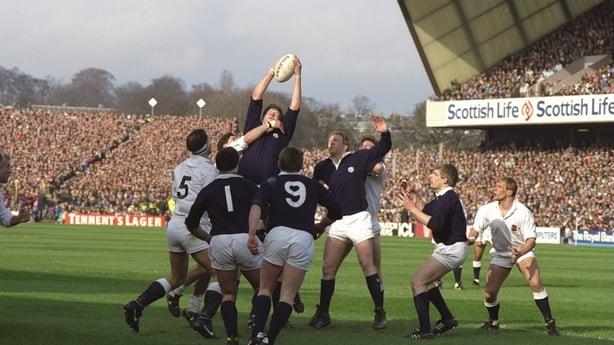
The Scots can slay several demons this week.
In Scotland's sole victory in Dublin since 2008, they prevented what would have been Ireland's fifth Triple Crown in seven years back in 2010.
Rob Kearney recalled the game at the weekend - albeit he misremembered the year as 2008 - that the Irish players were intending to don their inter-county jerseys for the trophy presentation as a thank you to the GAA for hosting their home games for the past four years.
This planned gesture was cancelled after the shock defeat, which was probably for the best.
The Scots' last victory south of the Liffey was way back in 1998 - a result which was also beneficial for Ireland in that it persuaded Brian Ashton to leave a job he clearly regretted ever taking in the first place.
The visitors are in bullish mood after their stunning takedown of France in a ludicrously entertaining game in Murrayfield.
The past decade's worth of Ireland-Scotland games have been accompanied by a bizarre narrative whereby Irish fans - and occasionally players - are constantly accusing the Scots of unearned cockiness.
The notion is comically overdone and seems to be largely based on a few excessively optimistic pronouncements by Stuart Hogg back in the day.
We did observe a few years ago that had Hogg been present at the skirmish in Widow McCormack's cabbage garden, he'd have concluded afterwards that Irish independence was imminent.
Eddie O'Sullivan had to embark on a brief podcast apology tour after branding the Scots 'deluded' following a loss in one of the Covid-era games in November 2020. And it was plain from Peter O'Mahony's interview after the 2023 World Cup pool game that the Irish players were taking account of what was said.
After all that, Darcy Graham has added a new chapter in this story by declaring that Ireland are "there for the taking" ahead of Saturday's game.
The media are grateful for the material. But for their own sake, they probably need to draft in Declan Kidney to instruct them in the ways of the 'whatever you say, say nothing' school of pre-match interviews.
One gets the distinct impression that from a neutral's perspective, Ireland winning the Six Nations would be the least satisfying outcome this weekend (Our loyal South African readers are nodding furiously in agreement here).
Either way, Andy Farrell's side can end an often trying Six Nations by lifting another Triple Crown and then waiting around to see whether they've claimed what would be an improbable championship win - on a par with the forgotten triumph of '74.
Follow a live blog on Ireland v Scotland in the Six Nations on Saturday from 2.10pm on the RTÉ News app and on rte.ie/sport. Listen to commentary on Saturday Sport on RTÉ Radio 1
