


Stuart McCloskey's masterclass in Twickenham showed that age should be less of a talking point when it comes to selecting an Ireland squad.
Head coach Andy Farrell has been criticised with regards to talent development and the selection of older players throughout various campaigns.
Many people would like to see the summer and autumn series being used as development blocks for budding talent and high-performing provincial players.
Farrell prefers to pick a strong squad and drip feed a player into that team from time to time. International rugby throws up enough challenges and talent development often occurs when others become injured or unavailable.
Take Robert Baloucoune for example. He’s been one of Ireland’s top performers in the last two weeks. He wouldn’t have been given an opportunity if injuries didn’t occur, as well as a poor performance in the aerial battle in Paris.
Farrell was looking for a solution and Baloucoune was ready and waiting. It’s almost unbelievable that he has just six Irish caps to his name when you see how he performed.
The reason why talent development is so difficult in Ireland is because Test matches, no matter what time of the year, will carry ranking points that will have a serious impact on World Cup draws and therefore will dictate a lot of the thinking outside of the World Cup year.
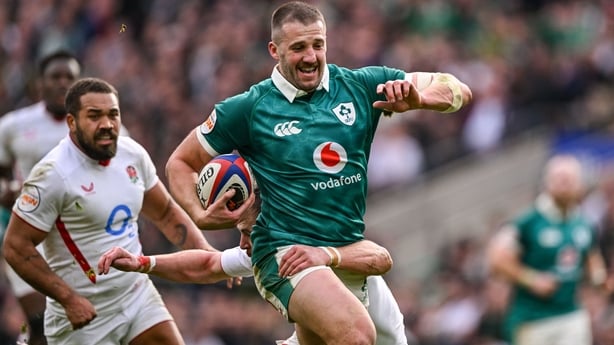
Holding a higher ranking will benefit the team in the most important competition. It’s difficult for a country like Ireland to ignore those ramifications when we already punch above our weight in terms of performance.
Direct comparisons have been made to the likes of France and South Africa, who have an abundance of talent, and can make harsh calls with older players. France had a small clearout of experienced players ahead of this year’s Six Nations, yet they haven’t been negatively affected. They have given chances to younger players and as rugby supporters we get carried away with these comparisons.
France has two fully professional leagues. Their top division has 14 teams, in comparison to Ireland’s four. There are far more places up for grabs at club level, which serves their national side's development a lot differently to Ireland.
Their second tier is also fully pro. Below Ireland’s four professional teams is the All-Ireland league which has 10 amateur teams in the top division. This is no comparison.
There are many more spaces and professional contracts available at club level. Players like Theo Attissogbe, Nicolas Depoortere or younger guys like Fabien Brau-Boirie have benefited from this by being capped early as a follow-on from their club appearances. There’s no doubt France are more willing to introduce younger players, but the comparisons aren’t like for like.
Baloucoune has 78 appearances for Ulster at 28 years of age. He’s been scuppered by injuries in the past, yet when you compare his younger French counterparts, they regularly reach 50 professional games in their early 20s.
In the Irish system, to give younger players more appearances, you have to take appearances from guys in their prime. There simply isn’t room to have it both ways. Irish players are also discouraged from playing abroad if they want to protect their chances of breaking into the national team. You’d have to wonder if this is becoming a dated system, and if there’s a middle ground to enable our ageing talent to play abroad while freeing up space for younger players to develop faster.
South Africa have used this approach in the past, although they’ve had to adapt since they’ve joined the United Rugby Championship. They’re recruited more of their players back to their South African franchises, while allowing some players to take up positions in European teams or even further afield in Japan.
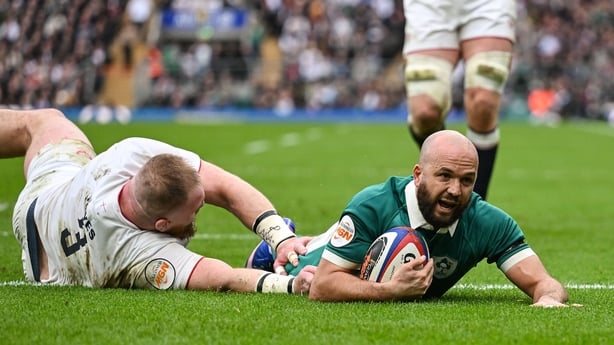
One thing is clear, Ireland’s system isn’t comparable to countries with larger playing populations where rugby is their number one sport.
What’s also clear is that players over 30 years of age aren’t ready for the scrapheap. Jamison Gibson-Park turned 34 at the start of this week, yet he played one of his greatest games in an Ireland jersey last weekend, and he’s had many standout performances. He has developed into one of Ireland’s most consistent and exciting performers, outside of a small hiccup at the start of this season.
McCloskey was born in the same year as Gibson-Park and will turn 34 in the summer. He’s currently in the form of his career at international level, building upon his consistently destructive best at club level. If the worry about ageing players is that they’ll slow down, you need only look at Ireland’s victory against England at Twickenham to ease those fears.
Speed of thought is as important as speed of movement, and Gibson-Park showed both to score Ireland’s first try in the corner from a quick tap penalty.
McCloskey showed no signs of slowing down when he chased down Marcus Smith to bundle him into touch. Smith is known as a flyer across shorter distances, and maybe the distance favoured a bigger player like McCloskey. However, Smith had only joined the game in the last play before half-time. He was fresher, lighter, and apparently faster than McCloskey. The Ulster centre caught him with 10 metres to spare and man handled Smith into touch.
It goes to show that we should judge players on their performances and not their age. At younger ages, players need chances to be selected based on performance, which is a bit of a problem when there are fewer opportunities in Irish rugby.
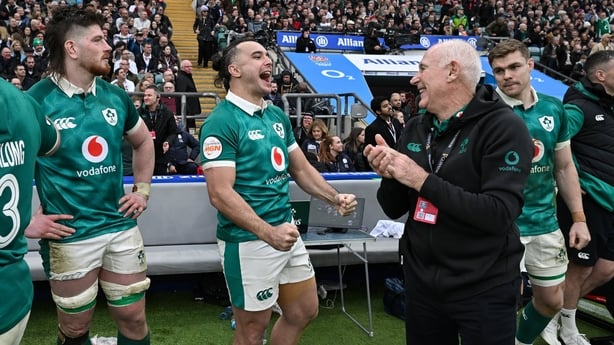
However, it is clear that we don’t need to give up on older players if they’re still the top performers in the Irish playing pool.
The concern for Ireland is that much of their squad is heading into the over 30 category. Tadhg Beirne, Tadhg Furlong, Gibson-Park, McCloskey, Garry Ringrose, James Lowe, Josh van der Flier and others are already enjoying their 30s, while others like James Ryan are entering that territory soon.
Balancing that, there are many others heading into their prime - the likes of Jack Crowley, Craig Casey, Joe McCarthy, Caelan Doris, Dan Sheehan and many more.
Ireland can continue to prioritise older athletes if they keep performing like McCloskey did last weekend. More experienced players can see situations much quicker because of their previous experiences. McCloskey has had time to mature and is now very confident of his strengths, as well as being comfortable with his role within the group.
He’s arguably Ulster’s most important player. His strength in contact allows him to control the situation and calmly offload out of traffic, using his wing span and strength to enable Ireland to play a less structured attacking game.
At 33 years of age, McCloskey is a key component of Ireland’s attacking development and one of the first names on the team sheet for Andy Farrell.
