


It was a sobering start to the Six Nations for Ireland, who were emphaticaly beaten in Paris.
France showed their versatility and adaptability to trump the visitors in most areas of the strategic battle.
For the neutral, the way France approached the game is how rugby should be played. They were physical, but moved the ball away from contact regularly, playing with an excitement with the ball in hand.
And for all their attacking flair and flamboyance in possession, they never neglected the basics. Their set-piece functioned well and they cleaned up in the aerial battle.
Les Bleus never struggled to cross the gain line, which is the main aim in rugby. If you can go forward in attack, the game becomes easier.
They took different approaches to that gain-line success. At times they used Mickael Guillard, Charles Ollivon and others up front to lay down a marker against Ireland in the physical battle.
However, the third French try came from Guillard, who ran into space and offloaded to Ollivon charging up on his inside shoulder. Their brutish gain line winners could adapt and throw passes too.
Matthieu Jalibert was clever with his tactical kicking, turning Ireland and forcing them into difficult positions in their own half. When Ireland struggled to exit effectively, France pounced. That doesn't begin with flair, it begins with a pragmatic attacking gameplan.
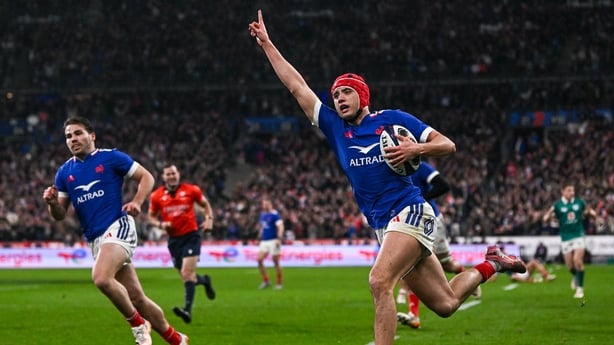
Their pace in the outside channels was their point of difference. Louis Bielle-Biarrey (above) survived a tap tackle from Sam Prendergast to regain his feet and still left Jacob Stockdale in his wake as he cruised down the left touchline for the opening try.
Theo Attissogbe was supposedly the rookie on the pitch. He still made big plays, with an intercept from a speculative Sam Prendergast pass, following it up with a skilful offload around the back of the covering tackle.
Nicolas Depoortere provided the balance between attacking flair from his half-backs inside him and the electric pace and creativity outside him. His ability to challenge the Irish midfield and go forward for his team helped their attacking gameplan massively.
On Thursday night, France were the full package and were in unstoppable form.
Unfortunately for Ireland, they showed very little resistance or ability to change that narrative. They struggled in the physical contest and backed out of it early to put the ball in the air, which is a fair tactic when you fail to go forward in a rugby match.
However, when you also fail to win the ball in the air then it leaves you with very few options afterwards. Jamison Gibson-Park was clearly instructed to put his foot on the ball if Ireland didn't get success in possession.
France were clever in their kick retreat and isolated Ireland’s chaser, flirting with the new laws around escorting in the kick receipt.
But Andy Farrell's side did themselves no favours with an isolated kick-chase and a poor ability to win the ball in the air. They subsequently lost the scraps from the breaking ball. They were simply outnumbered.
The worrying thing about Ireland on Thursday is that they lost the battles that don’t take any talent.
They lost the collisions in both attack and defence. That’s a mindset and an "intention" as Farrell described after the match.
The want to tackle someone can make up for much of the technical element of the contact zone.
If players are in the right mental space then you can paper over some of the disparity in technical ability. Mindset can’t make every tackle for you.
A layered and deceptive attacking game plan can cause teams to chase shadows and miss their dominant tackles.
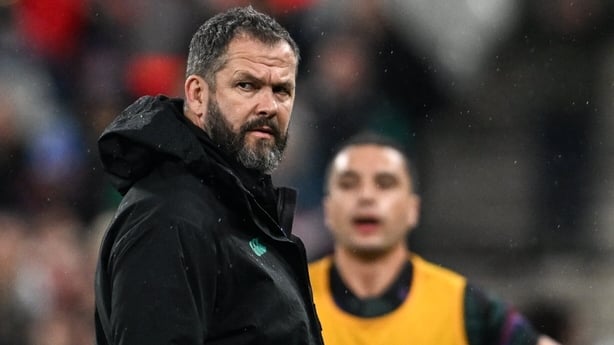
Andy Farrell now has a choice to make heading into the Italy game.
Traditionally, this was a fixture where the coach could afford to make a handful of changes. When Ireland face Italy in the second round it usually takes away many of the proposed changes and rotation because it’s quite early in the championship and frontline players don’t need a rest yet.
After Italy's performance against Scotland, if any Ireland players are left out it will surely be a selection decision and less to do with rotation.
After Ireland’s first-half performance last week, there should be enforced changes to shake up the squad.
The bench came on and made an impact, making the scoreline much more respectable at 29-14, before France polished off their performance with one last score.
Nick Timoney is deserving of a start for Ireland. His ball carrying and approach to the game made a huge difference in the second half.
Ireland don’t need to be clever with their bench this week either. Jack Conan is a starter for Ireland and should therefore take his place in the starting team.
Stockdale was unsuccessful in much of the aerial battle. Ireland need to change something with their outside backs for this kicking strategy to be successful.
Farrell could do worse things than to find an alternative at full-back and to play Jamie Osborne on the wing for his aerial ability.
Last week wasn’t good enough for Ireland. Farrell knows that and the players know it too.
If they don’t, they’ll be reminded quite quickly in camp this week. The head coach's media contributions after the match would suggest that there’ll be a hard stance during the week and that something will change.
It’s an uphill battle for Ireland to put a positive spin on this Six Nations championship.
They have one challenging home game against Italy to find their feet before finding themselves back in the cauldron of Twickenham in round three.
How they bounce back this weekend is a crucial next step.
Watch Ireland v Wales in the Under-20 Six Nations on Friday from 7.25pm on RTÉ2 and RTÉ Player. Watch Scotland v England on RTÉ Player
Follow a live blog on Ireland v Italy in the Six Nations on Saturday from 2.10pm on the RTÉ News App and on rte.ie/sport. Listen to commentary on Saturday Sport on RTÉ Radio 1


