


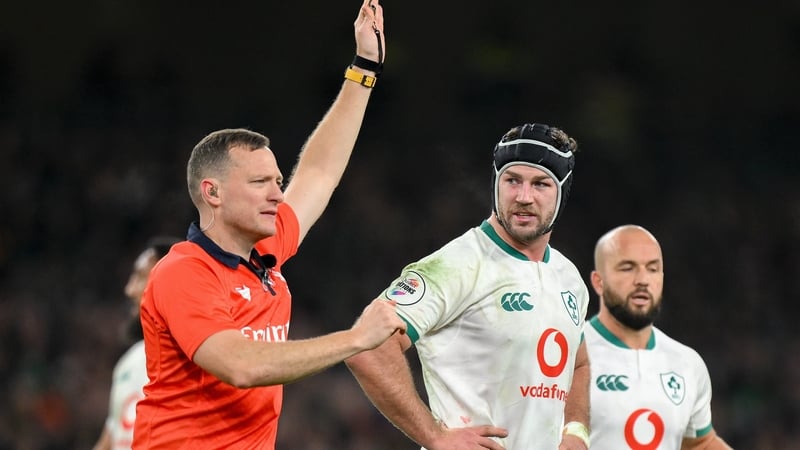

When Andy Farrell spoke to the media ahead of the Guinness Six Nations launch in Edinburgh on Sunday night, it's likely the Ireland head coach would have known what was coming down the tracks.
Rumours of a citing for Bundee Aki started doing the rounds on Monday night, and they were heightened by whispers he hadn't travelled with the rest of the Ireland squad to Portugal for their Six Nations training camp.
Particularly with the benefit of hindsight, it’s notable how Farrell instantly spoke about how his side’s discipline has to improve in his first answer to reporters at the launch earlier this week.
Ireland’s discipline problems have been highlighted often on these pages across the last two seasons, operating at an average of one card per game since the Rugby World Cup in 2023, the highest card-per-game ratio across the Six Nations and Rugby Championship sides.
With numbers like that, the last thing they will have needed is to anger the match officials more, but they’re now coming into the Six Nations championship with a reputation for talking too much.
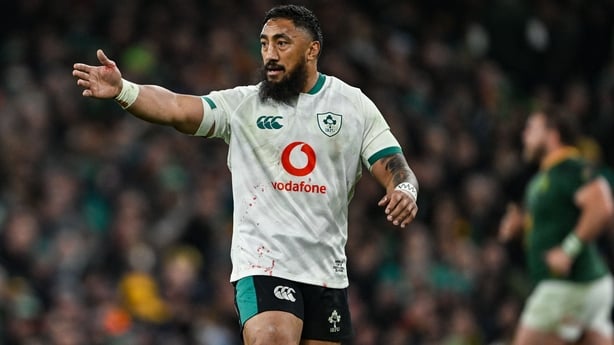
Aki's four-game ban for "verbal abuse and disrespect" of match officials came following a highly-charged atmosphere at Dexcom Stadium where Connacht’s players were frustrated at what they perceived to be multiple high-tackles on their players which went unpunished, and the Connacht centre (above) was warned and then penalised for his running commentary late in the game.
There was nothing malicious in what Aki said on the pitch – his suspension relates to "several" incidents after the game where he confronted the officials – but even at the time it felt like a continuation of a worrying trend where Irish players were testing the patience of referees.
A week earlier, Munster were penalised by English referee Matthew Carley for persistently calling for penalties during play, while Leinster were also penalised for dissent during their win against Munster at Thomond Park just after Christmas.
Farrell was pressed on those earlier incidents, and admitted work needs to be done on keeping their emotions in check, which his captain Caelan Doris echoed.
🗣️ "It's incredible, the amount of chat from Irish players, across the board..." - @bernardjackman
— RTÉ Sport (@RTEsport) January 27, 2026
Are Irish players talking themselves into trouble with match officials?
📺🎧 Full pod: https://t.co/E9hPfU2WwT pic.twitter.com/Tk1lOmZVLk
"You can't control what the refs are going to do, you can control what we're going to do, so focus on that," Doris said.
With one game of his suspension now over, Aki will miss the opening three Six Nations games against France, Italy and England, but will be available to return, if required, for the two final home matches with Wales and Scotland.
Ireland assistant coach Andrew Goodman insisted the door remains open for him to return later in the championship, but that optimism felt at odds with the tone of the IRFU’s statement, even prior to his ban being confirmed.
In dropping him from the squad before he was officially suspended, it’s clear the IRFU know they have bridges to build between players and officials, even if the reaction hasn’t been overwhelmingly positive.
There were multiple accusations of double-standards that the same treatment wasn’t given to then-Ireland captain Johnny Sexton when he was suspended for a similar offence after the Champions Cup final in 2023, as well as Mack Hansen, who was banned for comments made after Connacht’s loss to Leinster at the Aviva Stadium in December 2024.
The union haven’t been consistent in their approach to those three similar incidents, but hindsight would suggest they were too lenient on their players previously. Consistency isn't always a good thing.
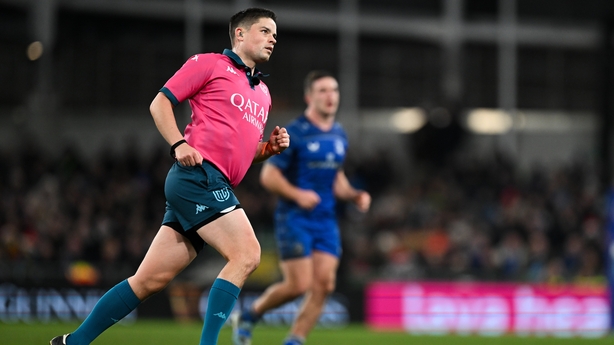
They would also have been acutely aware of the stinging criticism they received from referee Chris Busby (above) last year, who was at the centre of the comments Hansen made, which copped him a three-game ban.
Busby retired from refereeing at the end of last season, and while he claimed it wasn’t specifically down to that incident, he made his overall feelings clear in the summer when he posted a picture of his retirement gift from the IRFU, which he had thrown into the bin.
"What I really needed - and never received from IRFU leadership - was genuine support during the most difficult period of my professional life," he said in a social media post.
When speaking to the media on Thursday, Goodman pointed out how all three of those high-profile incidents involving Sexton, Hansen and Aki came in provincial games rather than in Irish colours, but it paints a poor picture for the reputation of Irish rugby.
The Six Nations will be a major test to see how that reputation is holding up.
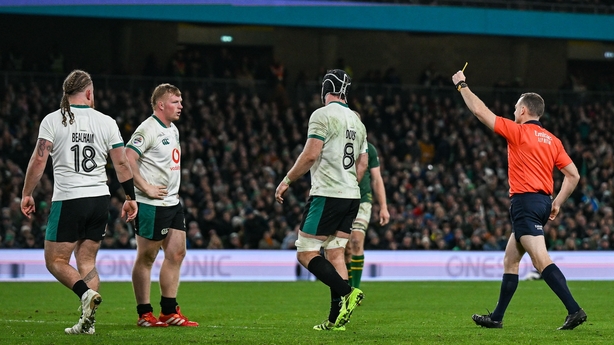
Cutting out the backchat will be the first step, and the RefMic feed will be just as interesting as the game itself when Ireland take on France in Paris next Thursday, with England’s Karl Dickson the man in the middle that night.
If they want to be tough on backchat, the easiest way is to be tough on the causes of backchat, and that involves cleaning up their game.
If you were to look at the penalty count, Ireland gave up 15 fewer penalties than they won during the Six Nations, and their average of 11.5 penalties against per game in November is inflated by their scrum getting decimated against the Springboks.
As Goodman (below) pointed out though, Ireland’s issues with discipline are around the type of penalties they concede, rather than the quantity of them.
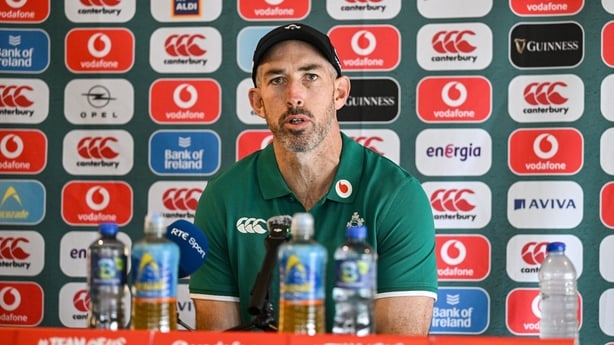
"It was the moments, the big ill-discipline moments that cost us," he said.
"It was the same in November when you have a look at our discipline of games, it was actually pretty good.
"It was just some of the avoidable penalties that we want to get out of our game.
"Jack Crowley's hand on the ground, for example [against South Africa]. Last year it was Joe McCarthy against France. Those yellow-card moments that just put your team under huge pressure.
"I think discipline and smarts have always been a massive strength of Irish rugby. We want to push that through our team, but we want to take away those real avoidable ones that can hurt a team in terms of carding."
