


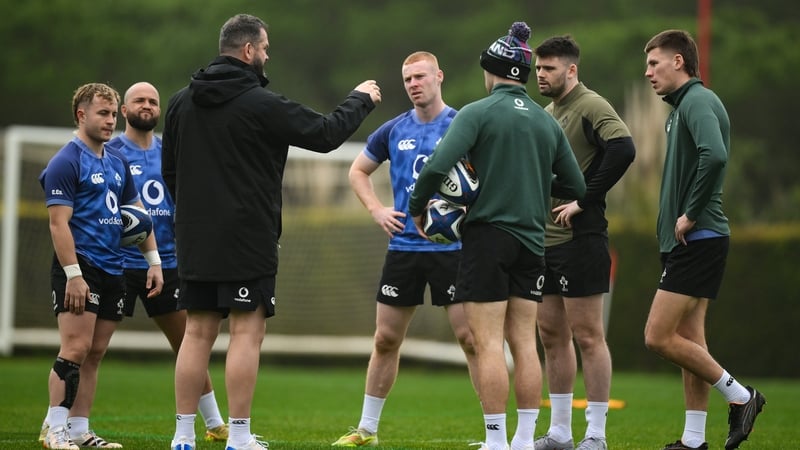

Ireland attack coach Andrew Goodman is preaching evolution rather than revolution, as his side look to rebound back to form in 2026.
With less than a week to go until Ireland begin their Guinness Six Nations campaign away to France in Paris next Thursday, Andy Farrell's squad have been getting down to business at their training camp in Portugal, which has already encountered a few bumps in the road.
Bundee Aki's four-game suspension for "verbal abuse and disrespect" will have been an unwelcome distraction for the Irish management, who have also been dealing with a growing injury list coming into the international window; Hugo Keenan became the latest to withdraw from the squad on Wednesday after suffering a broken thumb, which could keep him out of the championship entirely.
Even the weather is going against them, with the usual balmy Algarve January conditions replaced by some considerable rain and wind.
Goodman’s brief is to get the Irish attack humming again, after a frustrating November campaign where they suffered two defeats from four, with losses to New Zealand and South Africa carrying a running theme of wastefulness with the ball in hand.
With less than two years to go until the next World Cup in Australia, this current Ireland side are struggling to recapture their clinical, multi-phase attack which made them so difficult to beat in 2022 and 2023.
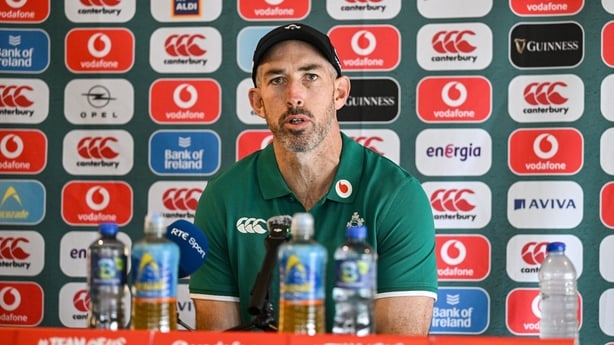
But Goodman (above) isn’t sounding the alarms just yet.
"We're always trying to evolve," Ireland’s attack and backs coach said this week.
"We're not saying we're staying stagnant in this way of playing. We know we've got to evolve our game and we are evolving in a little bit different ways. We're putting things in place to evolve.
"Again, what we did, what we have done in 2022, 2023 is different. It is growing, it's just we need to keep evolving and keep working on that to put it out in the field."
Part of that evolution, the New Zealander, hopes will come from the kicking game, which has been a hot-button issue in Irish rugby in recent months.
While Ireland dominated Australia in that area of the game in November, there’s a sense that Andy Farrell’s side haven’t adapted as well as others to World Rugby’s recent drive to allow for more one-on-one aerial contests.
One of his fellow assistants, Johnny Sexton, as well as Munster captain Tadhg Beirne and the province’s senior coach Mike Prendergast, have voiced their frustrations with the direction of travel the game is taking.
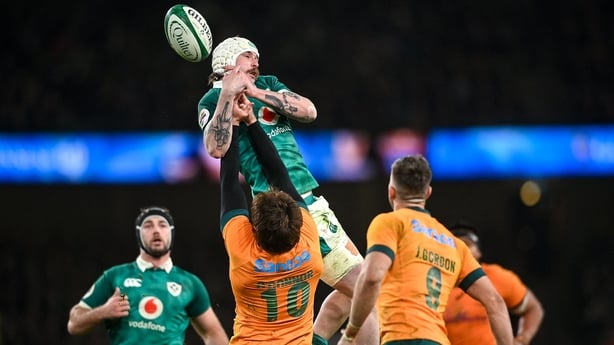
World Rugby don't appear to be changing those law interpretations any time soon, and Goodman believes Ireland have the personnel available to turn a perceived weakness into a real strength.
"Kicking is a weapon," added Goodman, who was part of Farrell’s British and Irish Lions coaching ticket.
"I think if you look at the Aussie game [in November], it was probably one of the highest games we've had kicking-wise in a long time, but a lot of those kicks were flat kick-passes to space.
"Again, we got early success with going back and putting high balls in the back-field and Mack [Hansen] was having a f***ing field day getting up and catching those balls.
"So we understand that those moments when you can get a transition back and you're attacking against the unstructured defence, there's a massive opportunity in the game. It's going to be part of the game moving forward.
"I think if you think of Irish rugby players growing up and the exposure they had to catching overhead, Gaelic and different sports, it's such a massive advantage.
"We have to use it. We want to be the best team in the world at the aerial game and then we want to grow our transitional game as one of the areas we really want to try and evolve.
"Look at the better teams in terms of France and a Bordeaux or someone like that. The way they transition the ball to space straight away, that's part of the evolution we really want to go after.
"So when we do win those balls back in the air, how fast can we be to see the space to execute our passes, to get the space and keep the D unstructured or in chaos."
The former Leinster out-half has taken "a strong look" at Ireland’s performances in November, as he and the rest of the coaching team try to piece together what went wrong in those defeats to the All Blacks and the Springboks.
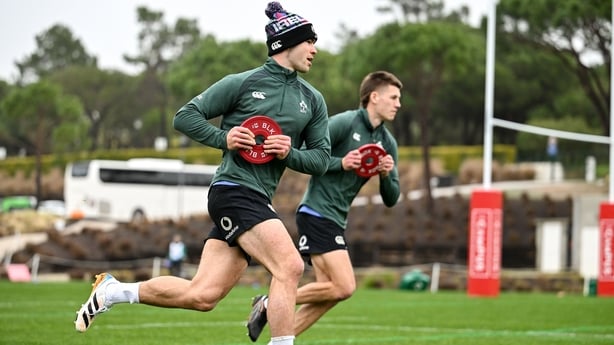
And his belief is that individual error, rather than system error, was the major fault.
"Look, I've heard a lot of that talk through the last couple of months and it's frustrated me a little bit because I think, actually, when you look at that game and look at the opportunities we had to put pressure on them, but didn't execute.
"There was space there for us to take, but we just didn't see it early enough, or we didn't trust ourselves to throw the pass, or the communication wasn't early enough.
"[We] Didn't kind of trust it to throw it, so I think there's still a great opportunity in the game.
"That's where we want to go as a team. We want to have a positive outlook on how we can attack the space," the New Zealander added.
Listen to the RTÉ Rugby podcast on Apple Podcasts, Spotify or wherever you get your podcasts, and email us at sportpodcasts@rte.ie
Follow every Ireland game in the Guinness Six Nations on RTÉ.ie/Sport and the RTÉ News app, or listen to live commentary on RTÉ Radio 1.
Watch live coverage of England v Ireland (21 February) and Ireland v Wales (6 March) on RTÉ2 and RTÉ Player.
