


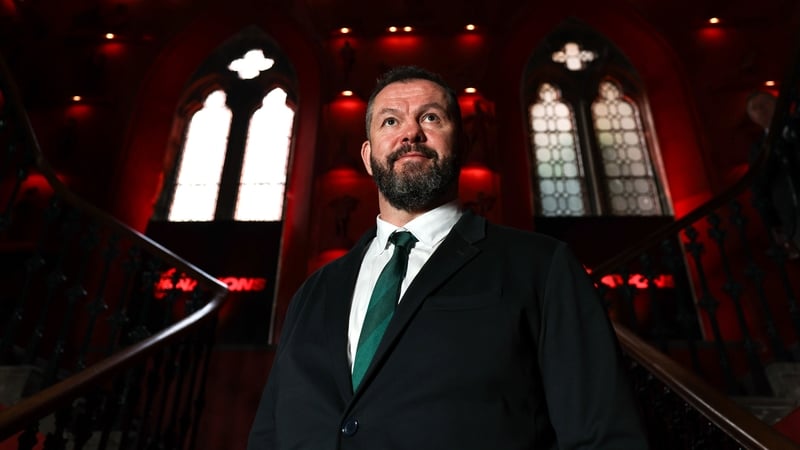

If there's an air of pessimism about Ireland’s chances in the 2026 Guinness Six Nations, then Andy Farrell didn’t get the memo.
Just over a week out from this year’s championship kicking off with a blockbuster Thursday night meeting of France and Ireland, the tournament launch in Edinburgh afforded the Irish public their first chance to hear from the head coach since early December’s World Cup draw.
The scars of Ireland’s defeat to South Africa were still pretty raw back then, and the eight weeks since have allowed for a cold analysis of what went wrong, and what needs to be put right.
That latter column is considerable, and combined with a heaving injury list – particularly at loosehead prop – there is some understandable unease among the general public about the idea of trips to both Paris and Twickenham inside the opening three rounds next month.
Farrell insists their north star is the same as it always has been.
"Winning every game," was his abrupt answer, when asked what makes a 'good’ Six Nations for this Ireland side.
After back-to-back championships in 2023 and 2024 – the first of which was a Grand Slam – Ireland were knocked off their perch last year by the French.
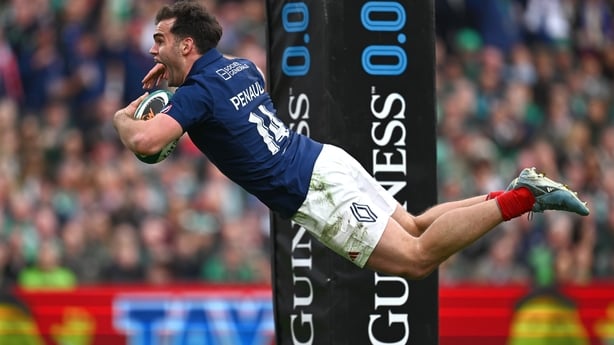
While it was their only loss of the campaign, the manner of the 42-24 defeat was enough for them to finish third overall, and the 7/1 odds being offered for them to win back their title reflects the outside feeling.
"Well, we're hunting again, aren't we? We were being hunted for a while.
"I get why people are saying that, I do, but it doesn't stop us from wanting to be the best team around.
"We have to have that type of ambition. Otherwise, what's the point?," he added.
Two years ago, there was a similarly ominous feeling around their championship opener away to the French in Marseille.
A World Cup hangover had been expected, but the 38-17 win at Stade Velodrome remains one of their best one-off performances under the Englishman.
The heavy lifting for that pessimism had been the retirement of Johnny Sexton, combined with the expectation that Ireland would struggle to recapture their 2023 form.
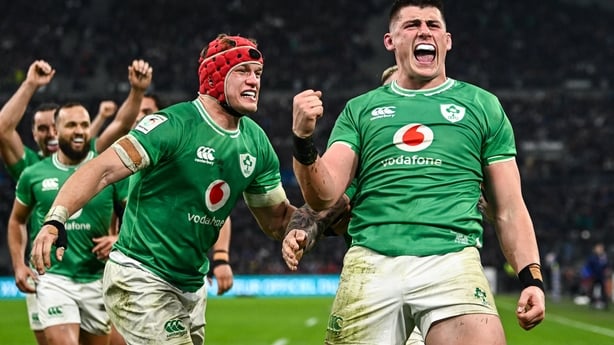
The hangover didn’t arrive in Marseille that night (above), but it eventually came in the second half of 2024, and they have struggled to shake it off.
As is now tradition, the Ireland squad are in Portugal for their pre-Six Nations camp, where Farrell and his coaches will have a checklist of points to address.
The Ireland head coach has often welcomed adversity with open arms, but even he must be wondering how much adversity is too much, having lost his first three options at loosehead prop, when there is already a target on his scrum since it was obliterated in the November defeat to South Africa.
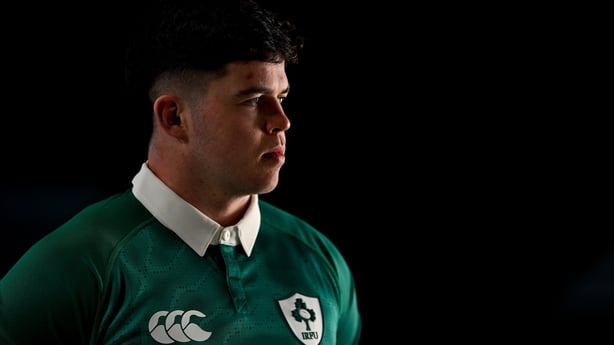
Andrew Porter and Paddy McCarthy were the two looseheads that day, and both are currently in the treatment room (Porter could be available later in the championship), while Jack Boyle’s season-ending achilles surgery led to a call-up for uncapped 20-year-old Billy Bohan (below).
Michael Milne and Jeremy Loughman are the two other specialist looseheads, and the Munster pair have just seven caps between them.
"I get what everyone says, the evolution of every team changes. Everyone talks about cycles.
"Where we're at, with new caps, 16 lads under 10 caps. It says a bit about the squad of where we're at, but there's still an expectation," the Ireland coach followed up.
While the scrum contributed two yellow cards, six penalties and four other penalty advantages in that 24-13 defeat to the Springboks, there is a wider issue around this Irish side’s discipline problems.
Their average of one card per game since the World Cup (22 cards in 22 games) is the highest of the Six Nations and Rugby Championship sides, and even more jarring when put alongside their pre-2024 record of just three cards in 29 games.
Even away from the national side, it appears some referees have grown weary about the level of chat coming from Irish players in the Champions Cup and URC.
"That shouldn’t be the case," Ireland captain Caelan Doris says.
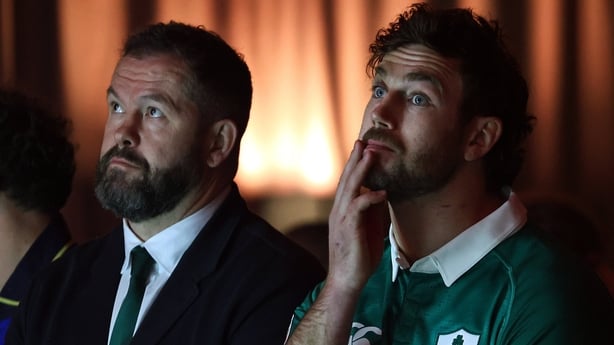
"We pride ourselves on being next moment focused and being present to what’s in front of our face.
"We’ve worked hard on it over the years, and if things are drifting then we need to get back on the horse and make sure we understand that we do things properly.
"We’re at our best when emotionally we’re calm enough to be able to deal with whatever the game throws at us. It’s something that we need to keep on addressing."
The kicking game has been the other major talking point in Irish rugby since November, with the likes of Mike Prendergast and Tadhg Beirne voicing their displeasure around how the current interpretation laws has led to a kick-heavy matches.
And while Farrell believes "there’s still scope for nice, attractive rugby to be played", he admits it has become a focal point of the game.
"Oh yes, we can all see that, can't we? I suppose people are trying to work out the system.
"There are always people trying to work it out. You’ve seen a lot more kicking because of that, the advantage going slightly more to the attacking side. With that, probably a few more scrums, a few more penalties, a few more cards, all of that.
"So, adapting to all that and how that best fits us, I think we kicked the ball the most we've ever kicked the ball against Australia, and we had a record win.
"That says a lot of what’s going on at the minute."
