


Only a few years ago, it would have seemed laughable that the Investec Champions Cup would have slipped under the radar, but here we are.
Granted, this week's Rugby World Cup draw was the main reason for Europe’s premier club competition being overshadowed, but like the early rounds of that World Cup in a couple of years’ time, the pool stages of the Champions Cup no longer has the bite of old.
This is the sixth season of the 24-team format, where the sprint through the pools has ironically turned the tournament into a marathon.
With the EPCR beholden to the financial juggernaut of the French Top14, the tournament’s organisers have been left in an unenviable position.
While there appears to be almost unanimous calls from supporters to return to the old six-game pool stage of home and away matches, there simply aren't enough weeks in the year to make it happen unless the French clubs are willing to give them back a week.
There have been some minor tweaks to the pool format in the six seasons since the rebranding, but the gist of it remains the same; four pools of six, with two teams each from England, France and the URC.

If you’re a URC team, you play the French and English teams.
If you’re French, you play the URC and English teams, and if you’re English, you play the French and URC sides.
In mid-January, the top four from each pool advance to the knockouts.
With teams from the same domestic league being in the same pool, but not being able to play each other in that pool, it doesn’t lend itself to being a level playing field. One team’s fixtures list can be considerably lighter than another’s, even in the same pool.
The introduction of the South African franchises to the Champions Cup in 2022/23 hasn’t worked.
While the four sides have been a valuable addition to the URC, and by proxy the Test rivalries, the logistics of the Champions Cup mean their presence has thrown the tournament off kilter.
Unlike in the URC, where teams travel north and south for multi-week tours, the week-on-week nature of the Champions Cup, particularly in the last-16 and quarter-final block, has resulted in second string travelling squads and lopsided scorelines.

Year-on-year, their interest appears to be waning.
In 2022/23, the South Africans had three teams advance to the Round of 16, two of whom reached the quarter-finals.
The following year, they had two in the last-16, and one in the quarters, and last season none of their sides got through their pool.
It’s no slight on the teams involved. In particular, the Bulls and Stormers remain two of the URC’s big-hitters, and their focus appears to be on that competition.
It’s hard to know what the future holds for the Champions Cup, which has existed in various guises for 30 years.
When TNT Sports took their money elsewhere and decided to buy the rights for Test rugby, it left the EPCR selling their TV rights for less than they would have hoped, while the removal of any free-to-air rights means fewer eyeballs will be on the competition for the next two years.
There’s a case to be made that less is more in the Champions Cup.
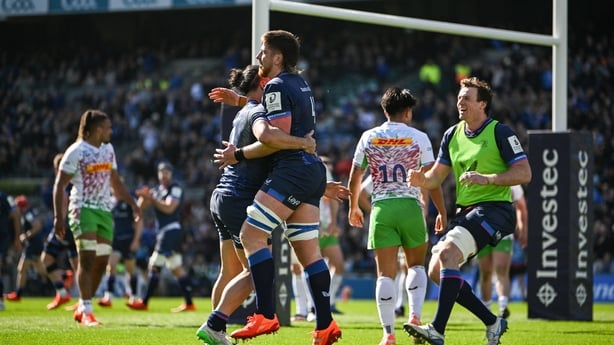
With 24 teams currently in the competition, 60% of URC, Premiership and Top14 sides have a place in the tournament, including eight of the 10 Prem sides.
The word 'Champions' is doing a lot of heavy lifting, and a streamlined competition with fewer teams involved may improve the quality at the expense of quantity.
The frustration is that when the Six Nations is done and the knockouts arrive, the Champions Cup is still capable of delivering the drama.
From an Irish point of view, we had Munster’s remarkable win against La Rochelle in the Round of 16 last season, and Northampton’s stunning upset of Leinster in the semi-finals in May.
The last four finals have all been thrilling games, and proof that when the best of the best play each other, sparks fly. Unfortunately, the top end of that wedge is already thin, and getting thinner.
Each of the last five winners have come from the Top 14, and with the money in the French game continuing to increase, that trend may continue in the years to come, with Toulouse in particular looking better again this season, and a fit-again Antoine Dupont back on deck.
As always, Leinster look best placed to muscle their way to the top of the pack, even if their start to this season has been slow by their usual standards.

Despite a stodgy run of form and a growing injury list, Leo Cullen’s side should get through Pool 3 with minimal fuss, and will be targeting a high seed as usual for the play-offs, to keep them at either Aviva Stadium or Croke Park for as long as possible.
They open their campaign at home to Harlequins on Saturday night, and while nobody is expecting them to repeat their 62-0 win against the English side from April, they are heavy favourites to start strong ahead of a trip to Leicester Tigers next Friday, before hosting La Rochelle and traveling to Bayonne in January.
Ireland only have two representatives in the Champions Cup this season, with Ulster and Connacht missing out on qualification.
For Ulster it will be the first time ever that the competition has started without them.
Munster’s Pool 2 is more of a tournament reunion of old friends and foes.
Up first a trip to Bath where their former head coach Johann van Graan has led a remarkable turnaround, culminating in a Premiership and Challenge Cup double last season.
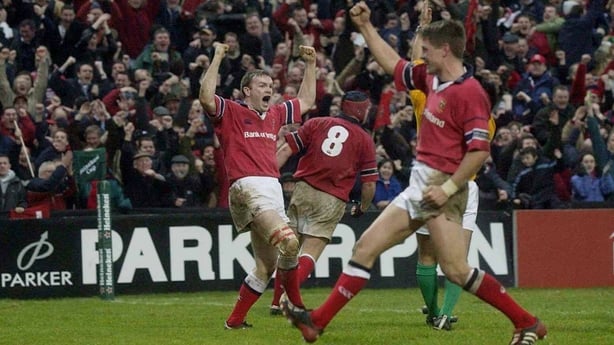
Returning from The Rec with a win would be a stunning start, although a bonus-point of some description would be a reasonable return, if they can add a good win against Gloucester at SuperValu Páirc Uí Chaoimh next week, a repeat of the famous 2003 'Miracle Match’ (below).
While they have consistently been reaching the knockout stage, they’ve often made heavy work of the pool, leaving them with treacherous away games in the Round of 16, a large reason why they only have one quarter-final appearance to show for the last three years.
This year, the pool draw hasn’t been kind.
Their two toughest opponents in the pool, Bath and Toulon, will both come away from home, and while they would be expected to see off Gloucester and their regular foes Castres at home, they will likely need to pull off a big road win if they’re to get home advantage when the knockout stage rolls around.
They have enjoyed a good start under new head coach Clayton McMillan, who will soon learn just how big a deal the Champions Cup still is around the province.
Going all the way to the final at San Mames in Bilbao next May seems like a long shot though.
Less so for Leinster, who will be hoping they can return to the site of their fourth and most recent title success.
Listen to the RTÉ Rugby podcast on Apple Podcasts, Spotify or wherever you get your podcasts.
Listen to live commentary of Bath v Munster on Saturday from 8pm on RTÉ Radio 1
