



The breakdown is a key factor to winning any game, and the Champions Cup quarter-finals were no different.
Leinster cruised past Leicester in the end to set up an attacking showdown with Toulouse in the semi-final. However, Leicester got under Leinster's skin at times and attempted to use the breakdown as a gateway to disrupt the Leinster flow.
Tommy Reffell had a number of jackals resulting in penalties, which makes you wonder what is the best way to get at Leinster’s attacking ball?
You could chase breakdowns in the hope of slowing the ball and winning turnovers, however, if you are slightly inaccurate with your timing or poaching ability the defence will be short on numbers and the Leinster attack will become even more potent.
The other tactic could be to leave the breakdown alone altogether to avail of a full defensive line, hoping to slow the attacking ball with a full front line of defenders, which should allow for less defensive frailty when the ball is slower coming from rucks.
We know from the Leinster and Ireland template that two to three-second ball is what their attack thrives on so choosing the defensive tactic to lengthen the time it takes for the ball to be available is a necessity.
In reality it’s probably a hybrid of the tactics above. Losing defenders to breakdowns that are already won is a cardinal sin. Having defenders on their feet to clog the front line, force slightly slower ball and open opportunities to attack a different breakdown is a balance that most teams are trying to achieve regardless of who they are playing against.
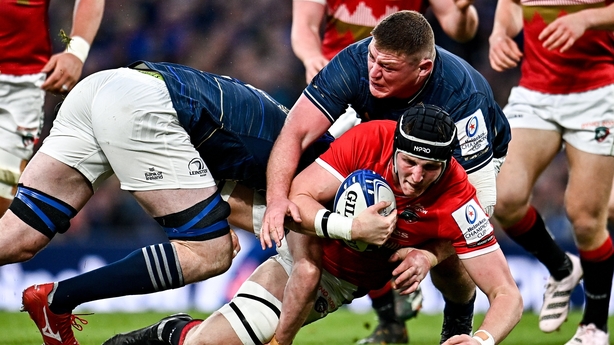
That can be easier said than done against the attacking ingenuity of semi-finalists Leinster and Toulouse.
The Leicester defence was chasing shadows for Garry Ringrose’s opening two tries. They weren’t short on numbers either, it was merely the Leinster attacking threats forcing too many decisions from Leicester, and poor decisions were made to free Ringrose up, cutting through the middle of the defence.
On top of their attacking movement, Leinster are one of the top performing teams at the attacking breakdown.
Their support play and clarity on their roles allows them to arrive at the ruck before the opposition poacher, meaning the ball is won before there is ever really a contest and play gets moved to another area quicker than the defence can get set.
The legality of these ruck involvements can be questionable, not just from Leinster, but the ruck has become a fairly loose area of the game where you once had to stay on your feet at all times. Now, if you are seen to take a player away from the ruck you can go off your feet freely.
That’s not the part where I have a gripe though. Attacking teams arriving to the breakdown before the opposition are now locking down on their own player, not allowing a fair contest and there doesn’t seem to be much spotlight on it from a refereeing perspective.
Yes, we want the attacking team to get the rub of the green but not when they can unfairly seal off the ball before there’s any contest.
Leinster’s breakdown ability will make them favourites against Toulouse in Dublin. The ruck is vitally important to any game. Leinster are able to look after their own attacking ball but they can also cause a lot of trouble in defence with Sheehan, Doris and a fit Josh van Der Flier. They have threats all over the pitch.
Toulouse showed defensive frailties when the Sharks got fast ball and the Toulouse defence wasn’t as interested from the start. The Sharks started at a ferocious pace but Toulouse were able to outscore them with their incredible half-back pairing and full-back, Ramos, in devastating attacking from.
However, they won’t get away with that kind of sluggish start against Leinster, the game could be over before they know it, much like how Ireland got out of the blocks against France in the Six Nations.
9 mins: With just 75 seconds on the clock Garry Ringrose crosses for Leinster. Byrne converts, but Leicester have since responded with a Pollard penalty
— RTÉ Rugby (@RTErugby) April 7, 2023
📺 https://t.co/jdvmXk432V
📻https://t.co/us1yDO9dqB
💻https://t.co/aeEeULJEzt #RTErugby pic.twitter.com/eTTyAONY2n
Should Leinster see off the French powerhouse, they would likely play defending champions La Rochelle in a final.
La Rochelle will have to deal with Exeter first, who were tactically astute against the onrushing and aggressive Stormers defence. Exeter used their kicking game and exaggerated depth in attack to give themselves time to move the ball.
The French giants have a similarly aggressive defence, evident in their first kick at goal last weekend against Saracens. Where the Stormers left their wings exposed, La Rochelle rushed very hard off the line, despite a numerical disadvantage. However, they left their winger wider to cover off any kicks.
It meant that executing a couple of passes into the wider gap is frustratingly difficult and the kick space wasn’t any easier to find. When the tackle came in, it was Gregory Alldritt that pounced on the ball at the ruck to give Hastoy the opening shot at goal.
La Rochelle are another nuisance at the breakdown. Their powerful and dynamic attack makes their attacking ball easier to win. When you have the size and gain line dominance that La Rochelle have, you can generally look after your own ball that bit better.
La Rochelle play a huge pressure game, not losing too much control at any stage of the match, which could frustrate the Leinster attack, should they face off.
On the defensive side, they have accurate and confrontational experts of the breakdown. Alldritt, Danty and Botia are incredibly difficult to keep away from your ball.
Botia was in fine form against Saracens, hanging around any retreating breakdown and getting his hands on the ball. Some of the dark arts displayed in his ruck actions shows why he’s able to switch between openside flanker and centre. He had a devastating effect on Saracens quick ball. If he wasn’t winning the turnover himself, he was disrupting somewhere along the way to open the gate for his team-mates.
It's much easier to win penalties and sacrifice a player in the ruck when your defence is dominant and more confident throughout the game.
Exeter will need to repeat their tactical genius if they are to negate these threats when they face La Rochelle at the end of the month.
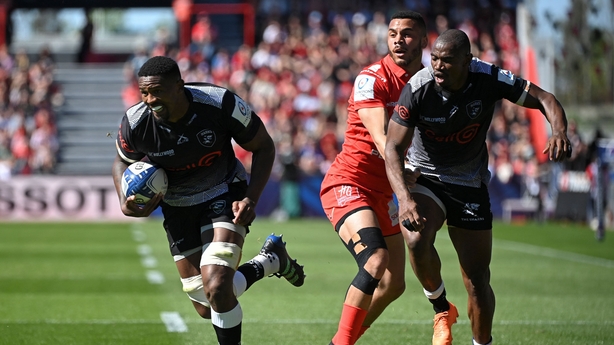
The breakdown is a key factor in rugby and whoever wins that battle should find themselves squaring off in the final at the Aviva Stadium.
Leinster and La Rochelle are both heavy hitters when it comes to protecting their own ball and upsetting the opposition so you would expect to see them repeating last year’s final.
A solid platform at the set piece, leading to a well-executed first phase attack will result in a much easier and effective breakdown. This is where Leinster have excelled. If the first breakdown is quick, your attacking ball will also be quick and repeatedly crossing the gain line becomes a lot easier.
Of course, you have to treat every individual breakdown with the same respect, because the minute you lose the race to the ball, the opposition will have a poacher in place and referees are rightly rewarding the penalty quite quickly to avoid any unnecessary time spent in a vulnerable position.
Win the battle of the breakdown, and you will go a long way to winning any game.
