



The Munster-Leinster rivalry may have receded somewhat in the public imagination but there was once a time when, like John Lennon, it was bigger than Jesus.
Gay Byrne and the Late Late Show get a great deal of credit off first year sociology students for secularising Ireland; the Magners League - for that is what it was called for those few years - gets no credit whatsoever for changing Good Friday forever.
The ban on drinking in pubs on Good Friday had been a staple of Irish life since the Intoxicating Liquor Act of 1927. Almost as venerable a tradition was the rush to stock up on cans beforehand. As a result of the law, Holy Thursday had long been a bumper day for off-licences.
Though supported with great ferocity by the religiously devout and with somewhat less ferocity by the romantically inclined nostalgics, the ban was increasingly regarded as an anachronism by the 21st century.
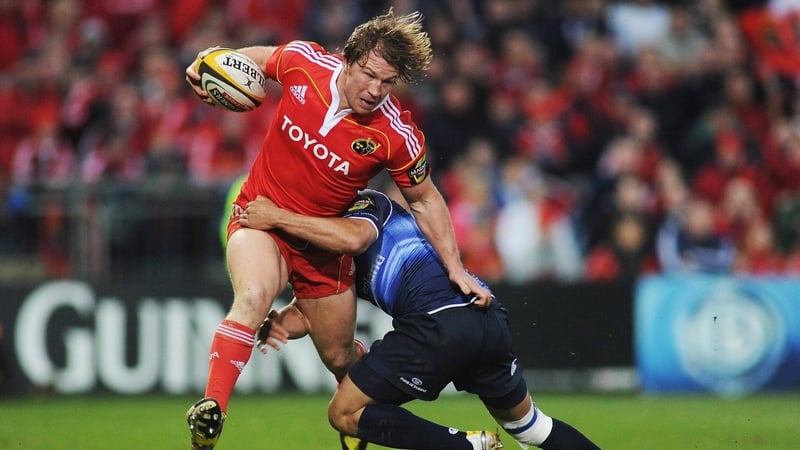
Matters came to a head in 2010 when the Munster-Leinster Magners League clash in Thomond Park was fixed for Friday, 2 April - Good Friday.
The rivalry between the two provinces was then at its zenith, less than 12 months after the famous Croke Park semi-final of '09, most vividly recalled for impetuous upstart Johnny Sexton hollering in ROG's face after Gordon D'Arcy's first half try.
While Munster had been in the ascendant for most of the preceding years - and made full sure to bask in triumphalism while they had the chance - the balance of power in the relationship was already in the process of shifting.
Early efforts to change the date had come to nothing. Munster had expressed a preference for Easter Saturday. Leinster - whose heartlands, after all, always delivered the biggest Yes votes in liberalising referenda - weren't inclined to agree to the change, given they were out in the European Cup six days later. The organisers weren't for turning.
When reality dawned that the date was set in stone, the Limerick vintners, horrified at the prospect of the match-day windfall disappearing before their eyes, sprang into action.
On 15 March, the Limerick Vintners Federation lodged an objection under Section 10 of the updated 1962 Intoxicating Liquor Act, which allowed for exemptions to the Good Friday ban in the case of what was termed "special events".
As a piece of reminiscence it would be hard to improve upon the Wikipedia page dedicated to the episode entitled 'Good Friday closure controversy'.
The Seanad, the traditional home of high-flown rhetoric, offered some gems. Joe O'Toole argued in favour of dropping the ban and for the separation of church and state more generally when he said we "should render unto Munster the things that are Munster's and render unto God the things that are God's".
Donie Cassidy, on the other hand, was appalled that anything should interfere with our traditional commemoration of the "crucifixion of our Good Lord", not least the negotiated TV rights of a foreign broadcaster.
David Norris, notwithstanding his Church of Ireland background, lamented the proposal to end the tradition, painting it as part of a general homogenisation and noting that Sunday was now the biggest commercial day as we had become lackeys of British multinationals.
Moyross-based Franciscan friar Brother Sean O'Connor fulminated against the proposal to end the ban, saying that observant Catholics should be nowhere near Thomond Park on Good Friday and that anyone who chose to attend was "serving Mammon over God" (as opposed to Mumhan).
Brother O'Connor also suggested that the decision would "backfire on a spiritual level".
Brother O'Connor did not explicitly argue that it would backfire on a rugby level, though in retrospect he could have. The religiously inclined might see Munster's struggles since then as a karmic backlash for the great Limerick knees-up of April 2010.
He was in the vicinity of Thomond Park that day, distributing religious material to the Brave and the Faithful as they approached the venue. Most ploughed on regardless.
The Sunday Independent's Declan Lynch, not renowned for his devotion to the oval-ball game, did a piece for Prime Time on the controversy, pondering the ban, its temporary lifting, and the country's relationship with alcohol.
The Republic of Telly dispatched Mairead Farrell to Limerick to vox-pop rugby fans on the lengths they had gone to in attempting to source booze on Good Friday.
The case was decided on 25 March. At the end of a 90-minute hearing, Judge Tom O'Donnell decided in favour of the vintners, observing that since Thomond Park would be able to serve alcohol under the terms of its licence, it would be "somewhat absurd" if pubs in the vicinity weren't also able to do so. Pubs in Limerick would be able to trade on Good Friday between 6pm and 11.30pm.
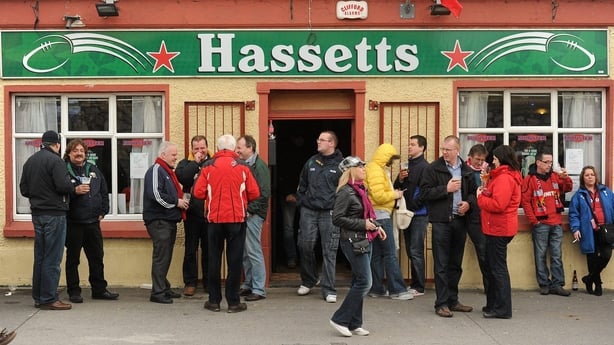
There was much rejoicing among the publicans of the city, who produced a raft of commemorative T-shirts marking their victory, the most wordy of which read "We have no bishop, no minister, and no hurling team but we can drink on Good Friday" - referring to the recent resignation of Willie O'Dea over a false affidavit controversy and the Limerick hurlers' strike in revolt against Justin McCarthy's management.
In the Sindo, columnist and publican Billy Keane hailed the judge for his common sense ruling and labelled the whole affair 'The Good Friday Disagreement'.
While Judge O'Donnell's decision was limited to a one-off special event, the whole episode probably marked the beginning of the end for the Good Friday drinking ban.
The ban was officially lifted in June 2018, Minister for State David Stanton saying it was "unsuited to a modern society" and that the change would boost tourism on Easter weekend.
Unlike many church-state issues, the debate didn't entirely break down on right-left political lines, with Maureen O'Sullivan, a woman of the left, arguing that "we could do with a few Good Fridays throughout the year".
The game was a watershed in a rugby sense too. Hard to believe now, but Leinster hadn't won in Thomond Park since December 1995, when the game here was still sorting through the ramifications of professionalism. Jim Glennon's side won 19-15 in Limerick en-route to their first inter-provincial crown in 12 years.
Not that there was much whooping and hollering. Back then, the interpros were barely above the Railway Cup in the level of interest they attracted.
As Limerick academic Liam O'Callaghan has noted to this writer in the past, Munster Rugby was regarded with apathy and even resentment within the city by the early 90s, amid a perception of pro-Cork bias in selection and the ultimately short-lived supremacy of the All-Ireland League.
Limerick clubs, in particular Shannon, dominated the AIL in the 1990s and the tournament was the breeding ground for the generation of Munster players who would power the province's success in the 2000s.
The passion that then attached to the AlL was transferred, almost instantaneously, onto the Munster Rugby team from the moment of their famous quarter-final win over Toulouse in a gloriously sunny Bordeaux in 2000 - one of the most riotous bandwagons in Irish sport had started rolling and would stay going for well over a decade.
Oddly enough, it could and has been argued that Munster's success in the noughties contained the seeds of its own downfall - in that their popularisation of the provincial game badly weakened the club game which had birthed their golden generation.
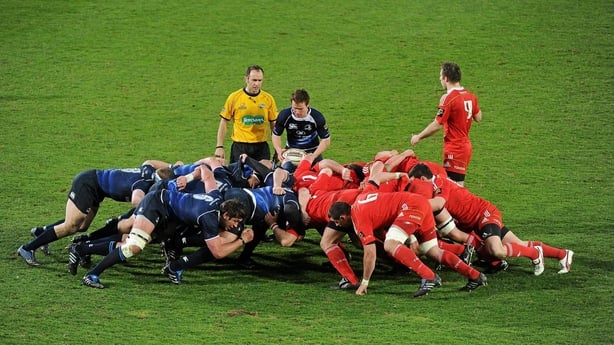
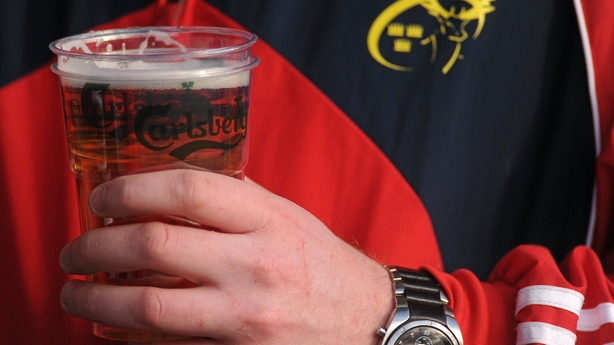
The 2010 match was as keenly contested on the pitch as it had been in the courts. Rob Kearney's first-half try and Johnny Sexton's 66th-minute penalty delivered a landmark 16-15 victory for the visitors. Sportsfile bank of photos from the game contain almost as many close-ups of supporters cradling plastic pints as they do of Sexton and co.
In some respects, the 2010 Good Friday saga could be regarded as one of the high-points of the rivalry, possibly the last one, after the Heineken Cup semi-finals of 2006 and 2009.
The Leinster-Munster match-up no longer has the same prime time drop-everything feel that it did in those years, at least to the casual rugby follower. Leinster's complete domination of the fixture in recent years has strangled much of the wider interest.
Between 1996 and 2010, Munster led Leinster 15-9 in the head-to-head. Since Leo Cullen's appointment in 2015, Leinster have won 17 of the 20 meetings between the sides, and one of the losses came in the entirely irrelevant Rainbow Cup.
The Ireland team is largely the Leinster team, including the imports, plus a few add-ons from the other provinces. The engine room of Irish rugby is no longer the Limerick club scene, as it was for a time in the late 1990s, but the Leinster Schools Cup.
The fee-paying schools in the Pale have been busy creating a super-race of back row forwards in the past decade, primed for the professional game from the moment they complete the Leaving Cert. The best of the crop are funnelled straight into the Leinster academy, the surplus products shipped around to the other three provinces.
Even the AIL now is dominated by Dublin outfits, with current champions Clontarf occupying top spot, with Terenure College sitting in second. Garryowen are rooted to the bottom of the table. No Limerick team has won the title since Shannon in 2009.
Far from not having a hurling team, Limerick is now home to one of the finest and most relentless outfits in the history of the sport.
Last weekend, Munster, after some apparent progress in the first season under Graham Rowntree, suffered another blow with a last-16 Champions Cup exit to Sharks, conceding seven tries in the process.
Leinster, meanwhile, are out again on Good Friday.
This time it's the European Cup but there will be no Munster to face them.
Leicester Tigers, having resurrected themselves after a few grim years of suffering, are the opposition but like all visitors to D4 these days, are heavy underdogs. At least, the courts will stay out of this one.
Listen to the RTÉ Rugby podcast on Apple Podcasts, Soundcloud, Spotify or wherever you get your podcasts.
Watch Leinster v Leicester Tigers in the Heineken Champions Cup on Good Friday night on RTÉ2 and RTÉ Player, follow a live blog on RTÉ.ie/Sport and the RTÉ News app or listen to live commentary on RTÉ Radio 1
