



by Kurt McQuilkin
Ireland v Wales was a game of two defences. One laid down the foundation for a famous and fully deserved victory.
The other unravelled and paved the way for an unwanted early exit from the knock out stages of the 2011 RWC for Ireland which leaves nothing but frustration and "what might have beens".
Defensively the Welsh game plan was simple - ramp up the linespeed across the park and target the legs of the Irish attackers through the "chop tackle".
Ireland’s main ball carriers in the forwards – the likes of Sean O’Brien, Stephen Ferris, Jamie Heaslip, Cian Healy - were taking ball at first reciever off the ruck but were stopped at source with clinical and aggressive tackles.
This forced those ball carriers out into the wider channels in a search to find any gaps in the Welsh defensive screen. More often than not they ended up running lateral lines while looking for space and made themselves even easier targets for the fired up Welsh defensive unit.
They showed glimpses of what they are capable of early in the match with a couple of promising attacking movements from line breaks and counter attacks but unfortunately for Ireland the Welsh defence scrambled well and regained their composure.
Ireland were tackled to a standstill
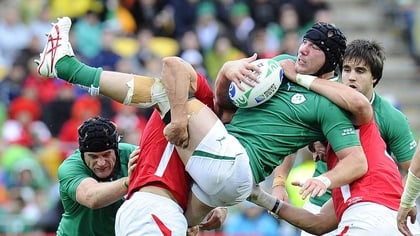
There were a couple of multi-phase situations where the Welsh defence tackled the Irish attack to a complete standstill and the Irish attackers in the end were taking the ball statically and just shovelling it on in the hope that something might happen outside them.
It was a relentless, aggressive and punishing defensive display and you have to say "hats off" to the Welsh defensive coach Shaun Edwards and his charges.
The three Welsh tries would have left Ireland’s defensive coach Les Kiss very frustrated at the ease with which they were scored - especially two of them.
The first try by Shane Williams came through some good building of phases from Wales and had the Irish defence creaking throughout the build up. The defense looked like getting breached on a couple of occassions until Leigh Halfpenny recognised the “numbers down” situation in the Irish line and expertly put Williams in the corner.
The second try was a "coach killer".
Ireland had just got back to level terms after the Keith Earls try. Once again they had been forced on the defensive scramble and had chased back to drag down the Welsh attacking unit. They had reset for the next phase.
But for some unknown reason Gordon D'Arcy started to leave his position at blindside first man off the ruck to move to the openside. That left an open invitation for Mike Phillips to attack down the shortside channel on a typical physical run and muscle his way over for the crucial game changing try.
The third try again came from another all too common scrambling defensive situation.
Forced into their own 22 the Irish were intially numbers down, but had scrambled well to get numbered up. Then Healy and Earls did not execute a tackle on Johnathon Davies and he coasted past two more Irish defenders on his way to the tryline to score the knock out blow for Wales.
Ireland were forced to scramble too often
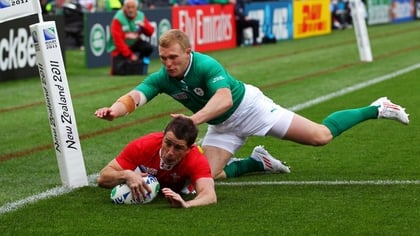
These scrambling defensive situations had wide ranging effects on the Irish players and their gameplan. The Irish defenders were consistently getting distracted by the Welsh decoy runners in the midfield in phase defence situations.
The smart Welsh attackers were then putting the ball in behind the decoy runners to a second attacker and catching the Irish defensive screen short out in the wider channels.
That created an unwanted scramble defensive situation for the Irish players.
Too much scrambling effects your defensive screen and set ups in the short term but it also takes the legs out of your attacking patterns of play in the long term and nowhere more so than in your tight five.
This was clearly evident as the match got into the last quarter, when there was no zip to the Irish attack. You can mark a majority of that fatigue factor down to too much scrambling on defence.
It is an unfortunate note for the Irish to end their 2011 RWC campaign on especially after performing so well against Australia and Italy and finishing top of the pool.
You can’t help but think that a marvellous opportunity to do something no other Iirish team has achieved before has been missed.
But rest assured the New Zealand public took this Irish team and their amazing band of supporters to their hearts and the RWC 2011 was the better for having them.
