


Irish rowing enjoyed one of the most successful years in its history in 2025, delivering world-class performances on the international stage while navigating the aftermath of difficult conversations about culture and athlete welfare in the lead up to the Tokyo and Paris Olympic Games.
At the centre of this next chapter is Niall O'Carroll, who was appointed High Performance Director in September 2025.
O'Carroll took the job at a sensitive moment for the sport.
Shortly after his arrival, a series of Sunday Independent articles were published, featuring former and current Irish rowers reflecting on their experiences within the high-performance system under the previous leadership.
Despite the turbulence off the water, recent Irish performances on it have been exceptional.
At last year's World Championships in Shanghai, Ireland finished fifth in the overall medals table, winning two gold and two bronze medals, an extraordinary achievement for a small nation competing against traditional global rowing powerhouses with far greater resources.
"People don't fully realise how remarkable what the athletes and coaches achieved last year really was," O’Carroll says.
"Dominic Casey is a phenomenal coach and a really good person. To hold a group together and deliver those results given the circumstances was exceptional, and something everyone in Irish rowing, and Irish sport, should be immensely proud of."
O’Carroll brings a diverse and international background to the role.
Originally starting his career as a Garda, he later pursued academic studies in psychology and high performance, which led him to Canada to work with renowned sports psychologist Terry Orlick.
That experience opened doors across the sporting world, including roles in North America, New Zealand with the Auckland Blues, and British Gymnastics.
After returning to Ireland during the pandemic, O’Carroll spent three years as chair of Irish Boxing, a role he describes as one of the most rewarding of his career.
"Challenging, absolutely, but with incredible people," he says. "And good people make any challenge easier."
That experience, combined with a desire to return to full-time high performance sport, ultimately led him to Irish Rowing.
"What attracted me was the challenge," he admits.
"It’s often harder to come into a system that’s already successful. Here, despite the success, there were clearly areas where I felt I could have a positive impact."
Central to O’Carroll’s early months has been addressing the fallout from the media coverage and rebuilding trust within the rowing community.
While he insists that Irish Rowing does not currently have a toxic culture, he acknowledges that mistakes were made in the past.
"Culture is incredibly easy to get wrong and very difficult to get right," he said.
"From what I can see, a key issue was communication or the lack of it. When there isn’t transparency around selection or clear communication between athletes, coaches and leadership, it creates a vacuum. And vacuums allow noise, confusion and hurt to grow."
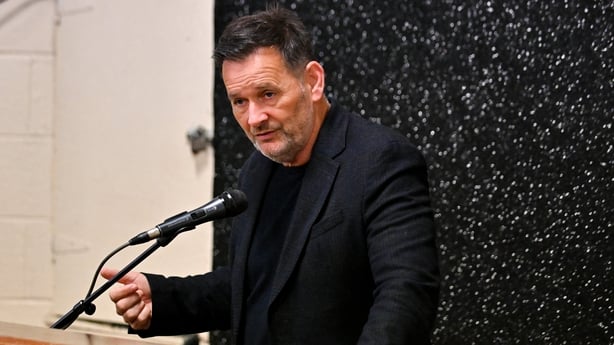
O'Carroll notes that many of the incidents referenced in the articles dated back five or six years, and that significant work had already been undertaken following Paris 2024 through formal reviews and changes.
"The culture throughout 2025 was very strong," he says. "But we would be foolish not to learn from what’s happened."
Now O’Carroll is hoping to move the focus forward. "We’ve asked athletes to draw a line under the past and focus on what we’re building now. The ambition is to create a system that is the envy of the world, not just in performance, but in experience."
One of the most encouraging signs for the future is the emergence of a new generation of athletes.
Five junior rowers are currently embedded in the senior training environment, including World Under-19 champions Jack Rafferty and Jonah Kirby, who recently finished first and third at senior trials, ahead of Olympic medallists.
"That sends a message," O’Carroll says. "You can’t rest on reputation. Performance matters."
O'Carroll also highlights the arrival of 18-year-old Sophia Young as a sign of the depth of emerging talent. "These young athletes are coming in without any baggage. They just want to row."
Beyond that, Irish Rowing has also launched a new strategy for Olympic beach sprints, a fast, accessible and spectator friendly discipline that O’Carroll believes could transform participation.
"You can turn up, run down the beach, jump in a boat, sprint, it’s fun, inclusive and exciting. Who knows? The next Olympian for Brisbane might never have sat in a boat yet."
For O’Carroll, success is ultimately defined not just by medals, but by performance and experience.
"The only thing athletes can control is delivering the best performance they’re capable of when it matters," he says. "If they do that, we’ve succeeded. regardless of podiums."
As Irish Rowing looks toward LA 2028, the challenge is clear: build on unprecedented success, embed a transparent and athlete centred culture, and ensure that those who pass through the system leave with pride in both what they achieved and how they were treated along the way.
