


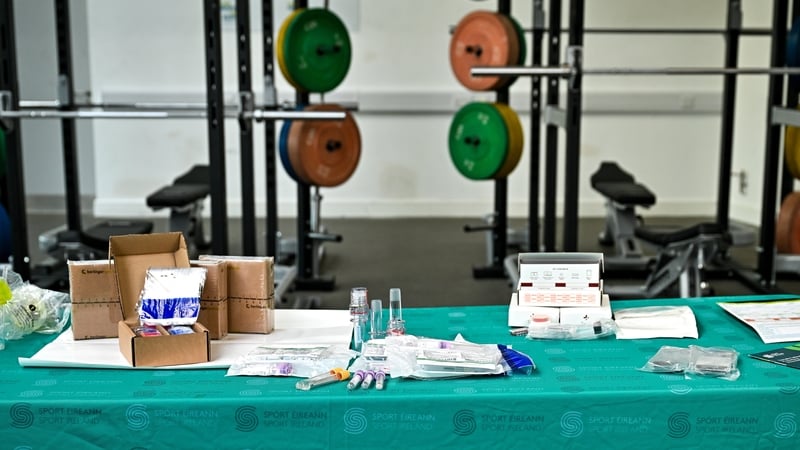

The Enhanced Games are due to take place later this week in Las Vegas.
The idea of the event is that athletes can dope, under supervision, to see how fast they can run or swim, or how much weight they can lift.
The events are spread across swimming, athletics, weightlifting and strongman contests in a purpose-built venue on the Vegas strip, pitched by the organisers as "elite athletes push[ing] the limits of human performance".
Certain sports have been impacted more so than others, but cycling and athletics spring to mind as sports where a significant amount of damage has been done to the idea of 'fair competition'.
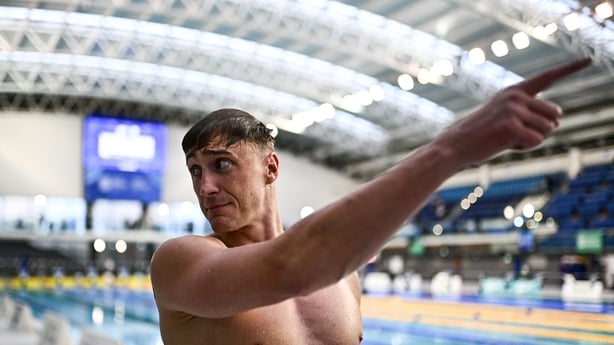
In that instance, some might argue that it's better to remove the pretence of completely clean athletes and instead allow them all to have the same level of doping.
"It sounds like it would be an interesting idea, something that would pique the attention of a lot of people," says Bruce Wardrop, a lecturer in Sport and Exercise Science in SETU Waterford.
"But if I think about it for any longer than a couple of seconds, I come down to the other side. It just really doesn't sit right with me.
"By allowing performance enhancing drugs, it goes directly against clean sports. I know that sport isn't clean. Athletes get caught for doping all the time. I'm not naive enough to say that all our favourite athletes out there are squeaky clean and would never take performance enhancing drugs.
"There are however systems set up to try and minimise it so that we can celebrate the achievements of who are supposed to be the clean athletes, that the best athletes in the world, the fastest, the strongest, the most powerful, the most skilful, the most technically proficient or whatever combination creates excellence in any given sport.
"That the achievement hasn't been artificially gained or it hasn't been supplemented by something that is illegal."
Wardrop is also an Accredited Advanced Sport Scientist with the Irish Sport and Exercise Science Association, a non-profit organisation which promotes evidence-informed practice within the sport and exercise sciences community.
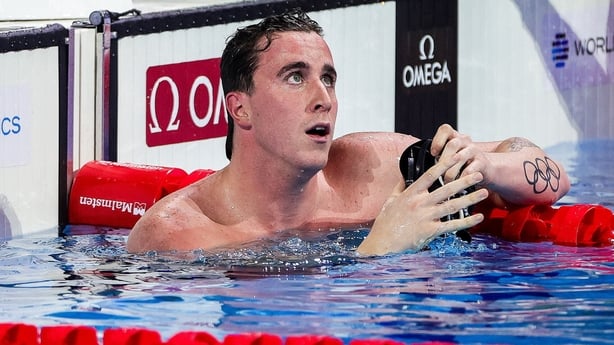
Irish athletes are set to take part, and Olympians at that.
Swimmer Shane Ryan was born in the US but represented Ireland owing to his Laois-born father. He took part in the games at Rio, Tokyo and Paris. Internationally, he won bronze medals for Ireland at the 2018 and 2024 World Championships, while also claiming European bronze medals in 2018 and 2019.
Shane Ryan on Enhanced Games: I need to put myself first
Also in the pool will be Max McCusker, who represented Ireland in Paris in the 4x100 medley.
Ryan was open when he spoke to RTÉ last year, confirming that the decision to partake in the Enhanced Games was a financial one.
The winners of each event will be given around €220,000, with additional bonus money on offer for participants who can set 'enhanced world records' in the 100m sprint or swimming's 50m freestyle.
"Not everyone has the earning power of a Premier League footballer or a championship-winning athlete," Wardrop, who also hosts the ISESA Podcast, points out.
"There are many, many elite athletes in smaller sports who don't have the same financial opportunities and the temptation must be there to participate in the Enhanced Games, but they're closing the door on performance beyond that.
"World Aquatics, for example, have come out and said that anyone associated with the Enhanced Games will not be able to compete in an event again after this. So I get the financial incentive for the athletes, but it seems like a short-term gain for potential long-term pain from it."
More: Sport Ireland 'deeply disappointed' as Shane Ryan joins Enhanced Games
The idea of acknowledging the chance to break records, even while doping, or going after large cash prizes is one thing, but it ignores the elephant in the room.
The health of those involved in the games should be paramount.
Organisers claim they "advocate for the safe, responsible, and clinically supervised use of performance enhancements."
On the Olympics website, they write of two cyclists who died during international events with the suggestion afterwards that doping was involved. Danish cyclists Knut Enemark Jensen died during the time trial at the 1960 Olympics in Rome. Seven years later, British cyclist Tommy Simpson died during the Tour de France.
These deaths led to creation of the IOC Medical Commission, which today works with WADA to try to fight doping in sport. Doping is rumoured to have played a part in the death of many other elite athletes, although conclusively proving the link has been tricky.
The Enhanced Games make the case that the doping the participants engage in must involve FDA approved substances. In essence, there will still be drug testing at the Enhanced Games.

The FDA is a US government agency whose stated mission is to, "ensure that safe and effective drugs are available to improve the health" of those using them.
As far as Wardrop is concerned, this is a misleading correlation between what the FDA is trying to do, and what the Enhanced Games are about.
"That gives it an air of authority that they're taking only drugs that have been approved in America by the FDA," he says. "But that approval is more than likely to treat someone who's ill, someone who's got a disease or someone who is unwell.
"It is not intended to be used in these supra-physiological doses."
Is the risk still there, even in already very healthy participants?
"They want to use these performance enhancing drugs to boost their performance," Wardrop continues. "It's not bringing them from an unhealthy value, whatever it might be, to a normal or healthy value.
"They're looking to take a healthy value and push it to the other extreme. And to the best of my understanding, that's not what the approval that these medications or these compounds have been given approval for.
"They've been given approval to treat conditions and therefore they can be prescribed under certain circumstances in certain doses to treat the condition.
"The athletes that are going to be taking them for the Games are going to be working outside of that window. So while that stamp of FDA approval makes it seem legit, my understanding of it is that these are not being used in legitimate ways.
"They've been used in ways that are not how they were designed to be used."
And Wardrop's concerns don't end there.
While the Enhanced Games are adamant that athletes will be supervised when doping, question remains over what happens if something goes wrong.
"The athletes will come in and they'll be given a battery of tests and they'll have all these health screenings and performance screenings," Wardrop says.
"They will be allowed to take the performance enhancing drugs and they'll be monitored in an ongoing way.
"In my head I'm thinking, just take it and take it until we see signs of something going wrong. That's not really where we want to be either.

"You don't want to push someone's hematocrit level, essentially to increase the red blood cell count in someone to the point where their blood becomes really thick and it's more likely to clot. You don't want to push us to the unknown upper levels where there could be adverse health risks, and they could be acute adverse health risks.
"What's silent in this will be the long-term health risks, so that the problems that might manifest months or years or maybe decades down the line, but that could stem from the actions of the athletes now.
"They could do irreversible damage to their hearts, kidneys, or liver through the use of these drugs.
"I don't know how rigorous that supervision is and is it appropriate to supervise someone to that point; the point of intervention is when you've pushed it too far.
"What if you missed that point when you pushed it too far?"
It's ultimately up to each athlete to decide what they're willing to risk for the rewards that the Enhanced Games are offering them.
The hope for everyone is that, whatever about going beyond what current clean athletes can achieve on the track, in the pool or on the weightlifting stage, that we don't get to the point of finding out what "too far" is this week.
