


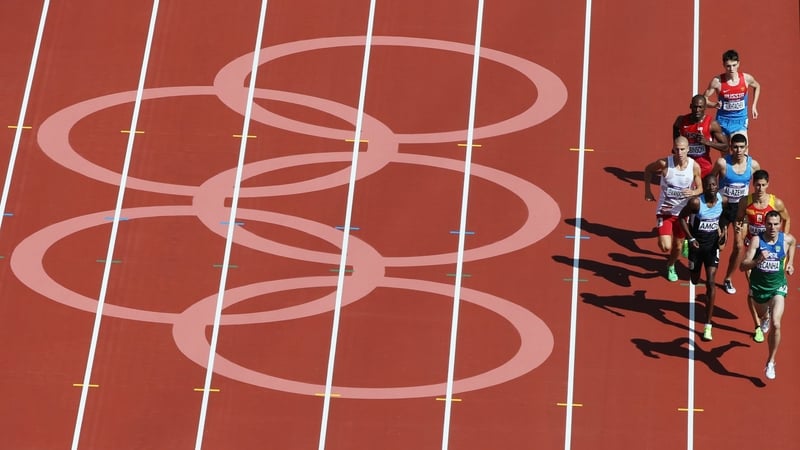
RTÉ Head of Sport Ryle Nugent is optimistic that the Olympic Games will remain free-to-air despite the recent purchase of exclusive pan-European rights by Eurosport.
RTÉ already has exclusive Irish rights to the Rio 2016 Olympics, but the Games in 2020 and 2024 are as yet undecided following the Discovery deal. Discovery, the owner of Eurosport, recently paid €1.3bn for exclusive rights that include the next two Games.
Speaking to Ray Darcy on RTÉ Radio 1, Nugent expanded on what that means for Irish sports fans: “For the summer Games of 2020 and 2024, what they have done is they’ve sold it to a pan-European broadcaster; they’ve sold all the rights to the 52 countries in Europe in all languages, on all platforms to Discovery.
“What Discovery has said is that in some territories they’re going to show it exclusively in that area. In other territories, and they’ve indicated this very clearly, in Ireland they’re going to go to the local market and they’re going to look to enter into some sort of rights sell.
“What that is, how that might manifest itself is too early to call, but what I would say is the headlines which such as ‘RTÉ won’t have the Olympics’ are premature. A headline that would say it’s not going to be available in Ireland, other than on Eurosport, is premature. Could it play out that way? Unlikely, because the summer Olympics are on the government protected list.
“This isn’t about protection for RTÉ, it’s about protection for free-to-air television in Ireland.”
Despite a tough commercial landscape for free-to-air broadcasters, Nugent is aware that coverage of marquee events remains paramount.
“There is a genuine belief from the licence payer, there is a level of expectation that top-quality sport will be available on RTÉ, and interestingly that’s even from people who don’t have an interest in sport.
“They expect that RTÉ will deliver that.”
RTÉ is currently in negotiations to secure Six Nations rights, and Nugent believes that BBC’s and ITV’s recently successful bid to cover the event could act as boon to RTÉ’s hopes of landing a deal.
“The fact that Sky or BT don’t seem to be involved in the UK – BBC and ITV are the ones that have it in the UK – it leaves a more clear way for the island of Ireland and for the Republic of Ireland rights, which is that it is a process that will involve the broadcasters in Ireland. It doesn’t rule out Sky or BT bidding for the Irish rights, but they can only broadcast in Ireland, they wouldn’t be able to broadcast in the UK. So, it’s probably less attractive.”
The Group Head of Sport also addressed recent changes to the soccer panel for international and Champions League broadcasts with a rotation policy, similar that used on RTÉ Rugby coverage, now in place.
The decision is one he stands by, insisting that scouting and affording opportunities to burgeoning, but less-established talents, is key to future success.
“Part of my responsibility as Head of Sport is to prepare for the future, whether that’s about our soccer panel, our rugby panel, our GAA panel, our presenters - whether that’s on TV or radio,” he said.
“At the end of the 2014 World Cup after Bill O’Herlihy retired, I made, and we made, a decision that we were going to start looking at others for the future – not for the immediate – but for the future, and part of that was to say those involved, and again, this also held true on our rugby panel, we’re going to start rotating these and were going to put people in places at times that maybe they haven’t been, because the only way we can figure out if they have something to contribute or not, and to see if that chemistry is right, is to put it in place.
“John Giles didn’t appear on the first Scotland match, nor the Gibraltar match, and he was disappointed, and I understand why – that he didn’t appear on that Scotland match.”
Asked what, if anything, he would have done differently to diffuse the situation, Nugent cited his desire for better communication.
“If you feel you’ve communicated something and the person on the other end doesn’t feel you’ve communicated something properly, then the chances are you didn’t do it properly.”
