



What did we really learn about overtaking from the opening round of the Formula One World Championship in Melbourne?
Getting the cars off the line is proving complicated and some fear it could eventually lead to a serious accident.
As pre-season testing suggested, Mercedes appear to hold a clear performance advantage. Whether it is the much-talked-about engine compression ratio alone that has contributed to that remains open to debate.
Many drivers, particularly Max Verstappen and Lando Norris, are not enamoured with the latest generation of Formula One machinery.
One statistic being highlighted as a positive is the number of overtakes compared with last year's race. There were 45 in 2025 compared with 120 this time around.
Everyone loves a bold overtaking manoeuvre, drivers included. But like most statistics, the numbers can be misleading.
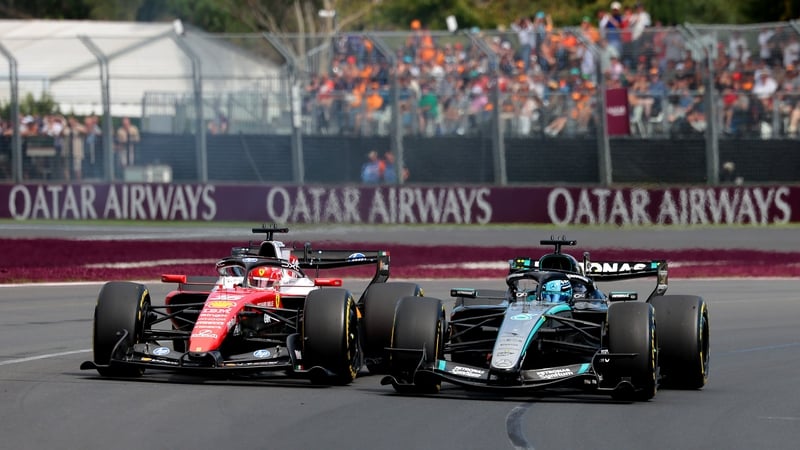
The early battle between Charles Leclerc and George Russell was exactly what fans want to see: two drivers going flat out, wheel-to-wheel, trading places corner after corner. It was wonderful to watch until Ferrari inexplicably failed to pit during the first safety car period, ruining both their prospects of victory and our hopes of a race-long battle for the lead.
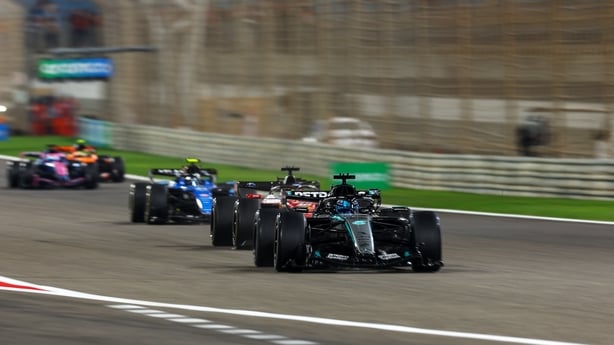
There were plenty of other passing moves that contributed to that inflated total. Max Verstappen, for example, sliced his way through slower cars as he recovered from the back of the grid to finish sixth. Impressive though it was, those overtakes were not nearly as compelling as the close-quarters duel we witnessed between Russell and Leclerc.
There is good overtaking and then there is statistical overtaking. The former excites spectators; the latter simply pads the numbers.
Formula One teams possess the expertise and financial resources to address many of the issues that emerged in Australia, but it may take a few races for this new generation of Grand Prix machines to settle down.
Overtaking may not be the be-all and end-all, but it certainly contributes to the spectacle.
For a very different perspective, take the opening round of the Moto3 World Championship in Thailand.
In this class, overtaking happens with such frequency that it is almost impossible to count, though it is safe to say there were well over 200 passing moves during the 19-lap race.
Close-quarters racing is far more commonplace in motorcycle competition and it is thrilling to watch. Riders slipstream each other along the straights before attempting daring late-braking moves into the corners.
When an Irish rider or team is involved, the enjoyment is enhanced even further. This year Irish fans have plenty to follow, with Casey O’Gorman riding for the Sic58 team and Michael Laverty’s MLav Racing outfit fielding Eddie O’Shea and Joel Kelso.
In Thailand the Irish contingent were mainly involved in midfield battles and constant overtaking skirmishes. O’Gorman spent much of the race in a tight scrap that at times had him running just inside the top ten. A lack of front-end grip cost him pace in the closing laps, but eleventh place still represented a solid start to his 2026 campaign.
Television cameras naturally focus on the action at the front and in Thailand two riders managed to break clear of the chasing pack: championship favourite Max Quiles and fellow contender David Almansa.
Time and again the lead changed hands as they raced mere centimetres apart in a gripping battle for victory. No quarter is asked or given in Moto3 and after almost 90 kilometres of flat-out racing, just 0.003 seconds separated the winner from the runner-up — a Moto3 finish measured not in metres, but in the proverbial gnat’s whisker between Almansa and Quiles.
