



It's way too early to be chatting All-Stars but I would like to talk about those players who will most likely not get the individual gong.
It will not have been through any personal fault but rather that their team has been eliminated before All-Stars are considered.
The awards, we are told, should go to the best players in the country. Yet, almost every year, they become a reflection not simply of individual brilliance, but of team success.
The deeper a county goes into the championship, the greater its representation on the final XV. By the time the All-Star team is announced, the players still standing in July have naturally dominated the conversation.
It is understandable, but it is not always fair.
There is a compelling case for a player who does not emerge from the provincial championship to still receive an All-Star award. In fact, there are years when such a player absolutely deserves one.
The All-Stars are supposed to honour excellence, not merely survival.
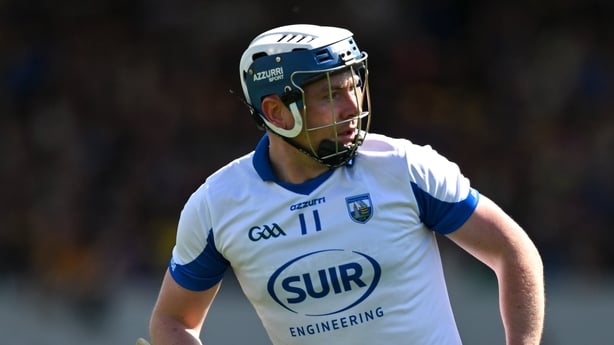
Several players come to mind but none more so right now than Stephen Bennett.
What more could this man do in two games where he has averaged a staggering 17 points per game?
His total will most likely keep him in the top 10 for the championship year after only two and a bit games and the reality is this player will not puck another ball in championship 2026 due to injury and the fact that his team are more or less gone.
The structure of the championship itself can often work against elite individuals. Hurling remains concentrated among a relatively small number of counties, meaning the margins between success and failure can be razor thin.
A player can deliver an extraordinary performance in Munster or Leinster and still find himself eliminated because the collective strength around him is insufficient. One man, no matter how gifted, cannot drag a county through a brutal provincial group.
Munster in particular has become unforgiving.
The standard is so high that a county can produce excellent hurling and still finish outside the qualification places. A forward might score heavily against the reigning champions, dominate his direct opponent, and influence every game he plays, yet be gone before the All-Ireland series even properly begins.
Should his season suddenly count for less because his county lacks strength in depth? That hardly seems consistent with the idea of recognising the best players in the game.
Go back to the good old days whereby because of straight knockout hurling a player was often considered for or awarded an All-Star and may have only played one championship game.
Historically, the All-Stars have often leaned heavily toward finalists and champions. This is partly because those players perform on the biggest days under the brightest lights. There is merit in that. Delivering in an All-Ireland semi-final or final carries enormous weight and should influence selection.
But there is a danger in reducing the awards to little more than an extension of team honours. If every outstanding player must first belong to an elite county to be recognised, then the awards cease to reward individuality in any meaningful sense.
Some of the greatest hurlers of modern times spent years carrying counties that were not equipped to compete for Liam MacCarthy.
Their brilliance did not diminish because their teams exited early. Indeed, there is an argument that exceptional players on struggling sides deserve even greater admiration.
Opposition teams can focus entirely on stopping them. They receive less possession, less support, and often face superior opponents every week. Yet they still stand out.
There is also the question of consistency.
A player eliminated in May may still have delivered four or five outstanding championship performances. Compare that to a player from a successful county who perhaps peaks in one semi-final but is otherwise solid rather than spectacular.
The latter often benefits from visibility and momentum. The former fades from public discussion simply because his county’s journey ended too soon.
That tendency says more about narrative than performance. Championship success creates stories that are easy to remember.
Media coverage intensifies around teams progressing through the summer, while players from eliminated counties disappear from headlines. Human nature takes over. Recency bias shapes opinion.
By October, the hurler who shone in May can feel distant compared to the player lifting silverware in July.
But the All-Stars should resist that drift. Their credibility depends on recognising excellence wherever it appears.
There is another important point. Rewarding a player from an early-exit county sends a healthy message about the sport itself. It acknowledges that hurling remains about individuals as well as teams.
Young players in developing or less successful counties need to believe that exceptional talent will still be recognised. Otherwise, the honours system risks becoming exclusive to a small circle of dominant counties.
Critics will argue that if a player cannot drive his county beyond the provincial championship, he cannot truly be among the elite. That sounds logical, but it oversimplifies a team sport.
Hurling is not tennis or athletics. One player, even an extraordinary one, cannot compensate for structural weaknesses across an entire panel. Judging individuals solely through collective outcomes ignores the reality of the game.
An All-Star should represent sustained excellence, influence, skill, and impact. Team success should matter, but it should not become the only gateway to recognition. Otherwise, the awards risk becoming predictable and narrow, rewarding circumstance as much as talent.
The best hurlers do not suddenly become ordinary because their county falls short in a fiercely competitive provincial campaign.
If a player consistently performs at the highest level, dominates opponents, and carries responsibility far beyond most of his peers, then he deserves to be judged on what he has actually done — not merely on how long his team survived.
That is not lowering standards. It is applying them properly.
Watch Dublin v Westmeath in the Leinster Football final (2pm) and Armagh v Monaghan in the Ulster Football final (4.15pm) on Sunday from 1.30pm on RTÉ2 and RTÉ Player. Follow our live blog on RTÉ.ie/sport and RTÉ News app and listen to Sunday Sport on RTÉ Radio 1
Watch The Saturday Game and The Sunday Game from 9.30pm on RTÉ2 and RTÉ Player. Follow a live blog on all matches on the RTÉ News app and on rte.ie/sport
