


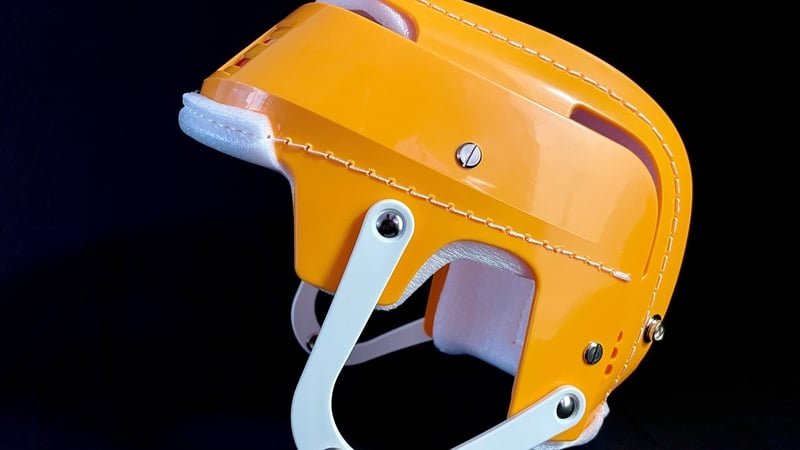
Hurling and camogie players have been warned that they could risk serious injury by using counterfeit 'Gola' branded helmets.
The English sporting manufacturer do not make helmets currently and have not licensed any other company to do so on their behalf, and players have been told to immediately stop using helmets with the ‘Gola’ branding on it as they do not meet basic PPE standards.
The helmets have been found to carry a risk of injury to face, head and eyes with product safety inspections discovering poor quality helmets with protruding screws and sharp edges.
Patrick Kenny of the Competition and Consumer Protection Commission said it was important that the helmets be avoided.
"Do not purchase one of these helmets for yourself or anyone else this Christmas.
"Our product safety officers are working to remove these dangerous helmets from the Irish market. If you currently use one of these helmets, stop using it and buy a standard, CE-marked helmet from a reputable retailer instead."
The warning was reiterated by Jim Bolger, chairperson of the Gaelic Games Helmet Work Group.
"In particular, we are concerned about juvenile players using these helmets and encourage parents and players to only buy helmets from reputable sources."
Expanding on the issue on RTÉ Radio 1's News at One, Bolger said that people should stick to the six companies that do meet the standards for helmets - Mycro, Cooper, O'Neill’s, MARC, Azzurri and ATAK.
"It's a requirement to wear these helmets in training matches or in training practice as well. Any time you take to the field, and even doing warm-ups, it’s a requirement to wear the helmets.
"That’s under rule in the GAA....that affords them the required protection then. Player safety is of paramount importance to us obviously."
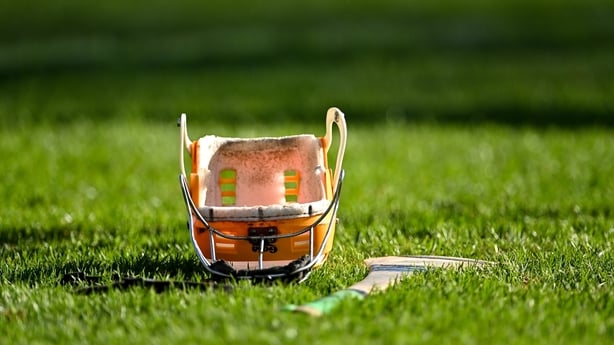
Hurling and camogie helmets must have a CE mark to show that the helmet meets the required health and safety standards.
The helmets bearing the counterfeit ‘Gola’ brand are also manufactured without faceguards. In order to meet health and safety standards, faceguards must be added at the point of manufacture and not afterwards.
Customers, who should buy from a reputable retailer rather than an unreliable online source, have been advised to asked four questions when purchasing a helmet.
- Is the helmet fully assembled? A safe helmet should have a faceguard attached at the point of manufacture. You should not need to attach a faceguard.
- Are there any obvious dangers? Watch out for sharp edges, sharp points, rough surfaces, or protruding screws. Do not wear the helmet if you find any of these dangers.
- Is there a CE mark on the helmet? If there is no CE mark, don’t buy it.
- Are the labels and instructions clear and comprehensive? All hurling and camogie helmets should be accompanied by instructions and information in a language which can be easily understood by users. Such instructions and information, as well as any labelling, should be clear and understandable.
