


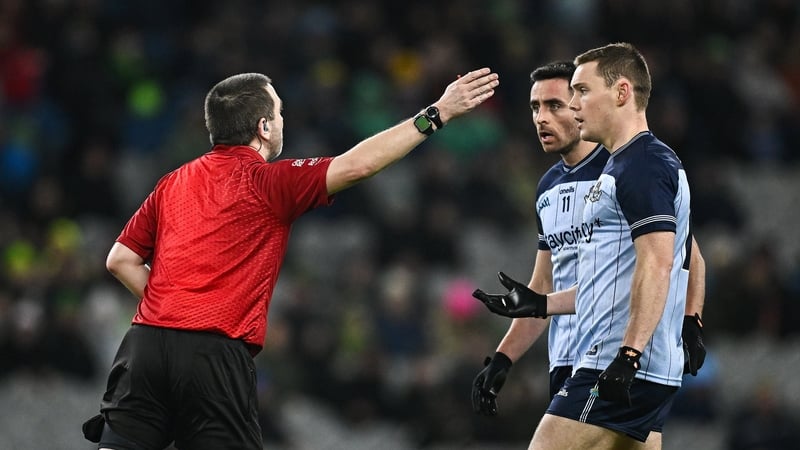

The GAA is working towards establishing a Gaelic Football Expert Advisory Group to follow on the work completed by the Football Review Committee.
Last winter the FRC published its final report with the recommendation that the Games Intelligence Unit would continue to provide ongoing data-driven analysis of games. The reports suggested that the unit would examine trends, rule impacts, and player welfare.
There was a further recommendation that the GIU's work would then be dissected by a Gaelic Football Expert Advisory Group composed of experienced managers, players, coaches, referees, and analysts.
It is understood that the GAA is now working towards establishing that group.
Part of their remit will be to review rules, data and advise the Standing Committee on Playing Rules on any future changes that are needed based on evidence and date.
The continuation of these groups was seen as highly important as the suite of FRC proposals permanently adapted by Special Congress last year bed in fully.
Week one of the national leagues has already highlighted the need for continual monitoring of the rules – the huge majority of which have been an outstanding success.
But the hooter is again under scrutiny. The final FRC report praised last year’s system for enhancing clarity and transparency in timekeeping and also addressing concerns around time-wasting tactics, especially in scenarios where a player has been black carded.
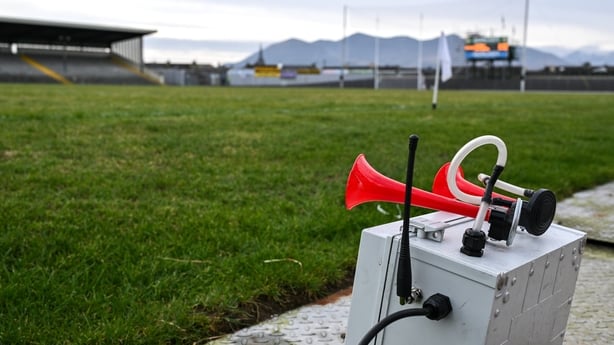
But while survey feedback indicated strong support for the stop clock and hooter, it also highlighted some confusion and inconsistency around when a game should end.
In response to that, the FRC then recommended a permanent reversion to its original proposal: that the game should end when the hooter sounds - unless the ball is in flight or a free-kick is being taken, including 45s and line balls.
This adjustment was intended to further streamline match conclusions and eliminate ambiguity around when a game ends.
The opening weekend of league action, however, has thrown up some examples of confusion.
Another rule under scrutiny is the 'hand back’.
Kerry manager Jack O’Connor argued at the weekend that the ball should be placed on the ground where a foul occurs. He pointed to situations where one player has the ball to hand over, but an opponent slaps it out of his hand, and it’s brought forward 50 yards against that player’s team.
Interestingly, in the qualitative feedback sections of the final FRC report, both the hand back rule and the old hooter rule received negative feedback.
Like O’Connor, some of those who responded to surveys suggested that players should simply be allowed to "place the ball on the ground" and called the rule "ridiculous" and "childish" and one where referee inconsistency and discretion might be problematic.
In the same section of the report, the old hooter and clock system were often seen as "distracting" and "killing the excitement", especially as teams could play down the clock.
However, the new system – where the game ends upon the sounding of the hooter – is already under the microscope.
The protraction of the GIU and the establishment of an expert group is seen as crucial if rules need to be tweaked or trends monitored.
Watch Armagh v Galway in the Allianz Football League on Saturday from 4.30pm on RTÉ2 and RTÉ Player. Follow a live blog on the RTÉ News App and on rte.ie/sport.
Listen to Saturday Sport on RTÉ Radio 1Watch Allianz League Sunday from 9.35pm on RTÉ2 and RTÉ Player. Follow a live blog on all matches on the RTÉ News App and on rte.ie/sport. Listen to Sunday Sport on RTÉ Radio 1
