


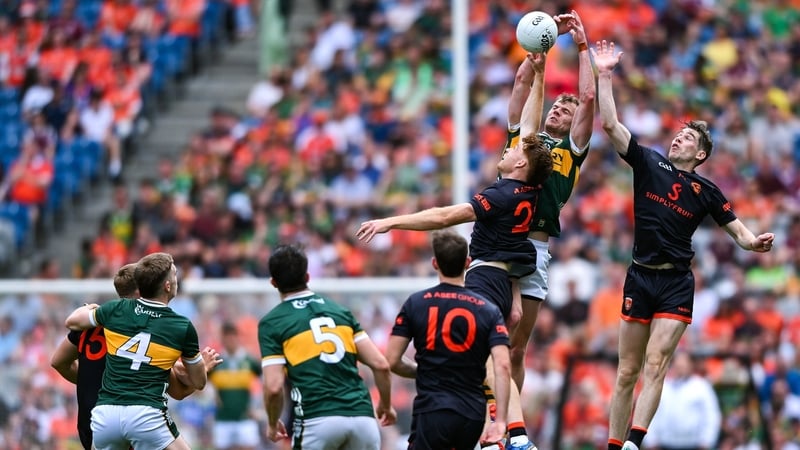

We're all getting used to this big gap between the end of the inter-county season and the beginning of the next one.
A shorter year for counties has received some mixed reviews, with a potential for a return to an August All-Ireland final for 2027 depending on how February's Congress vote goes.
One thing's for sure though, the bigger break between last summer and the start of the National League at the end of January means we're all dying to get going again.
Here are five of the big talking points ahead of the new campaign.
Pre-season is back... but for how long?
Before we even get to the league, we have the return of the pre-season competitions.
It has been common practice for managers to make use of the pre-season competitions to give less experienced players a shot at competitive fare ahead of the start of the league, or so the reasoning goes.
In reality, the likes of Kerry and Dublin - traditionally - might have sent teams out into the McGrath or O'Byrne Cups with players that you would not see again; that year or any other, for that matter.
For part of Jim Gavin's reign with the Metropolitans, he washed his hands of Dublin for pre-season, sending out Paul Clarke to manage an O'Byrne Cup squad.
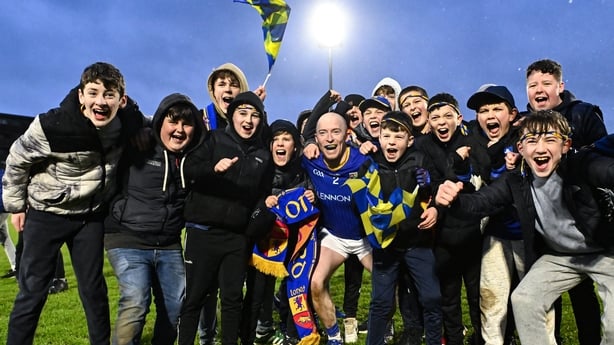
With the Connacht and Ulster councils revealing that six-figure sums have been lost out on due to the lack of pre-season competitions, they're clearly satisfied to see them back on the calendar.
But not the Gaelic Players Association, who claimed that their return, "runs contrary to much of the recent commentary on protecting player wellbeing and managing workloads responsibly."
There's a suggestion that 2026 may be the pre-season competitions' last hurrah, but don't be surprised if, like the 'Kiss Farewell Tour', players are still being asked to get out on the stage and perform in early January decades from now.
Longford, for the record, are going for a third O'Byrne Cup on the bounce.
New managers in big counties
There was plenty of change in the dugouts around the country over the autumn and winter.
The big ones are Dublin and Mayo - the counties that arguably defined the last decade - appointing Ger Brennan and Andy Moran, respectively.
Both men had cut their teeth with other counties before arriving in the presumed dream job of taking over one's own county.
Brennan achieved something truly remarkable, guiding Louth to a first Leinster title in 68 years in 2025.
Moran spent three years with Leitrim, the highlight of which was a promotion to Division 3 in the league in 2024.
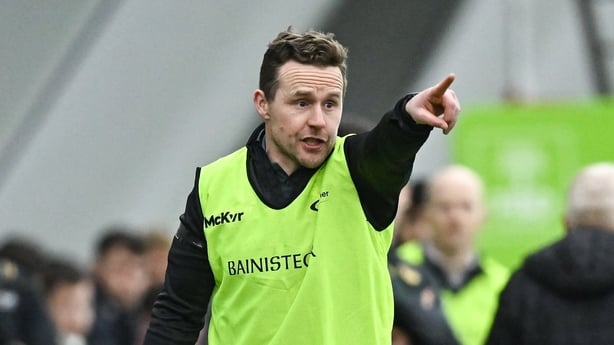
Elsewhere in Division 1, Mark Dowd has taken the reins at Roscommon, and his first job will be trying to avoid a relegation for the yo-yo team of the last decade.
Since John Evans took the Rossies back to the top flight for the 2016 season, they've been relegated four times (2016, 2019, 2021, 2024 ) but been subsequently re-promoted four times subsequently (2018, 2020, 2022, 2025).
The Wee County have chosen Gavin Devlin as the man to try to defend a Leinster crown for the first time since 1958.
Elsewhere in Division 2, Dermot McCabe has been handed the keys in Cavan, while Ciarán Meenagh is starting off with 2024 league champions Derry.
In Division 3, keep an eye out on Declan Bonnar, the former Donegal manager has taken over at Fermanagh, while Sligo have a potential dream duo in Eamonn O'Hara and Dessie Sloyan.
Another new format
Another season, another slight tweaking of the championship format in the GAA's pursuit of absolute perfection.
What does it say for the game when there's a regular changing of how the Sam Maguire is competed for? If we've learned anything from soccer and rugby in recent years it's that the grass isn't always greener when it comes to trying to make things more exciting.
The old format, used for the last three seasons, was criticised for not bringing enough jeopardy to the championship, with only one team eliminated from four-team groups ahead of the knockout stages.
For 2026, 16 teams will still compete for Sam - the provincial finalists, the Tailteann Cup champions from the previous year, and the seven highest ranked National League finishers who are not already involved - but thereafter things are different.
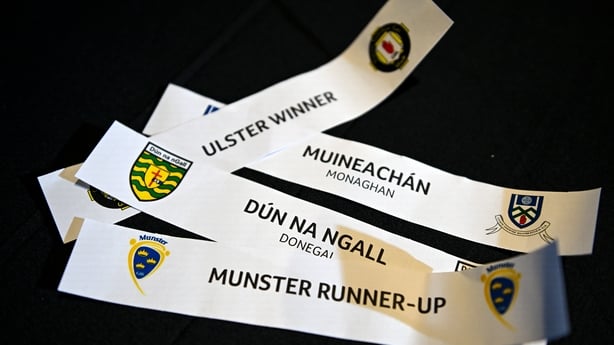
Eight Round One winners advance to Round 2A with the losers going to Round 2B. The four Round 2A winners will qualify for the quarter-final stage. Round 2A losers will meet Round 2B winners in Round 3, for what is essentially a preliminary quarter-final.
One of the system's positives is that it's designed to prevent teams who've lost three games - one in the province and two in the race for Sam Maguire - from still having a chance to win the All-Ireland.
This was something that Derry and Roscommon in 2024, and Cork and Cavan in 2025, managed. Louth also lost two group games in 2025 and made it to the knockout stages, but they did so without losing in Leinster.
Have the powers that be struck gold with the new format? Only time will tell.
History beckons for Jack O'Connor and Kerry
Kerry head into 2026 with the chance to do back-to-back All-Ireland titles, something they haven't done since 2006-07, and something we haven't seen in the game since the Dubs won the last of their six-in-a-row in that surreal Covid final back in 2020.
David Clifford enjoyed a sensational summer in 2025, even by his own celestial standards, landing the player of the year award for the third time in four seasons.
He was one of eight All-Stars for the men from the Kingdom, who completed a clean sweep with Munster and National League honours.
For O'Connor, it was a fifth All-Ireland triumph in three different spells; only Jim Gavin has won more in this century.
But there is one thing that Dromid native O'Connor hasn't managed and that is back-to-back All-Irelands. He was in charge in 2006 and 2009, but he had stepped away in 2007 with Pat O'Shea taking over to complete the two on the spin.
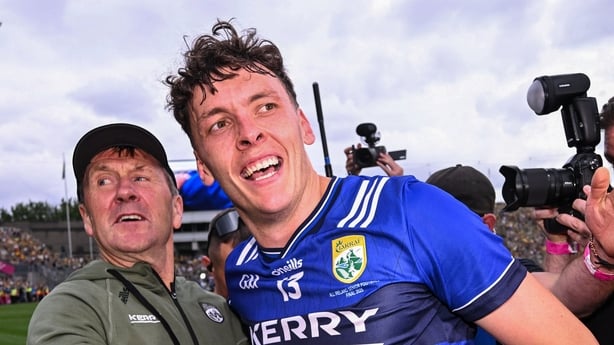
In the course of his post-match interview with RTÉ Sport, O'Connor seemed to change his mind, almost mid-flight.
"I'm a long time at it, and I might be passing the baton onto somebody else," he began, suggesting the end was in sight. A mere matter of moments later it was, "that was the plan anyway, so we'll see".
In the end, the potential to write more history for Kerry - and match Gavin's modern record of six Sams - proved too much to resist.
O'Connor has also added Kieran Donaghy to his management team after the man they call 'Star' bought his five-year spell with Armagh to an end in 2025.
It's fair to say that there's feeling that there are plenty more All-Irelands in this Kerry group.
Challengers looking to take advantage of football's open era
There were five different winners in five years between 2008 and 2012 but this has been a very open period for football, generally speaking, after Dublin's eight titles in a decade.
In this last five finals, we've had four different winners, with Kerry the only team to win more than one in that period.
Jim McGuinness and Donegal would have been disappointed with how the 2025 All-Ireland final went, which is also true of Galway's performance in the 2024 decider. They are two counties to watch in 2026.
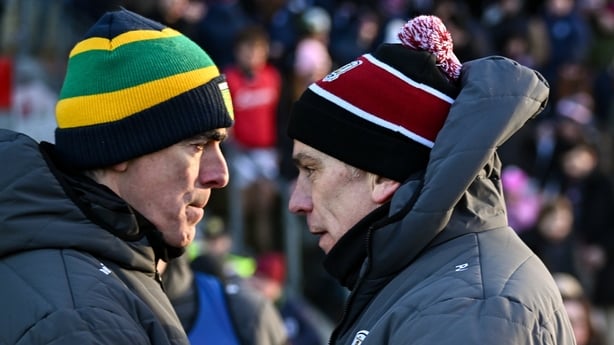
As already mentioned, Dublin and Mayo are under new management, and both are in periods on transition. The Dubs have only managed to reach the quarter-finals in the last two years, their worst run since 2008-09.
Mayo, meanwhile, haven't won a Connacht title since the last season they reached the All-Ireland final back in 2021.
They've lost the last two provincial finals in the west and, while there have been good days since then - beating Kerry in Killarney in 2023 springs to mind - they haven't managed to reach the last four of the All-Ireland in their last four attempts.
Tyrone and Meath were semi-finalists last year and will look to build on their runs, while Armagh were many people's favourites to defend their Sam Maguire title until they came up against an irresistible Kerry side in the quarter-finals.
Long may the open football championship continue.
