


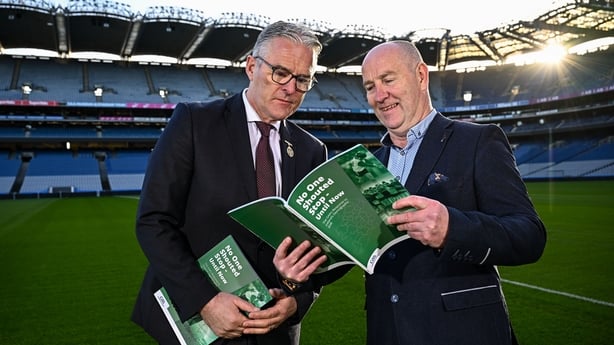
Targeted growth of new and existing clubs and support for clubs that struggle to field 15 players are part of the recommendations unveiled by the GAA's National Demographic Committee today.
The recommendations anchor a report aimed at targeting the dramatic demographic changes which have taken place in this country in recent years, which have a significant impact on rural and urban clubs.
Ireland now has a population of more than 7 million people, giving the island its largest population since 1851 with much of the increase centred in cities and towns.
In a startling statistic, the GAA have discovered that 25.5% of all children five and under in Ireland are concentrated across just 50 clubs.
More than half that demographic are to be found in Dublin, Belfast, Down, Kildare, Galway and Cork.
One in three people now live in Dublin or within one hour in satellite towns. Yet, only 18% of the GAA's clubs are located in this area.
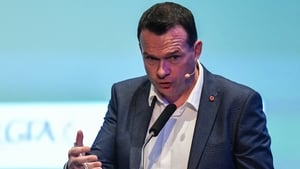
"In that area there's a population of three million," GAA President Jarlath Burns told RTÉ Sport following the publication of the report.
"There's only 18% of our clubs there, 25% of our members and I think that that indicates to us that the map of Ireland and the map of our clubs doesn't align.
"And there are issues there for us. It's not our fault that we are here, we are a victim of it, but we now have the voice to say stop."
The GAA say that new clubs are needed as well as the rejuvenation of existing units.
Read: Pitch battles and urban divides in Offaly and Dublin
Read: Cork clubs coping with city ageing and population booms
Read: Depopulation reaching crisis level for GAA in south Kerry
Even more worrying is that 78% of GAA clubs are in rural areas with declining populations.
"In rural villages, the Garda station closes, then the bank closes, then the school closes, then the post office closes, the bus stop goes, the train station goes, and then all that's left is the GAA club," Burns added.
"Even the GAA club, now we're seeing in some places, is it sustainable to the end of the decade? We have to try and make sure that they are sustainable. We have to work with our clubs to make them sustainable.
"On the other side of that are the towns and the cities where the GAA is growing at a rate where we just cannot provide enough fields to play our games.
"These are all challenges that we have to face. We can't solve these alone. We have to get the help of local authorities and of government to help us."
The report unveiled today will aim to assist clubs who have challenges fielding adult teams and retaining their official club status
It has specifically targeted pilot initiatives in Kerry and Kildare and the focusing of urban centres in those counties.
Rural areas with declining populations in both counties will also be studied with interventions towards increasing participation, improving integration, influencing planning policies, and creating sustainable club structures.
The idea of modified games programmes where clubs struggle to field 15 players will be examined with the possibility of running more blitzes or 11-a-side competitions now on the agenda.
A Club Support Unit at national and provincial level will be founded to help management and viability of clubs.
More pressingly, Central Council has given the green light to two motions on demographics to make the clár for next year’s Annual Congress.
One proposes a rule change to make it easier for clubs to be maintained, retained, and grown.
The second deals with playing championship at fewer than 15-a-side, to provide opportunities for counties to provide championships for demographically challenged clubs who are unable to field at 15-a-side.
