


The GAA’s new four-year agreement with the Gaelic Players Association marks a meaningful shift in how the organisation approaches the identity and commercial value of its athletes.
For the first time, the GAA has formally recognised that inter-county players own their name, image, likeness and personality rights [NILP].
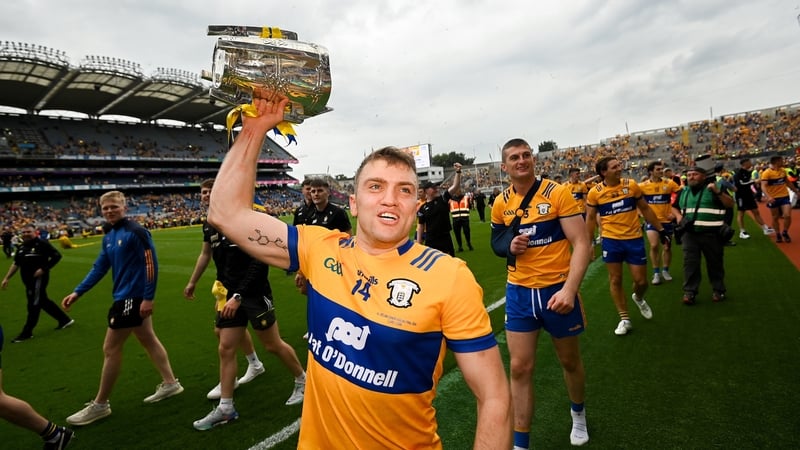
The change follows more than a year of negotiation and the disagreement involving Clare’s Shane O’Donnell, who objected to his image being used in GAAGO promotional material a couple of years ago without his consent.
With the agreement now set for 2026 to 2029, attention turns to what it will mean in practice for the players who define the sport’s public profile.
At the centre of the deal is a new revenue-sharing structure. From 2026, the GPA will receive 15% of the GAA’s gross Central Council commercial revenue.
Under the previous agreement, the 15% allocation was taken from net revenue after certain costs, a model the GPA argued lacked transparency.
Moving to a gross share creates a clearer link between the commercial performance of Gaelic games and the players who help generate that value.
The agreement also provides players with 15% of licence fees and dividends from GAA+, the GAA’s streaming service formally known as GAAGO, which has grown its reach in recent seasons.
The joint commercial venture between the GAA and GPA, known as Le Chéile, has also been overhauled.
Players will now receive 95% of the first €800,000 of profit after tax generated by player-led commercial activity, and 75% of profit above that.
Alongside this sits a specific NILP distribution pot for income earned directly from the commercial use of players’ identities. All NILP-related activity will be jointly governed by the GAA and GPA.
The GAA will retain audit rights over central funding and Sport Ireland grants distributed by the GPA, while the GPA will publish annual reports detailing how player funds are allocated.
"The most likely outcome is that eligible players will receive a modest but consistent annual payment through the NILP and commercial revenue structures."
Legally, the deal provides clarity within the organisation rather than creating new rights in Irish law.
Ireland does not have a dedicated statutory image right. Instead, individuals rely on a combination of privacy and data protection law, passing off and intellectual property to control the use of their likeness.
This has long made the commercial use of player images a grey area within Gaelic games. The O’Donnell case exposed how uncertain this space had become, particularly given the amateur status of inter-county players.
The NILP framework does not change national law, but it creates a structured consent and revenue system within the GAA’s own governance.
The financial impact for players will vary. The GAA does not publicly break out Central Council commercial revenue in a way that allows precise predictions.
The value of the 15% share will depend on the GAA’s sponsorships, broadcast income and the performance of GAA+ over the next four years.
The profitability of Le Chéile will also depend on the success of commercial campaigns. Distribution rules for NILP income have not yet been published, and eligibility will determine how widely funds are shared.
What is known is the broader financial context in which players operate. An independent report by Indecon, commissioned by the GPA, found that inter-county players generate €591m in annual economic impact through direct, indirect and induced spending.
Despite this, the same report showed that players are on average €4,602 out of pocket each year after covering travel, nutrition, equipment and other costs. That net cost has risen steadily since 2018.
Government player grants remain a vital support, but the NILP arrangement introduces a new and predictable revenue stream tied directly to the visibility and commercial use of players’ identities.
The most likely outcome is that eligible players will receive a modest but consistent annual payment through the NILP and commercial revenue structures.
It will not transform the financial landscape for inter-county athletes, but it will add a layer of recognition that has not previously existed in an amateur sport.
The scale of the commitment expected of players explains why this matters. Inter-county squads typically train four or five evenings a week, with additional strength and conditioning work, video analysis and recovery sessions.
Many players travel long distances from work or study to training. The Indecon findings highlight that even with reimbursements, the personal cost of competing at this level remains significant.
Individual commercial opportunities will continue alongside the collective arrangement. David Clifford’s recent partnership with McKeever Sports, which launched a player-branded apparel line marketed as one of the first of its kind in Gaelic games, shows how high-profile players can develop independent commercial profiles.
"If sponsorship, broadcast and streaming income expand, the value flowing to players will increase."
These agreements remain separate from the NILP mechanism but underline the value of player identity and the need for a clear system governing its commercial use.
Comparisons with other sports illustrate the position of the new deal. Professional rugby players in Ireland operate under a collective agreement that includes image and commercial rights within their employment contracts.
Soccer players typically negotiate such rights individually with their clubs. Neither model maps directly onto the GAA’s voluntary structure, yet the new NILP protocol now offers inter-county players one of the most transparent collective frameworks for image use in Irish sport.
Over time, the impact of the agreement will depend on the GAA’s commercial performance and the growth of player-led commercial activity through Le Chéile.
If sponsorship, broadcast and streaming income expand, the value flowing to players will increase. If revenues remain flat, the primary benefit of the deal will lie in its clarity and fairness rather than its financial return.
For now, the significance is clear.
Inter-county players have secured formal recognition of their image rights and a guaranteed share of the commercial revenue their sport generates.
It does not alter the amateur ethos of Gaelic games, but it reflects the realities of modern inter-county competition and provides a fairer, more transparent system for the athletes at its heart.
Watch the Leinster club finals, Athy v Ballyboden St Endas in football and Ballyhale Shamrocks v St Martin's in hurling, on Saturday from 4.15pm on RTÉ2 and RTÉ Player. Follow a live blog on the RTÉ News App and on rte.ie/sport
