


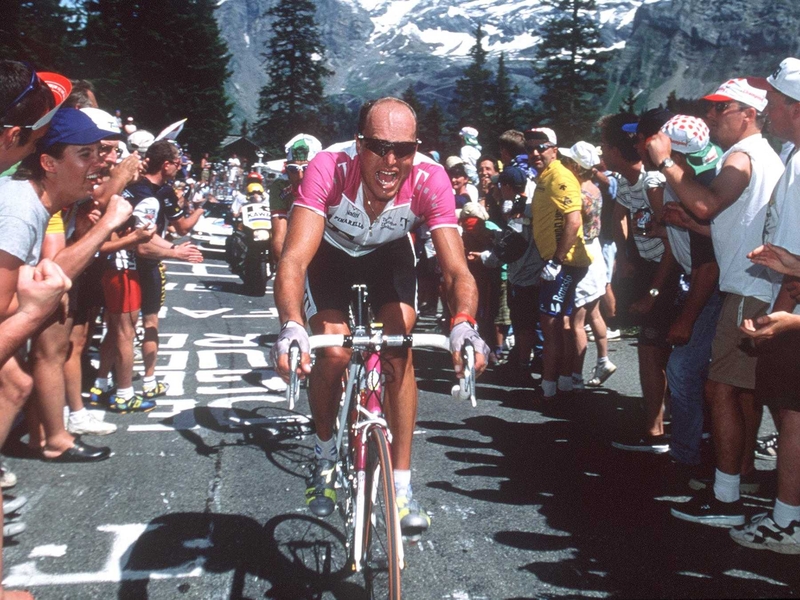
Cycling's governing body has called on 1996 Tour de France champion Bjarne Riis to return his yellow jersey after the Dane confessed to doping.
Riis became the first Tour winner to admit doping when he said he had taken illegal blood-booster EPO between 1993 and 1998.
The International Cycling Union has now urged Riis to return his yellow jersey, the symbol of his victory.
Cycling has long been hit by doping allegations but in the past week a number of the sport's stars have admitted doping.
Riis's admission came the day after former Telekom team-mates Erik Zabel and Rolf Aldag also admitted using EPO, while 2006 Giro d'Italia winner Ivan Basso is facing a 21-month ban after admitting attempted doping.
Floyd Landis' doping case ended on Wednesday and the USADA say they will make a decision on his doping case in about a month's time.
Landis, last year's Tour de France winner, tested positive for testesterone.
Meanwhile, American cyclist Joe Papp, who was one of the US Anti-Doping Agency's key witnesses in the Floyd Landis case, has been slapped with a two-year suspension.
Last week, Papp told the three-member panel at Landis' arbitration hearing that doping was widely used among cyclists and that synthetic testosterone would help athletes recover quicker from competition.
Papp's suspension is retroactive to 31 July of last year meaning he will have to serve just 14 months since the suspension was announced.
The 32-year-old Papp tested posiitve for synthetic testosterone following a race in May in Turkey.
