


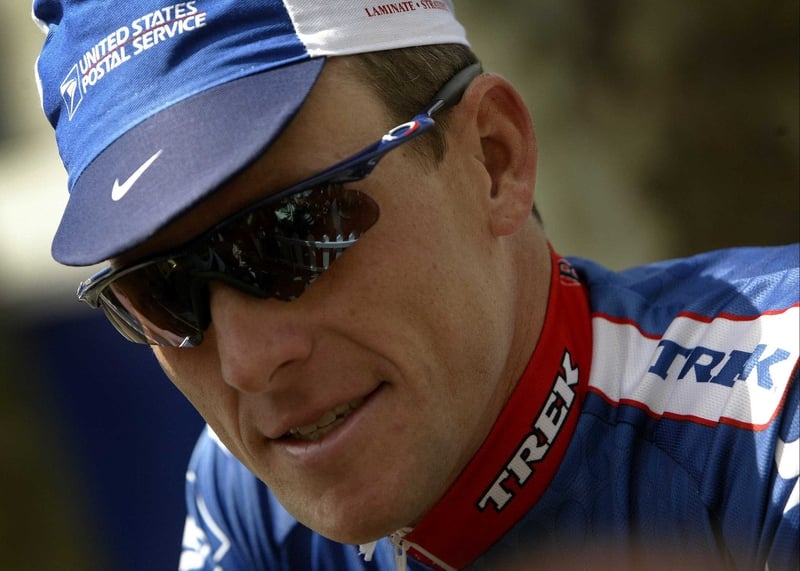
Organisers today unveiled a 2005 Tour de France route that suits rivals of champ Lance Armstrong rather than the American himself
With a single individual time trial on the penultimate day in St Etienne and fewer finishes at high altitude, July's Tour could be a little less demanding than in recent years and give the likes of Jan Ullrich and Joseba Beloki more recovery time.
However, organisers are not holding their breath over a fight to the finish for Armstrong, who preferred to stay in Texas for family reasons rather than travel to Paris.
"Don't count on me to make any predictions about the winner. We have been far too disappointed by Lance Armstrong's rivals in 2004," said Tour director Jean-Marie Leblanc.
The 21 courses on the Tour menu will take 200 riders from the island of Noirmoutier, south of Brittany, to Paris with the race going clockwise this time with a short incursion into Germany.
As a result, Armstrong and the rest of the bunch will tackle the Alps before the Pyrenees.
Despite a tough stage to Courchevel in which the peloton will tackle the Cornet de Roselend climb which proved fatal to Miguel Indurain's chances in 1996, the Alps stages look less gruelling with two valley finishes, in Briancon and Digne.
The stage to Briancon will, however, include the most famous climbs of the region, the Galibier and Madeleines passes.
The Pyrenees look set to be more decisive with two finishes at high altitude in Ax Trois Domaines and a gruesome 17th stage to Le Pla d'Adet, involving five first category climbs.
Climbers will also be in a position to shine before the Alps in the Vosges mountains, with a stage up the Ballon d'Alsace.
"I'm glad that the first big climb of the Tour will take place on the Ballon d'Alsace. It was the first ever climb in Tour history in 1905 and it revealed its first great climber, Rene Pottier," Leblanc said.
From the Pyrenees to Paris, riders will have to tackle the hilly roads of the Massif Central with a demanding finish in Mende.
As a result, the 2005 is a more balanced route than usual and will neither suit true climbers or sprinters, who will have only five flat stages to string out their rivals.
Time trial specialists will start the Tour with a longer prologue than usual over 19 km, but will have to wait for the day before the July 24 finish to express their power once more over 55 km in St Etienne.
"That last time trial in St Etienne will decide the final positions in the race. And I can tell you it'll be a tough one," said Leblanc.
On paper, the 2005 itinerary looks ideally suited for an all-rounder, a versatile rider equally at ease on all terrains.
That definition suits Armstrong perfectly.
