


Sport Ireland's Women in Sport lead Nora Stapleton said the controversy around the playing surface and the absence of dressing rooms for the recent Clare-Wexford league game had highlighted the need for "respect" between the male and female codes.
The Camogie Association have said they are investigating the circumstances surrounding the staging of last weekend's Centra Camogie League clash between Clare and Wexford, after playing conditions at the Meelick venue were subject to heavy criticism.
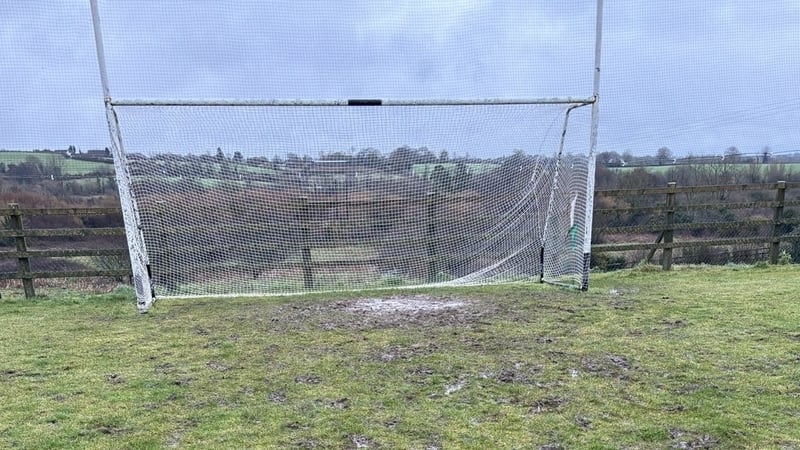
The Division 1B game had originally been scheduled for Clareabbey but was switched just two hours ahead of throw-in after the playing surface was deemed unplayable. It was moved to Meelick, where the game was played immediately after a "memorial match between two local clubs".
Match officials deemed that the surface was playable, however video and photographic imagery posted on X by Wexford journalist Dean Goodison captured heavy underfoot conditions, particularly around one of the goalmouths.
Wexford camogie chairperson Martina Donnellan, who was present at the game, told RTÉ Sport that "on health and safety grounds the pitch was not playable on the day.
"I have never seen a game go out on such a horrendous pitch. We were afraid someone was going to get injured. Our goalkeeper fell five times in the goal during the warm-up. The referee had to blow the whistle a couple of times to dig the ball out of the ground, to throw it in."
The Camogie Association said on Tuesday they were investigating the circumstances that led to the game proceeding in such conditions.
Speaking ahead of Sport Ireland's sixth annual 'Women in Sport Week' (2-8 March), Stapleton reflected on the controversy in Clare, noting that poor weather would often lead to such sitations arising but said the fact that they so often occurred in women's sport was nonetheless significant.
"It reminded me of some of the rugby pitches I would have played on back in the day," Stapleton told RTÉ Sport.
"It's very unfortunate because anyone who knows camogie or hurling, the ball gets stuck in there, you can't dig it out.
"I think the important thing is all those codes are on the journey towards integration. Everybody has received various updates on that.
"Clubs and county boards know that when the time comes, they will have to talk more to each other around the scheduling of matches.
"But I think what it comes back to is the respect that we show between males, females, to each of our teams, to our club members.
"If we're coming from a place of respect and a place where we want to treat everybody the same, then situations like that may still arise - because, look, the weather in Ireland, pitches are going to be soggy - but if they arise, they arise the same whether it's a male match or a female match.
"That's where we want to get to, where these stories aren't always coming out with the tag of 'women in sport' on them.
"And probably at the minute, the majority of them are unfortunately."
The theme of this year's Women in Sport week is 'Same Energy', which encourages everyone - clubs, coaches, supporters, organisations, and communities - to bring the same energy, support, excitement, and visibility to women's sport as they do to men’s.
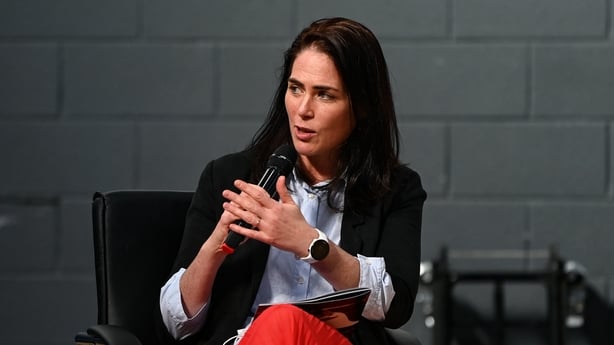
"It's not just down to media organisations when it comes to visibility," says Stapleton. "What we are seeing is a lot of the team sports are really visible. And then some of the other sports don't get as coverage. Then when we look at the stats of other sports, it's nearly 50:50 in terms of visibility between male and female athletes.
"So how do we diversify the coverage that we're seeing? How do we support the national governing bodies in their own storytelling? How do they amplify the message from their athletes? How do we profile our players, how do we get to know them more?
"Because we know that's what sells stories as well. Especially fans of women's sport. We definitely do like to get to know our athletes. Social media has a big part to play in women's sport. We're looking at how do we embrace that rather than shy away from it."
