


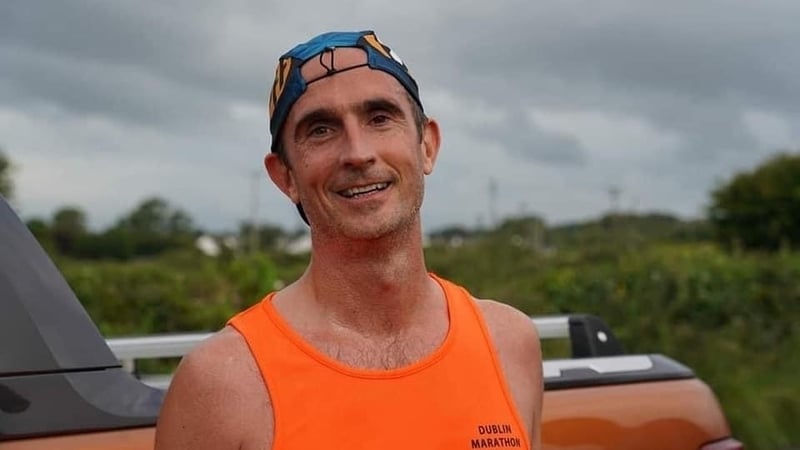
Just five years after returning to running at the age of 39, Keith Butler is likely to finish the year part of a select band of Irish runners to complete the marathon majors grand slam.
The Ennis Crusaders man has checked off four of the most high-profile races in the marathon calendar with medals hanging for his exploits in Boston, London, Berlin and Chicago.
All that remains is Tokyo in a fortnight and completing the series in New York later this year.
Not bad for a man whose simple aim initially was just to complete a marathon before he turned 40, encouraged by his brother-in-law to sign up for the Dublin Marathon of 2018.
That goal was nearly scuppered by a couple of stress fractures, but in the end he got there, crossing the line in a little over three and a half hours for an impressive debut.
The following year, his second stab at the 26.2 mile distance saw him take seven minutes off that time, but of greater significance was what occurred before he even started.
We need your consent to load this rte-player contentWe use rte-player to manage extra content that can set cookies on your device and collect data about your activity. Please review their details and accept them to load the content.Manage Preferences
On his way to the line, he spotted the world marathon majors wall of fame, the names and countries of those who have completed the half a dozen high profile races. From there, the seed was sewn.
"I remover thinking to myself, that would be a nice thing to do," he told the RTÉ running podcast.
"I made the decision there and then, in my second marathon, that I would try and get the six majors done. That is why I have been banging them out pretty quickly ever since."
Tokyo in a couple of weeks will be his ninth crack at the distance, with a target time sit of in and around around 2:45.
What does he put the continued improvement down to?
Working with a coach – in his case online sessions with Tralee’s John Starrett, known as coach Stazza and mentor for a while to Irish Olympian Aoife Cooke – provided more clarity.
Butler says that structure around his training has been a huge factor, where less really is more.
"Sunday is a long run that could typically be at marathon pace, while my Wednesday session is more tempo-based, running faster than marathon pace," he says.
Three times a week it’s "easy pace" running, running for roughly an hour.
"I’d have decent mileage, maybe 60 miles. I get a day off after each of the heavier sessions. I only do a little strength and conditioning, maybe half an hour."
In offering advice to fellow runners, Butler, who has qualified for says recovery and preparation is crucial
"I get good sleep. The whole recovery/sleep/diet is underestimated by most people. I think you can get serious gains in terms of performance around that area.
"Don’t be expecting miracles within three months of putting the runners on. You have to take a longer-term view. It could take two to three years for you to find your level with those adaptions."
