


Beetroot & Hazelnut Salad with Whipped Goat's Cheese
Serves 6
200g soft goat’s cheese
75g cream cheese
finely grated rind of 1 lemon
4 tbsp extra virgin olive oil
100g whole hazelnuts
100g raw baby beetroots (a striped
variety, if possible)
4 cooked beetroots
50g mixed soft herbs, such as
parsley, chives, dill, mint, basil or
chervil
3 tbsp white-wine vinegar
1 tbsp raw Irish honey
sea salt and freshly ground black
pepper
Put the goat’s cheese, cream cheese and lemon rind in a bowl with one tablespoon of the olive oil and a pinch of salt. Beat with an electric whisk until light and fluffy. Cover and chill for up to 24 hours. Heat a non-stick frying pan over a medium heat and toast the hazelnuts for a few minutes, tossing occasionally to ensure they cook evenly. Tip out, leave to cool and then rub off the skins and roughly chop. Peel the raw beetroots and cut into wafer-thin slices – a mandolin is perfect if you have one. Put the beetroots in a bowl with another tablespoon of oil and a little seasoning. Cut the cooked beetroot into 1cm cubes. Pick the leaves from the herbs; if using chives, cut into 3cm lengths and add to the beetroot. Whisk the rest of the olive oil with the vinegar and honey and season to taste. Arrange the raw beetroot slices overlapping on small plates and add a quenelle of the goat’s cheese mixture to each one. Toss the cooked beetroot and herbs in the dressing and scatter around the plates. Finish with the hazelnuts to serve.
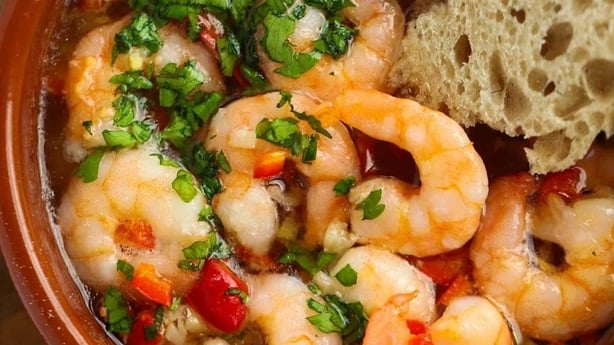
Sizzling Garlic & Chilli Prawns
Serves 4
1kg raw peeled prawns, thawed if frozen
100ml olive oil
50g butter
4 garlic cloves, crushed
2 red chillies, seeded and finely chopped
juice of ½ lemon, plus extra wedges to serve
2 tbsp chopped fresh flat-leaf parsley
sea salt and freshly ground black pepper
1 sourdough baguette, cut into slices, to serve
Pat the prawns dry with kitchen paper, and warm some tapas style dishes in the oven. Heat a large heavy-based sauté pan until smoking hot. Add the oil and butter and, when it starts to foam, carefully add the prawns and season them generously. Cook for 2–3 minutes until the prawns turn pink and start to curl. Just before serving, toss the garlic and chilli over the prawns, tossing to coat. Season with salt and add a good squeeze of lemon juice. Scatter over the parsley and give a final toss, then spoon the mixture into the warmed tapas dishes. Serve with lemon wedges and plenty of sourdough bread to mop up all the succulent juices.
SERVE WITH … I would love a plate of these at literally every meal! They are perfect as part of the Spanish Tapas spread, but if you fancy making a meal out of them, try them with Chargrilled Tenderstem Broccoli with Caesar Dressing or simply fold them into some fresh pasta.
Crispy Spatchcock Chicken with Lemon & Herbs
Serves 4
1.2kg whole chicken (preferably free-range or organic)
6 garlic cloves, crushed
a few sprigs each of thyme and rosemary, leaves picked and chopped
a few bay leaves, torn
finely grated rind and juice of 1 lemon, plus 1 extra, sliced
5 tbsp olive oil
1 packet of fresh rosemary
sea salt and freshly ground black pepper
Spatchcock the chicken by placing it breast-side down with the legs towards you. Use a kitchen scissors or sharp knife to cut along the backbone and through the ribs. Flip it over and press down the backbone so that the chicken flattens out. In a dish large enough to hold the chicken, combine the garlic, herbs, and lemon rind, juice and slices with the oil. Season with salt and pepper, give it a good mix and rub the mixture all over the chicken. Cover and set aside at room temperature for 1 hour. Preheat the oven to 220°C (425°F/Gas Mark 7). Put the chicken in a shallow baking tin, skin side up, spread all the marinade back over the bird and arrange the slices of lemon on top. Roast for 45 minutes until cooked through and tender. Remove from the oven and leave to rest for 15 minutes, then carve into portions (and the breasts into slices). Garnish with the extra herb sprigs to serve.
SERVE WITH … This goes beautifully with Smashed Roast Potatoes. When cooking for more than four people, roast two chickens and have platters alongside filled with Steamed Asparagus with Hollandaise and Green Couscous, or Grilled Corn Salad and Warm Potato Salad.
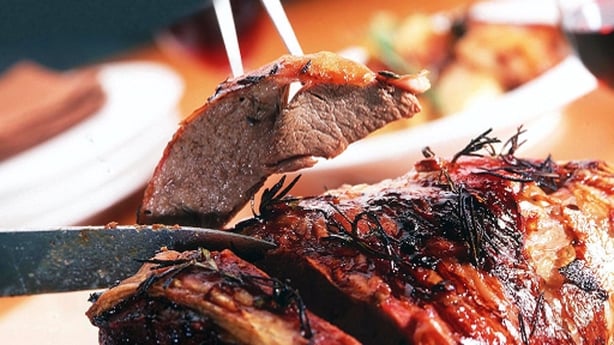
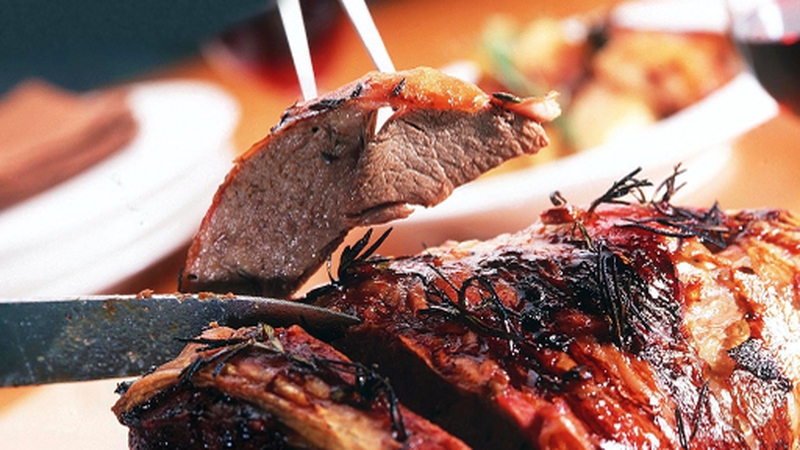
Fragrant Butterflied Lamb
Serves 4
2–2.5kg leg of lamb, boned and well trimmed, roughly 4–5cm thick
25g chopped fresh mint, plus extra to garnish
finely grated rind and juice of 2 lemons
4 garlic cloves, crushed
2 tbsp ground coriander
2 tsp paprika
2 tsp ground cumin
2 tsp coarsely ground black pepper
1 tsp cayenne pepper
4 tbsp extra virgin olive oil
2 tbsp pomegranate seeds (optional)
1 sprig fresh rosemary (optional)
good pinch of sea salt
Place the lamb in a shallow non-metallic dish. Mix the remaining ingredients, except the salt and pomegranate seeds, and rub over the meat. Cover with cling film and chill overnight or, if time is short, leave to stand at room temperature for 2–3 hours, turning the lamb over from time to time. When you are ready to cook, if the lamb has been chilled overnight, bring it back to room temperature. Preheat the oven to 240°C (475°F/Gas Mark 9) or light a barbecue; if using a charcoal barbecue, light it 45 minutes before you want to start cooking; if using a gas barbecue, light it 10 minutes beforehand. If cooking in the oven, place the lamb, cut-side up, on a rack in a large roasting tin and season with salt. For rare meat, roast for 25–30 minutes. For medium-rare meat, roast for 35–40 minutes, turning over halfway through. If barbecuing, cook the lamb over medium-hot coals for about 50 minutes for medium-rare lamb, turning occasionally. Remove the lamb from the oven or barbecue, and leave it to rest in a warm place for 10 minutes. If you don’t like your lamb too pink, you can cover it with foil at this point, and it will continue to cook. Carve into slices and arrange on plates, drizzling any juices from the tin. Scatter over some mint to garnish, then add the pomegranate seeds and fresh rosemary, if using.
Roast Picanha & Chargrilled Pepper Salad
Serves 6–8
1.2kg Irish Angus Picanha
1 tbsp olive oil
½ tsp dried thyme
3 large red peppers
3 large yellow peppers
2 tbsp extra virgin olive oil
2 tsp balsamic glaze
small handful fresh basil leaves
sea salt and freshly ground black
pepper
Preheat the oven to 200°C (400°F/Gas Mark 6). Allow the Picanha to return to room temperature; then, using a sharp knife, score the fat cap in a criss-cross pattern. Heat the olive oil in a large
frying pan over a medium-high heat. Once the oil begins to shimmer and is just starting to smoke, place the meat in the pan and sear for 2–3 minutes on each side. Put the seared Picanha on a wire rack in a roasting tin, then season generously and sprinkle with the thyme. Arrange the
peppers around the joint and roast for 40 minutes (for medium rare). Remove from the oven and transfer the meat to a platter, then cover loosely with foil and leave to rest for 20 minutes.
Meanwhile, transfer the peppers to a large bowl with tongs and cover with cling film. Leave for 10 minutes to help the skins steam off, then strip off the skins and discard the cores and
seeds. Cut the flesh, which will be nicely blackened in places, into strips and arrange on a platter. Drizzle over the extra virgin olive oil and balsamic glaze, then tear the basil on top. Season to
taste. Carve the rested roast Picanha into thin slices and add to the separate platter to serve.
Braised Petits Pois with Bacon
Serves 4–6
1 tbsp olive oil
100g smoked streaky bacon lardons
4 tbsp white wine
1 bunch scallions, trimmed and thinly sliced
400g frozen petits pois 1
50ml fresh chicken stock (from a carton)
2 little Gem lettuces, cut into quarters
40g butter, chilled and diced
4 tbsp chopped fresh flat-leaf parsley
sea salt and freshly ground black pepper
Heat a sauté pan over a medium heat. Add the oil with the bacon lardons and sauté until they are golden and have released their fat. Pour in the wine and add the scallions, then allow the mixture to bubble for 2 minutes. Add the petits pois and chicken stock, then bring back to the boil and cook for 3 minutes. Carefully place the lettuce quarters on top of the petits pois mixture, with the stalks facing upwards. Cover with a lid and cook for 2 minutes, then turn off the heat. Remove the lettuce and put on a plate. Add the butter into the petits pois mixture and give everything a good stir, then simmer gently until the butter has formed a smooth emulsion sauce. Season to taste and stir in the parsley. Tip most of the petits pois mixture into a warm dish and arrange the lettuce on top, then finish with the rest of the petits pois mixture to serve.
SERVE WITH … This goes rather well with the One-Pot Fish Pie or the Cottage Pie. Of course, it is also perfect with any roast dinner – and the buttery sauce means you can get away with not making any gravy.
Potato Gratin
Serves 4–6
1kg floury potatoes (such as Rooster or Maris Piper)
900ml cream
120ml milk
good pinch of freshly grated nutmeg
4 garlic cloves, finely grated (on a microplane)
butter, for greasing
wild garlic, to serve (optional)
sea salt and freshly ground white pepper
Peel the potatoes and cut into 3mm slices with a mandolin. Spread them on a tray and sprinkle with plenty of salt. Rub the slices together, then heap them up in a pile and leave for 10 minutes. The salt will extract the excessive water and soften the potatoes. Put the cream and milk in a pan large enough to take all the potatoes later. Season lightly with salt, add plenty of pepper and the nutmeg, then stir in the garlic. Place over a high heat and bring to the boil, then reduce the heat to low and simmer to reduce the liquid by about a quarter, stirring occasionally to ensure it doesn’t stick to the bottom. Preheat the oven to 120°C (250°F/Gas Mark ½). Press the potatoes gently in a tea towel with your hands to squeeze out all the excess water. Add to the reduced cream mixture and bring back to the boil. Remove from the heat and, using a large spoon, spread the mixture out evenly in a buttered ovenproof dish. The gratin should be at least 6cm thick. Cover tightly with tin foil and bake for 90 minutes, or until the potatoes are completely tender when pierced with a sharp knife but not at all coloured. The gratin can now be cooled down and chilled for at least 6 hours, although overnight is best to firm up. At this point it can be cut into portions and arranged on a non-stick baking sheet, or kept whole. When ready to serve, preheat the oven to 170°C (32°F/Gas Mark 3) and cook the gratin pieces for about 20 minutes until warmed through; if you are cooking the whole dish, it will take 30–40 minutes until bubbling and golden. Garnish with wild garlic, if desired.
Honey-Glazed Spiced Carrots with Pistachio & Dill
Serves 4–6
50g shelled pistachio nuts
400g baby rainbow carrots
2 tbsp extra virgin olive oil, plus a little extra for drizzling
2 tbsp raw Irish honey
2 tsp spicy red pepper and herb seasoning
handful fresh dill sprigs
sea salt
Preheat the oven to 180°C (350°F/Gas Mark 4). Put the pistachio nuts in a roasting tin and toast for 5 minutes, then tip on to a chopping board and roughly chop. Scrub the carrots and trim the tops. Put in a roasting tin with the oil and season with salt. Roast for 30 minutes. Mix the honey with the spicy pepper and herb seasoning. Drizzle over the roasted carrots and cook for another 10 minutes until soft and caramelised. Arrange the carrots on a serving platter, drizzling over any juices left in the tin and a little extra oil. Scatter over the dill sprigs and pistachio nuts to serve.
SERVE WITH … These carrots look wonderfully theatrical on the table and the recipe scales up nicely, so it works well for a large crowd – it’s one that I always end up doing over the festive season, when we celebrate with family and friends. This dish goes very well with Crispy Spatchcock Chicken.

Chocolate Mousse Cups
Serves 4
225g plain chocolate, broken into squares (minimum 55% cocoa solids)
3 eggs
2 tbsp Coole Swan Irish cream liqueur (or use Grand Marnier, whiskey, Malibu or crème de menthe) 300ml cream a selection of berries (such as raspberries, strawberries and pomegranate seeds), to decorate
a few sprigs of mint, to decorate
Melt the chocolate in a heatproof bowl set over a pan of simmering water. Whisk the eggs with the liqueur in a separate bowl over a pan of simmering water until double in size. It is very important to ensure the water does not boil or it will cook the eggs. Fold the melted chocolate into the egg mixture, then leave to cool for 5 minutes. Meanwhile, whisk the cream in a bowl, fold into the chocolate mixture, then put into stemmed glasses or teacups using a spatula. Cover with cling film and refrigerate for 2–3 hours or overnight. Spoon over the berries and add a sprig of mint to serve.
SERVE WITH … This rich, intensely chocolatey dessert not only looks great in glasses but also vintage teacups. It can also be scooped into quenelles. Sometimes I’ll serve it with a couple of thin buttery biscuits for dipping, or perhaps an ice-cold glass of the liqueur I’ve used to flavour the mousse.
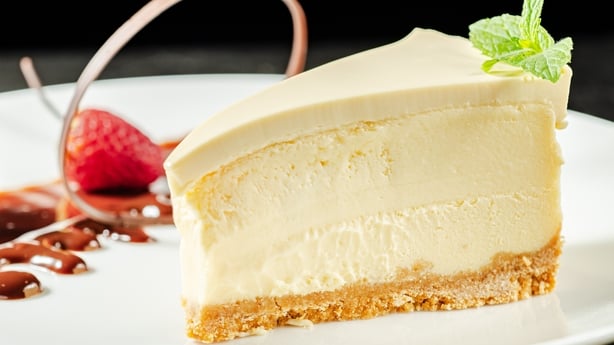
Lemon Curd Cheesecake
Serves 6–8
200g ginger biscuits
100g butter
325g jar Sicilian lemon curd
500g mascarpone cheese
2 x 500g cartons authentic Greek
yogurt (10% fat)
juice of 2 lemons
icing sugar, to dust (optional)
Put the biscuits in a food processor and blend to crumbs. Melt the butter and put in a bowl with the biscuit crumbs. Mix well and use to line a springform tin, pressing down well with the back of a spoon. Take out 2 tablespoons of the lemon curd and reserve, then put the rest in a bowl. Add the mascarpone, yogurt and lemon juice, then whisk until smooth. Using a spatula, cover the biscuit base, swirling around the top so it’s not too smooth. Add small bloops of the reserved lemon curd and swirl into spirals with a toothpick. Chill for at least 2 hours – overnight is perfect. Remove the cheesecake from the tin and, using a palette knife, put it on a cake stand. Give it a light dusting of icing sugar, if liked, just before bringing it to the table, and cut it into slices in front of your guests.