


Panel: Éanna Ní Lamhna and Richard Collins
Reporter: Terry Flanagan
All this week, from Monday to Friday, at 22:00 Derek Mooney and his Mooney Goes Wild team of experts are bringing you Nature Nights LIVE, a celebration of Ireland's rich flora and fauna with a special emphasis on nocturnal wildlife. This year, we are also teaming up with the Tree Council of Ireland to celebrate National Tree Week 2026.
Each night, we will share updates from events happening around the country and highlight the trees we often overlook. We will be placing a special focus on Ireland's native trees, all of which support insects, birds and mammals, store carbon and play an essential role in keeping our ecosystems healthy.
We will also hear from researchers who work after dark as nocturnal animals begin their nightly routines and we open the phone lines so listeners can ask questions directly, with an expert panel in studio ready to offer advice and insights.
If you have any nature-related queries for our panel of experts or would like to share your wildlife observations with fellow listeners you can do so in the following ways:
- By email to naturenights@rte.ie
- By WhatsApp to 087 680-6206
- By text message to 51551
A recap of last night’s programme
The first programme of our 2026 Nature Nights LIVE series was broadcast last night, Monday 9th March, and certainly kicked our week-long celebration of wildlife in style. Highlights included:
- Vincent Hyland getting up close and personal with an octopus
- Paula O Connor in Florida found three baby squirrels in her BBQ
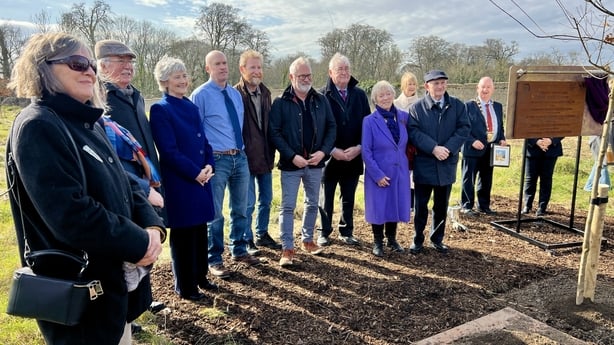
- Éanna Ní Lamhna told us all about National Tree Week 2026 and the importance of our forests.
To listen back to last night’s programme, visit https://www.rte.ie/radio/radio1/nature-nights/2026/0309/1562405-nature-nights-monday-march-9th-2026/.
Why are trees so important?
Given that it’s National Tree Week, as well as the 40th anniversary of the Tree Council of Ireland, two-time former President of that august body, Éanna Ní Lamhna, kicks off tonight’s programme by telling us just why trees are so vital for life on Earth. Her top three reasons are:
- Carbon capture: 5 tonnes of carbon are captured per year just by one Sitka Spruce tree, thanks to photosynthesis.
- Biodiversity: Trees support an astonishing array of different animals, plants and fungi.
- Human welfare: intrinsic to our mental and physical health.
If you would like to learn more about Ireland’s trees and to experience some of the above benefits for yourself, you are in luck! Each year, National Tree Week sees a plethora of events being run across the country, and 2026 is no exception, so there are plenty of opportunities for you to take part.
To learn more about National Tree Week 2026 and the wide range of events that you can take part in, visit https://www.nationaltreeweek.ie/.
An intrepid Pine Marten has "bin" captured on video
Listener Carmel Killackey, who lives in east Co. Galway, close to the Co. Offaly town of Banagher, noticed something odd happening to the bins in her shed. The rubbish bags were being disturbed by something, despite the lid being closed. Even putting weights on top made little difference; clearly, something was managing to get in. So, in an effort to discover the culprit, Carmel’s son installed a camera, which captured the following amazing video:
So what happened next?...
The video shows a Pine Marten in search of an easy meal. These clever and supremely agile members of the weasel family are adept at seeking out food, and this individual managed to make off with a tasty chicken spine. Once on the brink of extinction in Ireland, these wily mammals have staged a remarkable comeback in recent years and have recolonised many of their former haunts across the country.
To learn more about Pine Martens, visit https://www.vincentwildlife.ie/species/pine-marten.
Mute Swan deploying its landing gear
It is great to see that people are so eager to contribute to our Nature Nights LIVE programmes. Another listener, Karol O'Donovan, sent us in a wonderful video captured last weekend while walking along the banks of the Royal Canal in Phibsborough, showing a Mute Swan landing on the water.
Male swans can weigh up to 20kg, so it takes quite a lot of effort for them to come to a stop. Note how the bird needs to run along the surface of the water in order to reduce its considerable momentum, then how calmly it stops and begins to swim: frantic activity followed by impressive serenity.
On tonight’s programme, our resident swan expert Dr. Richard Collins tells us more about these seriously impressive and formidable birds.
For more information about Mute Swans, visit https://birdwatchireland.ie/birds/mute-swan/.
Mad March Hares
For tonight’s programme, our roving reporter Terry Flanagan travelled to a mystery location in north Co. Dublin to meet with ecologist Dr. Kendrew Calhoun, on the trail of one of Ireland’s most special mammals: the Irish Hare. Assisted by a large network of trail cameras, Kendrew is currently undertaking a study of these lovely lagomorphs for Queens University Belfast.
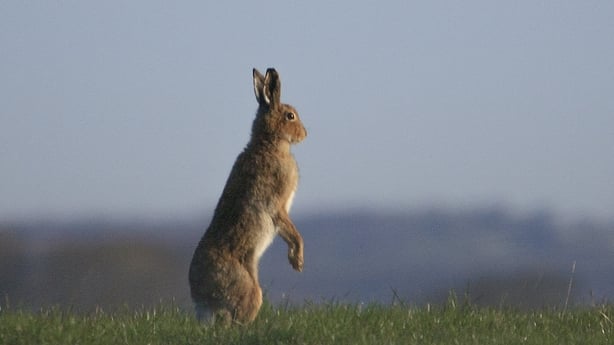
We tend to think of hares as being highly active during the day, but the reality is that they are actually busier after dark, which makes observing and counting them a real challenge. As Kendrew explains to Terry, however, the remote cameras have been a gamechanger, allowing him to survey large areas in great detail. It does necessitate looking though hour after hour of footage, however, to ensure that the data gathered is as accurate as possible.
To learn more about Irish Hares, visit https://hare-preservation-trust.com/species-status/irish-hare/.
Badger Behaviour In Baltimore
Next up on the programme, we hear from a very familiar voice to radio listeners, namely that of former RTÉ reporter Fergal Keane, who joins us from his farm in Baltimore, Co. Cork. Why? To tell us about his Badgers, of course; perhaps the ultimate nighttime animal. Feargal has been watching these stocky mammals for several years now, and has come to know their habits and behaviour very well... including their love of cat food and dislike of citrus fruit!
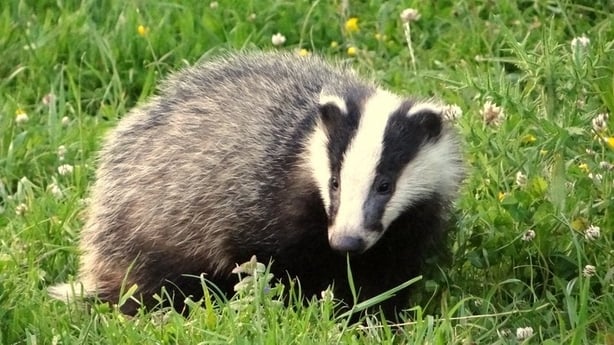
To answer Fergal’s questions about his Badger family, we are joined in studio by Virginia Morera-Pujol is a Quantitative Ecologist and Assistant Professor at the School of Agriculture and Food Science, Agriculture and Food Science in University College Dublin, and an expert in the sett distributions of these mighty mustelids. Virginia fills us in on the dynamics of Badger society, how they decide upon the locations for their setts and how they communicate with each other.
Also, as only she can, Éanna informs us about a rather bizarre pick-me-up that used to be given to new mothers to help them to recover from the exertions of giving birth: boiled Badger legs!
For more information about Virginia Morera-Pujol and her work, visit https://people.ucd.ie/virginia.morera-pujol/.
For more information about Badgers, visit https://www.vincentwildlife.ie/species/badger.
Mute Swan checking out its reflection
A video was sent to us at the very end of tonight’s programme showing a Mute Swan apparently checking out its reflection in a pane of glass on the campus in University College Dublin. As Richard explains, rather than being a narcissist, the bird most likely believes that the bird is a rival that has dared to encroach on its patch.
This might seem odd to us humans, but many birds and other animals are fooled when they see their images in mirrors or windows. Perfect reflections don’t occur in nature, so they have not evolved to understand what they are.