


To listen to RTÉ.ie's radio and podcast services, you will need to disable any ad blocking extensions or whitelist this site.
0
00:00
00:00
Episode Notes
Panel: Terry Flanagan and Niall Hatch, with contributions from Éanna Ní Lamhna
We are excited to let you know that the the twelve finalists in the 2022 RTÉ Eye on Nature wildlife photography competition will be announced on the Today show on RTÉ One television on Wednesday 20/4/22 This year's competition, which Mooney Goes Wild and the Today ran in conjunction with the National Botanic Gardens at Glasnevin and the Office of Public Works, received over 3,000 entries, which was a truly staggering result. Many thanks to all of you who submitted your photos this year.
On next week’s programme, we will be talking to each of the 12 finalists and our expert panellists will be taking an in-depth look at each of their entries. Don’t forget that you can also see the top 12 photos in all their glory as part of our Eye on Nature exhibition, which will initially be hosted in the Botanic Gardens in Glasnevin and will then go on tour to other OPW sites around the country.
The overall winner will be revealed on the Today show on RTÉ One on Wednesday 27/4/22.
When the Red, Red Robin Comes Bob, Bob, Bobbin’ Along
Congratulations to our roving reporter Terry Flanagan and his wife Angela, who recently celebrated their wedding anniversary. As Terry himself tells us, it was a "roundy" one, so to mark the occasion the happy couple decided to take a trip to the Big Apple itself, New York City.

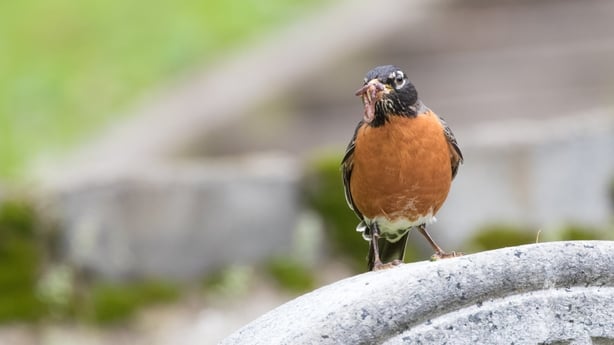
While in New York (and from the back of a horse-drawn carriage going through Central Park, no less), Terry spotted a bird he had long wanted to see: an American Robin. A common bird of gardens, parks and woodland across North America, this species is not closely related to the European Robin that is so familiar to us on this side of the Atlantic. These distinctive birds, which are dark grey above, bright red below and have black heads, actually belong to the thrush family and, feather-colour aside, closely resemble our Blackbirds here in Europe: their shape, size, behaviour and song are all remarkably similar.
As we discuss on tonight’s programme, the American Robin was given its English name by early European settlers who, missing the Old World, bestowed the name 'robin’ on the first red-breasted bird they encountered. The resemblance to the European Robin may only be superficial, but the name stuck. Having two species sharing the same name has often led to confusion, including, as we hear tonight, for the creators of one of Derek’s favourite films, Mary Poppins!
For more information about American Robins, visit https://www.allaboutbirds.org/guide/American_Robin/
Charting the fortunes of wintering waterbirds at a hundred Irish wetlands
The winter months see hundreds of thousands of swans, geese, ducks, waders and other waterbirds come to Ireland to escape the freezing conditions in their Arctic breeding grounds. As a result, Irish wetlands are of international importance for a significant number of species. Every winter, hundreds of dedicated bird surveyors across the country count these waterbirds as part of the Irish Wetland Bird Survey. This survey, which has been running since 1994, is funded by the National Parks and Wildlife Service and coordinated by BirdWatch Ireland.
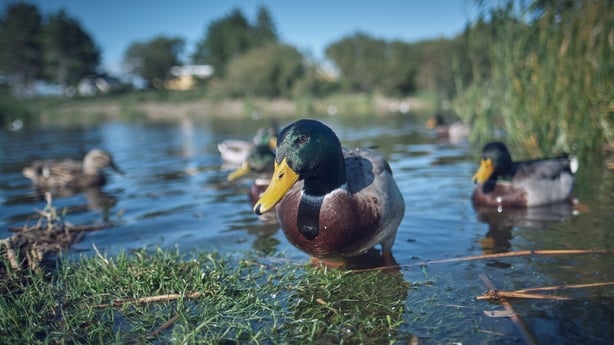
The data gathered by the survey provides a vital insight into how our waterbird populations are faring. BirdWatch Ireland has recently published a fascinating breakdown of wintering waterbird trends for 97 lakes, rivers and coastal estuaries across Ireland. Thanks to their new special online tool, you can now see how different species of ducks, waders and other waterbirds are faring at your local wetland, as well as how that compares to the national trend.
As we hear on tonight’s programme, this data analysis has revealed some winners and some losers. Of greatest concern are our diving ducks, which include species such as Pochard, Goldeneye and Scaup: these have dropped on average by 65% to 90% since the mid-1990s across the 97 sites analysed. Many waders are faring poorly too, with wintering Curlews down 43% over the same period, and Lapwings down by 64%.
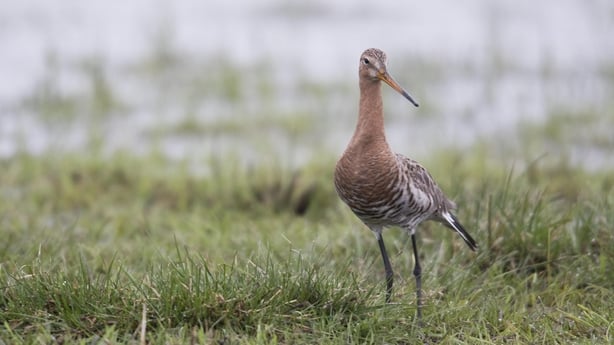
But it's not all bad news. Black-tailed Godwits, which are migrants from Iceland, have increased by an impressive 92%, while Sanderling numbers are up by 85%.
This collected data will be a vital tool to help conservation groups, local authorities, government, state agencies and local communities to protect our precious wetlands and all of the ecosystem benefits that they bring, as well, of course, as the birds themselves.
For more information about this study and to check on the fortunes of the birds at your own local wetlands, visit https://birdwatchireland.ie/new-analysis-charts-fortunes-of-wintering-waterbirds-at-a-hundred-irish-wetlands/
Think before you flush!
Think Before You Flush is a public awareness campaign operated by Clean Coasts, in partnership with Irish Water. The campaign addresses the issue of flushing unsuitable items down the toilet and highlights the consequences of doing so, such as blockages in our wastewater network and treatment plants, surface water overflows and sewage-related litter on our beaches and in our oceans, damaging our marine environment.
Beauty and dental items, such as wet wipes, cotton pads and dental floss, are part of the ‘Dirty Dozen’, which are the top 12 items that are incorrectly flushed down the toilet in Ireland. Other items include hair, paper towels, medicine, tampons, food items, contact lenses, condoms, cigarette butts and cotton bud sticks.
On tonight’s programme, Terry speaks to Liane Costello, Campaign Officer with Clean Coasts, about the campaign, the need to change people’s attitudes and the simple steps we can all take to make sure that our bathroom habits don’t cause problems for our environment.
For more information about the Think Before You Flush campaign, visit https://thinkbeforeyouflush.org/
Grasslands under threat
Around 50% of Ireland’s land area consists of grassland, making it the most extensive wildlife habitat in the whole country. Not all grasslands are equal, however, and as farming has become ever more intensive and has shifted largely to cattle production, so species-rich, wildflower-laden hay meadows have become a thing of the past in many areas. These traditional meadows are absolutely essential to a whole host of insects, birds and other creatures, and those that remain are still under intense pressure.
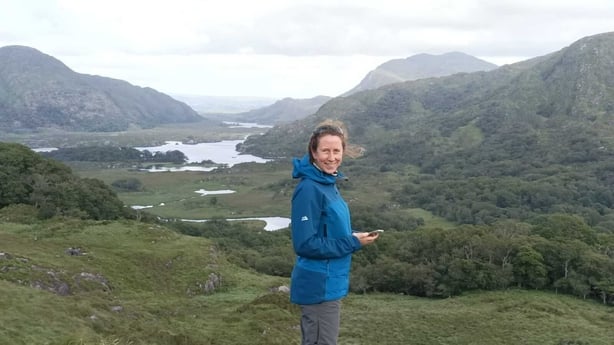
On tonight’s programme, Éanna Ní Lamnha speaks to Dr. Maria Long, Grassland Ecologist with the National Parks and Wildlife Service, about the importance of protecting our semi-natural grasslands and improving their value for biodiversity. These habitats, which are closer to nature than intensive monoculture grass crops but nonetheless are still farmed, are often hidden from the eye and can go unnoticed . . .which means that unfortunately their value often goes unappreciated.
But hopefully change is in the air. Maria tells us about a new three-year programme which commenced last year and which aims to revisit over 100 of our best and most species-rich grassland sites, all across Ireland, as well ongoing work with farmers and landowners to preserve our rural grassland biodiversity.
For more information about Irish grasslands, visit https://www.npws.ie/research-projects/grasslands
Knock on wood
We are always delighted to receive queries from our listeners, and our expert panellist do their very best to respond to every single one. One such query came in recently from Elizabeth in Co. Meath, who heard a strange, hollow knocking noise coming from a group of trees when playing a round of golf. She even performed her own sonic recreation of the experience for us!
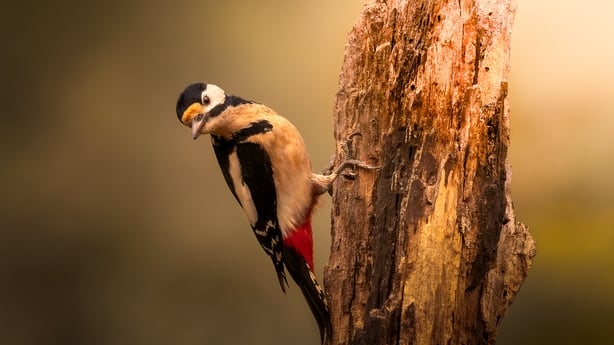
Having heard it, our panellists agree that the sound was most likely made by a Great Spotted Woodpecker that was either excavating a nest hole in a trunk or extracting a tasty insect larva from wood. These birds, which only began to colonise Ireland over the last 15 years or so, are becoming more widespread in Ireland, and several pairs are known currently to be nesting in Co. Meath.
For more information about Great Spotted Woodpeckers, visit https://birdwatchireland.ie/birds/great-spotted-woodpecker/
Something to crow about
Another query came in from listener Caroline Casey in Co. Cork, who has a problem with noisy crows in her garden. Over the course of six weeks, approximately 30 of the boisterous birds have been making a racket from a stand of large trees, and Caroline would like to know if there is anything she can do to make this stop.
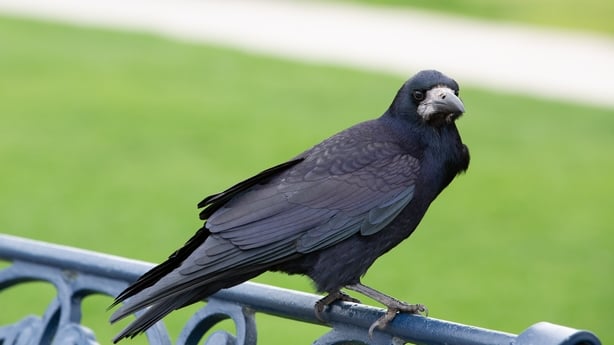
The answer is, not really. The crows that Caroline is most likely hearing are Rooks, a very common and widespread species across Ireland, which often behave like this in advance of the nesting season. Youngsters in particular can gather and call loudly to each other, especially right before they go to sleep in the evening. There is no way to stop them doing this, but the good news is that this antisocial behaviour tends to lessen considerably over the course of the summer, as the crows become more preoccupied with caring for their chicks.
For more information about Rooks, visit https://birdwatchireland.ie/birds/rook
A very choosy Blackbird
Ray had an unusual observation to report. He has noticed that a male Blackbird that was nesting in his garden has developed a fondness for morsels of cooked salmon that have been left on the barbecue. He also observed that, while the female Blackbird feeds worms and leatherjackets to her chicks as usual, her partner seems only to feed them barbecue scraps and food from the bird table. Is this normal behaviour, he wants to know.
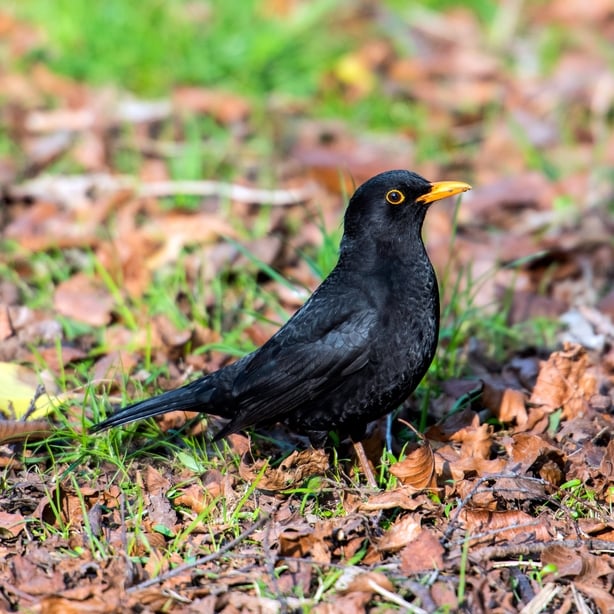
Birds can be extremely resourceful, and this particular male Blackbird has obviously learned that salmon is a great source of nutrition for him and his growing chicks. It is high in protein and omega oils, after all. He must have tried it once, perhaps attracted by the distinctive pink colour, and realised that it was good to eat. Between the barbecue and the bird table, it sounds like he is probably taking the easy way out too, as all his needs are being met without him having to put in too much effort. At least with the female continuing to feed the nestlings more traditional Blackbird food, all should be well.
For more information about Blackbirds, visit https://birdwatchireland.ie/birds/blackbird/
Same Swallows every year?
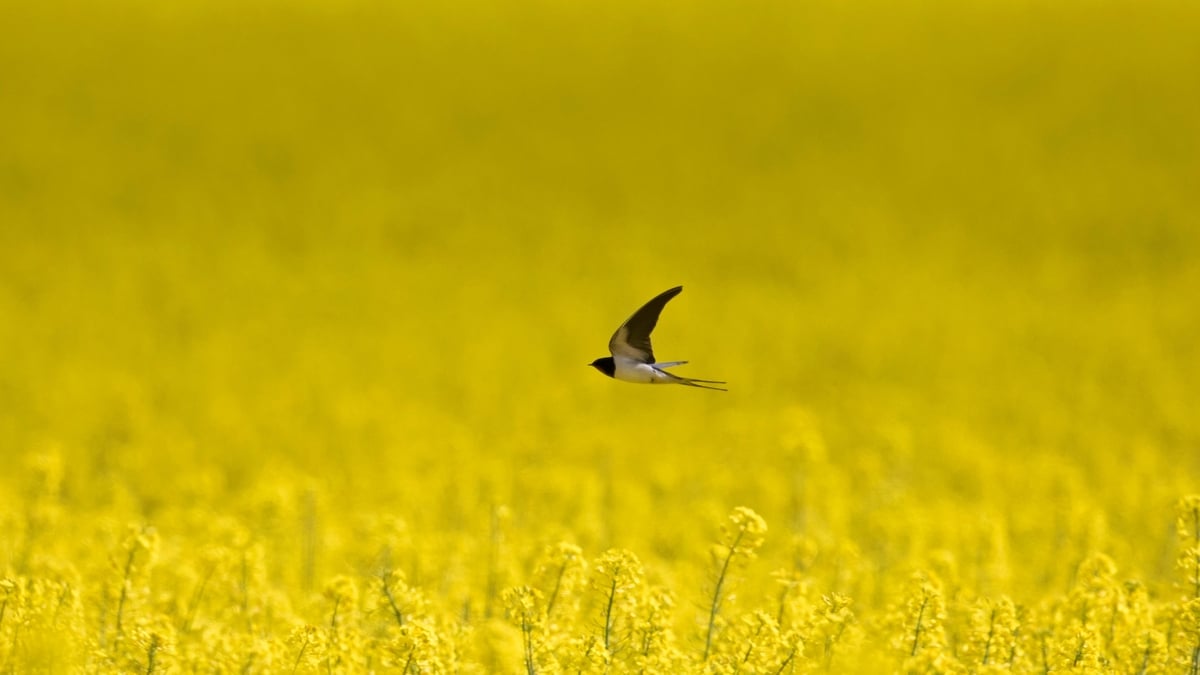
Finally, Orla Coffey from Co. Kerry was in touch to ask about Swallows, and specifically the ones that arrive each year to nest in her grandparents’ shed in Co. Galway. Are they the same Swallows that nest there every year, she wants to know, or could the birds instead be their offspring, now ready to nest themselves?
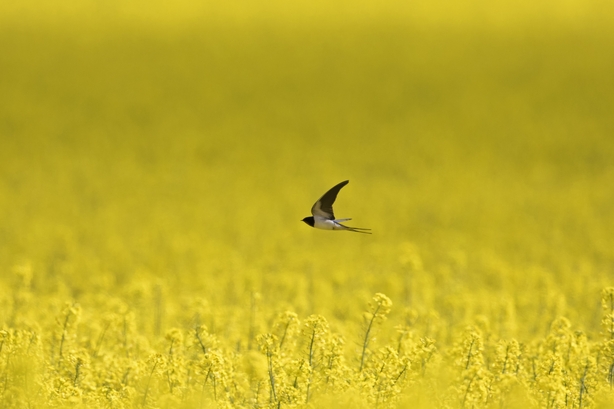
The answer is that it could very well be either of these options, or indeed perhaps even both. Swallows are very ‘site faithful’ when it comes to nesting, which means that they like to return to exactly the same spot year after year. This goes both for the original adults who first nested there and for their offspring who were raised there: they all home in on the same location. Sadly, Swallows tend not to live terribly long, so in most cases it is a succession of different but related individuals that nest in a given location over time.
For more information about Swallows, visit https://birdwatchireland.ie/birds/swallow
When you see your first Swallows of the year, please remember to report them to BirdWatch Ireland’s Spring Alive project, by going to springalive.net