


Panel: Éanna Ní Lamhna, Richard Collins and Niall Hatch
Reporter: Terry Flanagan
In addition to listening to us on RTÉ Radio 1 at 22:00 every Monday night, don't forget that you can also listen back to each of our programmes any time you like at www.rte.ie/mooney. There, you will find an extensive archive of past broadcasts, conveniently split into different topics and segments.
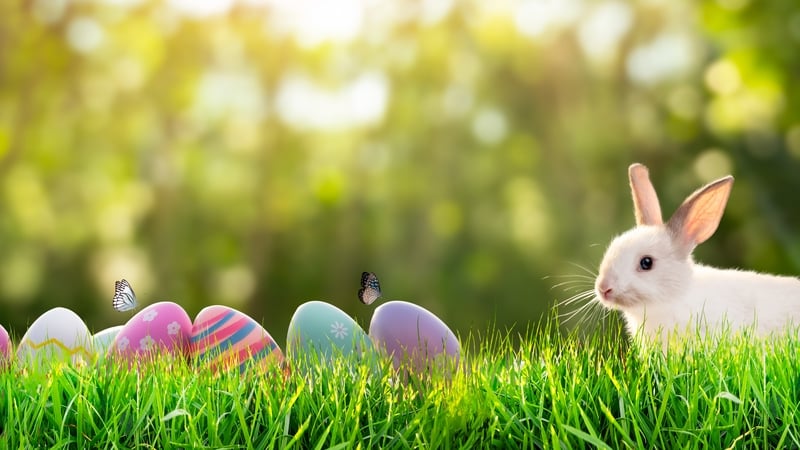
Did the Easter Bunny pay a visit to your home this past weekend? Given the season that’s in it, we thought you might like to learn more about its inspiration, the European Rabbit, one of Ireland’s best-loved and most widespread mammals. That’s why our recommendation from our archives this week is a documentary all about these lovely lagomorphs called, appropriately enough, The Easter Bunny. Presented by Dr. Richard Collins, it was first broadcast in April 2006.
To listen to this programme from the extensive Mooney Goes Wild archives, visit https://www.rte.ie/radio/radio1/clips/21749715/.
Wishing all of our listeners a very happy Easter
On behalf of all of us here at Mooney Goes Wild, we would like to wish each and every one of you, our loyal listeners, a very happy Easter season. We really appreciate all of the encouragement and support that you have given us for more than three decades now: it is a privilege to have you along with us on our weekly forays into the natural world.
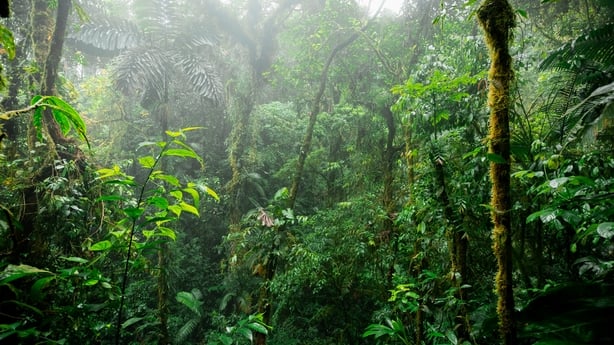
Today, Easter Monday, is a public holiday in Ireland... which, of course, means that this afternoon we broadcast another of our popular Nature on One documentaries. We have built up an impressive back-catalogue of these deep-dives into aspects of our flora and fauna over the years, all ready and waiting for you to dip into any time that you like.
To listen back to all of the documentaries in our Nature on One series, visit https://www.rte.ie/radio/radio1/mooney/generic/2023/0313/1362023-nature-on-one/.
Pine Martens
A few weeks ago on the programme, we were discussing how the Pine Marten, a native Irish carnivore that was once on the brink of extinction here, has made a remarkable recovery in recent years. As Niall Hatch tells us at the start of tonight’s programme, this fact was brought home to him recently when he was driving from Co. Wicklow to Co. Tipperary and spotted no fewer than six dead Pine Martens along the roadside.
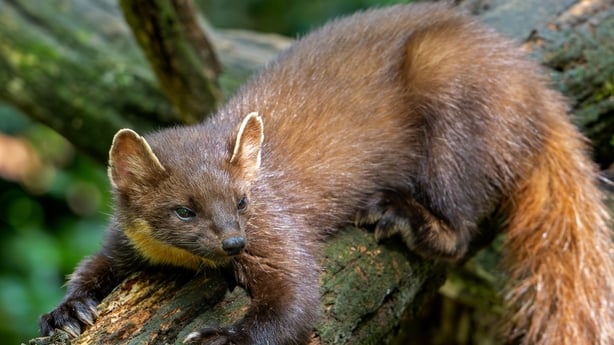
Sad though it was for Niall to see so many of these magnificent mammals dead on our roads, it is worth bearing in mind that it indicates that the species itself appears to be going from strength to strength across the country. Just a few decades ago, such numerous and widespread sightings of Pine Martens would have been impossible, given how rare and restricted the species had become, so this is clear evidence of at least a partial recovery.
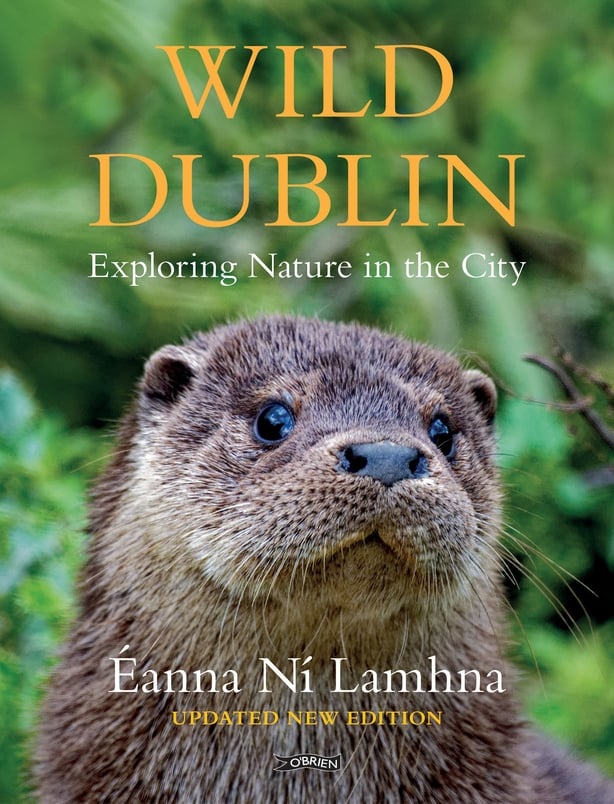
What’s more, just a couple of weeks prior to that, Niall also spotted another Pine Marten – thankfully, alive and well this time – close to St. Columcille’s Hospital in Loughlinstown, south Co. Dublin, a rare confirmed record of this elusive species inside the boundary formed by the M50 motorway. This was of great interest to Éanna Ní Lamhna, in particular, who, as recently as the publication of the second edition of her Wild Dublin book last year, had received no reports of the species being present in Dublin.
For more information about Pine Martens, visit https://www.npws.ie/sites/default/files/publications/pdf/pine-marten-in-houses.pdf.
For more information about the 2026 All-Ireland Squirrel and Pine Marten Survey and to submit details of your own sightings, visit https://biodiversityireland.ie/surveys/2026-all-ireland-squirrel-and-pine-marten-survey/.
Make a date for Dawn Chorus 2026: Sunday 3rd May
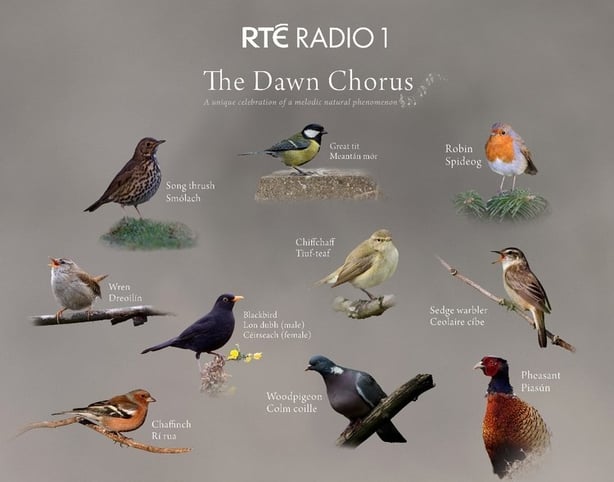
The dawn chorus is one of the most magical experiences in nature: a multitude of birds of many different species all singing together in harmony as morning breaks and light begins to fill the skies. As our natural world’s most impressive and renowned concerts, it is almost as though it has been tailor-made for radio. It never ceases. It moves, with the early morning light, like a great wave on the face of the Earth. At this moment, somewhere in the world, the birds are waking up and bursting into song.

International Dawn Chorus Day will take place on Sunday 3rd May, and this year the Mooney Goes Wild team will once again be bringing listeners across Ireland and, thanks to RTÉ’s online presence, the world a celebration of Irish birdsong from midnight through to 7:00am on RTÉ Radio One.
While Derek Mooney steers the ship from the RTÉ Stage 7 in Dublin, 'home base’ for the live broadcast once again this year will be BirdWatch Ireland’s Cuskinny Marsh Nature Reserve in Cobh, Co. Cork, where our main presentation team of Jim Wilson and Niall Hatch will introduce the dawn chorus and, while the birdsong builds in real time, explain to listeners what our feathered friends are getting up to as the sun rises.
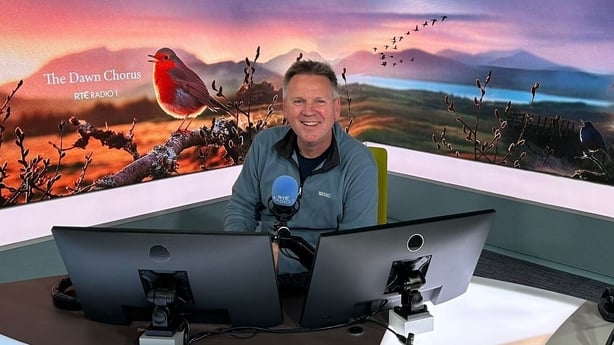
Across the country, Richard Collins, Éanna Ní Lamhna, Eric Dempsey and Terry Flanagan will also bring us the birdsong from their parts of Ireland, as the sun gradually breaks the horizon and the birds begin their performances. We are delighted also to be partnering once again with our colleagues from the national broadcaster YLE in Finland, who have become an annual fixture in the event.
But, most importantly of all, we want to hear from you, our listeners! We are counting on you to send us your own recordings and live feeds of the birdsong performance happening near you. It could be the sound from your garden, your local park or woodland... or even just your open bedroom window.
Also, if you happen to be holding your own dawn chorus walk that morning, please get in touch: who knows, we might even feature you live on air! Just e-mail mooney@rte.ie at any time, with the subject line Dawn Chorus 2026.
To listen back to last year’s Dawn Chorus programme, visit https://www.rte.ie/radio/radio1/clips/11714488/.
Terry has a tree-mendous time at the National Botanic Gardens
The National Botanic Gardens at Glasnevin are an oasis of nature, calm and beauty that are open to all, free of charge, every day of the year, apart from Christmas Day. A premier scientific institution, the Gardens contain important collections of plant species and cultivars from all over the world.
Often overlooked by visitors, despite their often massive size, the collection of trees at "The Bots" are one of the jewels in its crown, with species from all over the planet thriving side by side. These tree specimens are the subject of some of the "walk and talk" tours that take place there throughout the year.
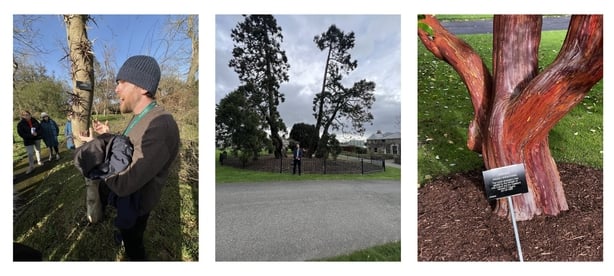
For tonight’s programme, we sent our roving reporter Terry Flanagan to the Gardens to meet tour guide Eoin O’Reilly, who showed him some of the astounding arboreal attractions that he shows to participants on his tours.
For more information about guided tours at the National Botanic Gardens, visit https://www.botanicgardens.ie/glasnevin/tours/.
Trying to save New Zealand’s albatrosses from extinction
As the saying goes, "from little acorns to mighty oaks"; well, for our final item on tonight’s programme the expression could be "from little eggs to mighty albatrosses". These globetrotting seabirds are mighty indeed, both in terms of their enormous size – they boast the largest wingspan of any flying creatures on the planet – and the mammoth journeys that they undertake around the world’s oceans.
Sadly, these amazing birds are not doing too well, with BirdLife International reporting that two-thirds of the world’s albatross species are globally threatened. Every year, up to 100,000 of these incredible creatures are unintentionally killed by equipment used in commercial fisheries... that’s one every five minutes.
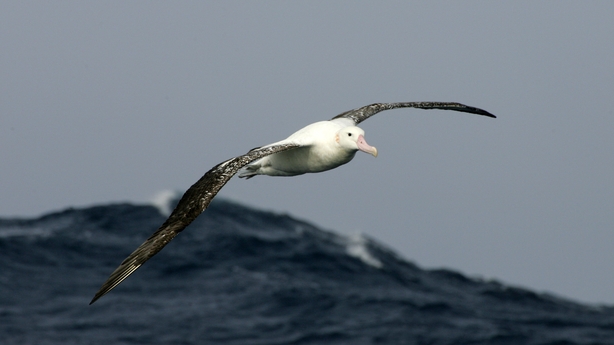
Dr. Jamie Darby, is a researcher from University College Cork, currently working with the University of Auckland and the New Zealand Department of Conservation. Recently, he visited the remote, uninhabited Antipodes Islands in the subantarctic waters to the south of New Zealand, to affix tracking devices to endangered Antipodean Albatrosses.
As Jamie tells us on tonight’s programme, the project has revealed that these birds are being killed by commercial longline fisheries at a much greater rate than previously thought. Given the species’ slow breeding rate and the vast distances these birds travel in essentially unregulated international waters, this could drive them to complete extinction. The more that we can learn about them and their movements, the better placed conservationists will be to identify and implement solutions.
For more information about Jamie Darby’s crucial work to monitor the fortunes of the Antipodean Albatross, visit https://wwf.org.nz/news/species/edge-world-tracking-seabird-brink.
The Rime of the Ancient Mariner
The importance and vulnerability of albatrosses have long been recognised. Considered crucial guides to oceanic winds and weather for generations, there is a long-standing taboo amongst sailors against harming them.
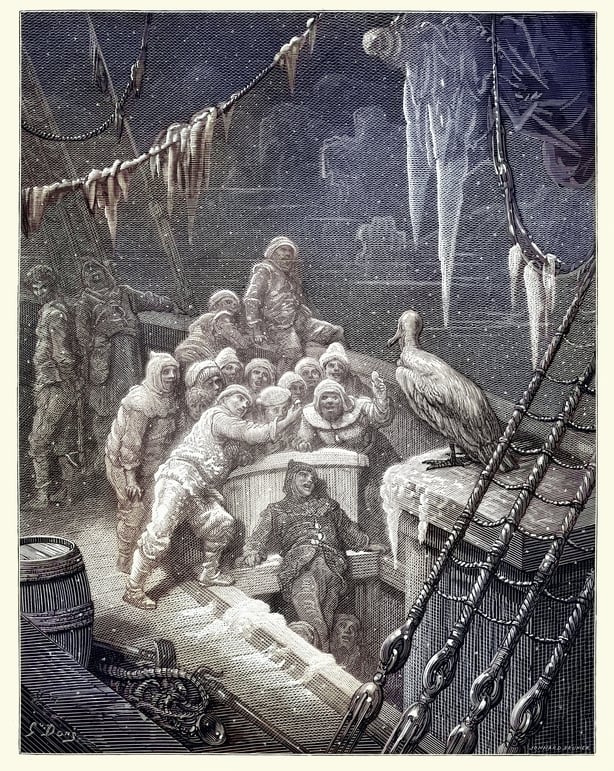
This was the sentiment which inspired the great 1834 poem The Rime of the Ancient Mariner by Samuel Taylor Coleridge, which today is sometimes regarded as the first ever call for the conservation of a threatened species.
To read the full text of Coleridge’s acclaimed poem The Rime of the Ancient Mariner, visit https://www.poetryfoundation.org/poems/43997/the-rime-of-the-ancient-mariner-text-of-1834.